1Highlights
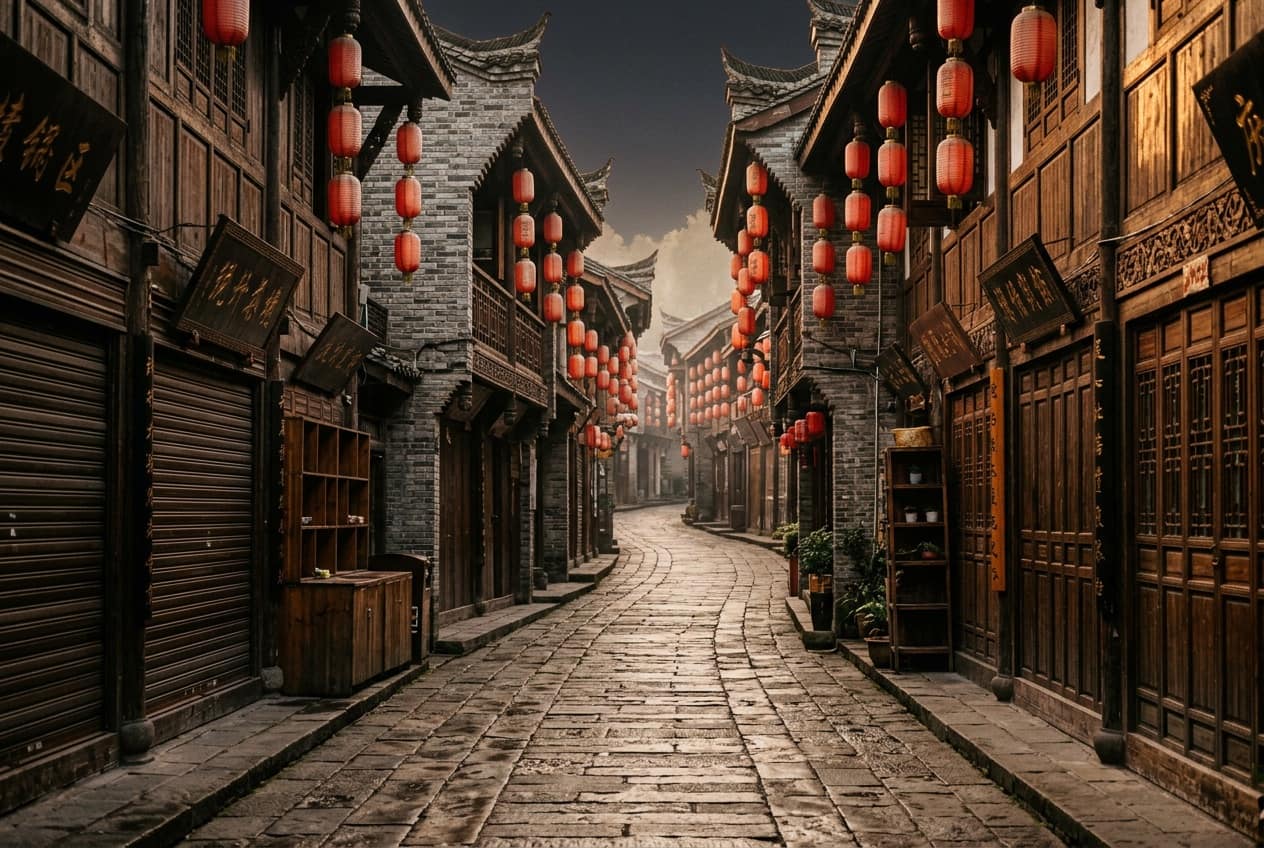
Ciqikou grew up around the porcelain trade — the name means 'porcelain port' — and it is one of the better-preserved old street districts inside Chongqing's built-up area, with flagstone lanes and stilt houses running down towards the Jialing River. Today the main street runs on a straightforward formula: fried dough twists, hand-pounded noodles as street theatre, and old teahouses. That main lane is unapologetically commercial. The reason to come anyway is that the cross streets and back lanes immediately behind it are not, and the whole thing is free, metro-direct and doable in about two hours.
- Entry
- Free
- District
- Shapingba, Jialing riverside
- Metro
- Ciqikou station, Line 1
- Allow
- About 2 hours
- Timing matters
- Weekend afternoons are packed
2Tickets
The old town is free and needs no ticket — the lanes, the snack stalls and the teahouses all cost nothing to walk into. A few interior courtyards and small exhibition halls may charge modest fees and keep their own hours; none of them is essential. During national holidays the district may run crowd control, which makes timing the only real lever you have.
| Old town access | Free | Open through the day; no booking on normal days. |
|---|---|---|
| Courtyard exhibition halls | Free or low cost | Small and optional; hours vary by venue. |
| Jialing River boat rides | Per activity | Separate paid activities run by their own operators. |
Free, but capacity-managed at peaks:Golden Week crowd control can change how you enter. Weekday-morning Ciqikou and weekend-afternoon Ciqikou are effectively two different places — choose the former if you can.
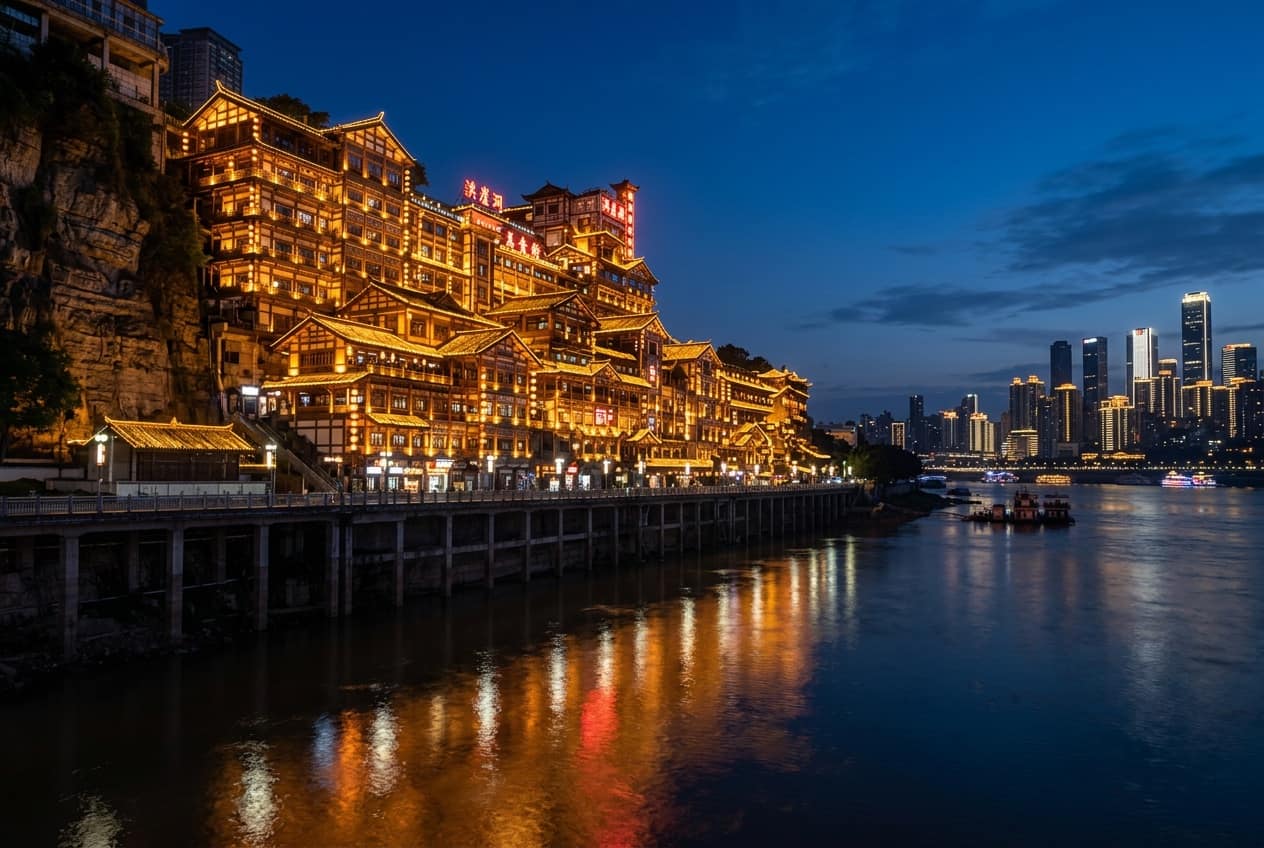
Chongqing's night views come in a free tier and a paid tier:Hongya Cave and its best photo angle on Qiansimen Bridge are both free to access, as is the Liziba viewing deck. The Nanshan One-Tree platform and the Yangtze River Cableway are ticketed. Decide which tier you actually need before buying anything — plenty of visitors pay for a view they could have had for nothing.
3Getting There
Ciqikou is in Shapingba district and the metro drops you within a few minutes of the main gate.
Ciqikou station, then a five-to-ten minute walk to the main archway.
Around half an hour from Jiefangbei outside peak times.
Several routes stop at Ciqikou; slower but cheap.
The metro is the reliable option:Streets around the old town are narrow and congest badly on holidays, so a taxi can easily be slower than the train.
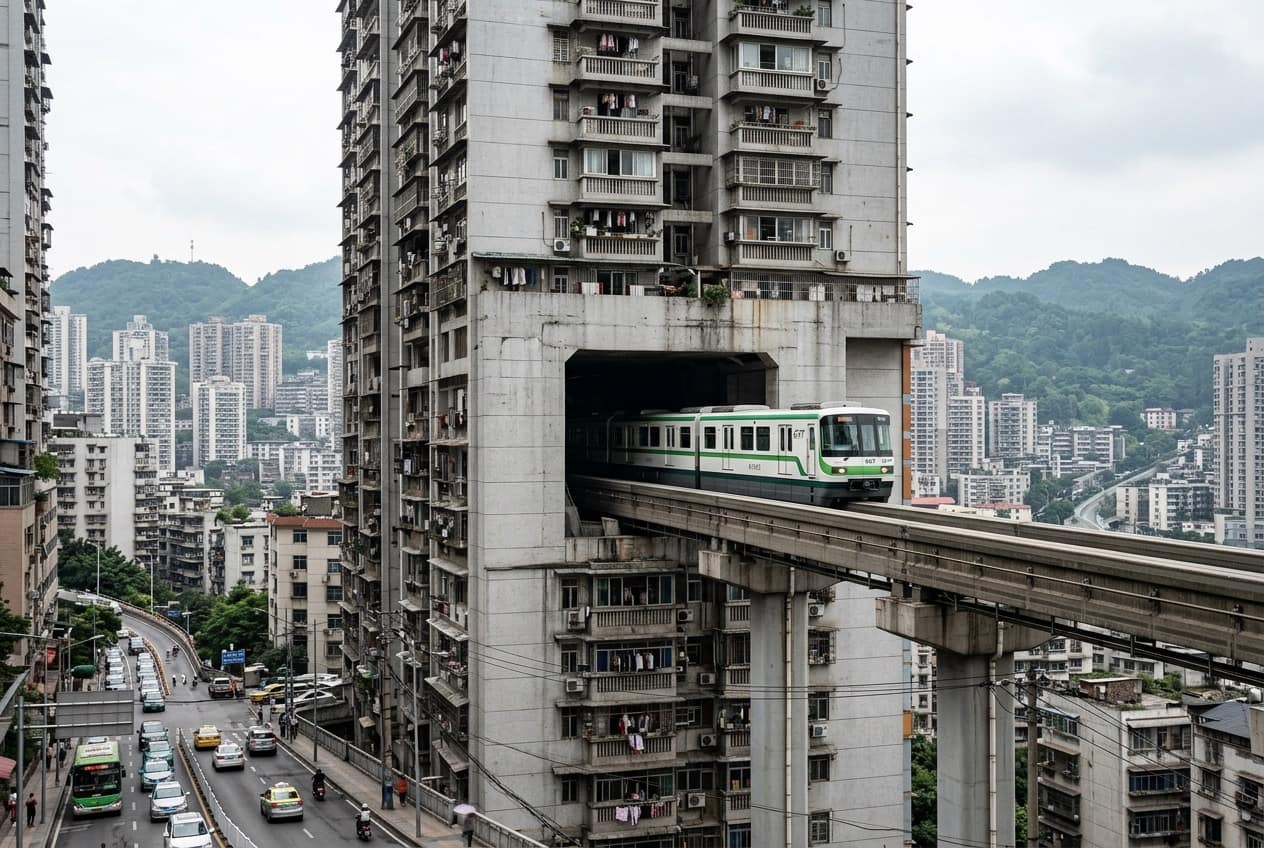
Map distances in Chongqing are unreliable:The city is built on steep slopes, so a short horizontal distance on a map can mean a long staircase or a cliff. Wear flat shoes, expect vertical detours, and treat map walking times as optimistic.
4Route & Photos
The working method is move fast on the main street, slow down in the cross lanes, and find quiet in the back lanes. Snacks and street theatre are on the main drag; teahouses are one turn off it; real neighbourhood life and river views are behind.
Early is worth more than long:Arriving soon after the shops open gets you open lanes for photographs and stalls that are freshly making rather than restocking.
Recommended Route
- 1
Main archway
Photograph the entrance first — it is only uncluttered early in the day.
- 2
Main street, snacks
Queue for freshly fried dough twists and watch the noodle-pounding, grazing as you go.
- 3
Cross lanes, teahouses
Turn off for a bamboo chair and a lidded bowl of tea — the best half hour here.
- 4
Baolun Temple
A temple within the town; the rear terrace looks out over the rooftops.
- 5
Back lanes to the river
Loop out through the back lanes to the riverside walk and leave by a side gate.
Best Photo Spots
Main lane, receding perspective
The depth shot with hanging lanterns only works while the lane is still relatively empty.
Back-lane riverside
The Jialing River and old stilt houses in one frame, with far fewer people.
Baolun Temple rear terrace
A rooftop overview that most day visitors walk straight past.
5Food & Stay
| Fried dough twistsSweet or spicy | Cheap per bag | The town's signature. The stall frying fresh is the one worth queueing for. |
|---|---|---|
| Hand-pounded hot-and-sour noodlesSweet-potato noodles | Cheap per bowl | The mallet demonstration on the main street doubles as quality control. |
| MaoxuewangJianghu-style stew | Mid-range per person | A dish closely associated with this area; heavy on oil and chilli. |
| Old teahouse teaCovered-bowl tea | Low | A whole afternoon for very little — the most local thing you can do here. |
Treat the snacks as the meal:Grazing across several stalls generally beats sitting down for one tourist-priced dish, and costs less.
Order chilli conservatively:Local baselines for 'mild' are high. Ask for the lowest level first and adjust upwards.
Where to Stay
- Ciqikou works best as a half-day trip from central Yuzhong, which keeps you close to the evening sights.
- Shapingba itself is a student-district base with cheaper rooms if you want to be next to the old town.
6Tips & Pitfalls
- Prices, opening hours, light-up schedules and reservation rules change; verify the official notice for your date.
- Carry your passport — real-name registration and ticket collection may require the original document.
- Go on a weekday morning if at all possible — the difference in crowding is dramatic.
- Buy dough twists from a stall that is actively frying rather than pre-bagged stock.
- Turn off the main street early; the cross lanes and back lanes are why the visit is worth it.
- Sit down in one teahouse rather than visiting ten more shops — it is the better use of the same hour.
- Wear flat shoes: the lanes are stone, sloped and slippery after rain.
7Frequently Asked Questions
Does Ciqikou Ancient Town charge admission?
No. The town is free and open through the day. A few courtyard exhibition halls inside may charge small fees and none is essential — the lanes, snacks and teahouses all cost nothing.
When is the best time to visit Ciqikou?
A weekday morning, shortly after the shops open. Tour groups have not arrived, the lanes still photograph clean, and stalls are freshly making. Weekend afternoons are shoulder-to-shoulder and national holidays may bring crowd control.
What should I eat at Ciqikou?
Freshly fried dough twists, hand-pounded hot-and-sour noodles, and maoxuewang if you handle chilli well. Grazing across stalls works better than a single sit-down meal, and a covered-bowl tea in an old teahouse is the most local thing on offer.
How do I get to Ciqikou from downtown Chongqing?
Take Metro Line 1 to Ciqikou station and walk five to ten minutes to the main archway. Roads around the old town are narrow and congest on holidays, so the metro is usually faster than a taxi.
How long do I need at Ciqikou?
About two hours covers it: move quickly along the main street, pause in a cross-lane teahouse, and finish by the river at the back. Half a day works if you add Baolun Temple and a proper sit-down meal.
Combine With
Other Chongqing sights that genuinely pair well with this one
Before You Go
The practical guides you will actually need here
All Chongqing attractions
Klook
Compare Chongqing day tours that include Ciqikou
The old town is free, so there is no entry ticket to book. What can save real effort is a guided half-day or full-day route that combines Ciqikou with other districts and handles the transfers. Klook lists these in English — check the pickup point, which sites are actually included and the guide language before booking.
- The old town itself is free — you are paying for guiding and transfers
- Check what the product actually includes before paying
- Timeslot, ID and boarding rules follow the operator's current policy
- Read the weather, change and cancellation terms
Disclosure: this is an affiliate link. We may earn a small commission if you buy through it, at no extra cost to you. We only recommend products we would use ourselves.
GoChinaTravel Editorial Team
Our team of China travel researchers combines on-the-ground contributor insights, official government sources, and traveler community feedback to create the most detailed English-language China guides available. Every guide is fact-checked against primary sources (NIA, 12367, official attraction websites, Railway 12306) before publication.