1Highlights
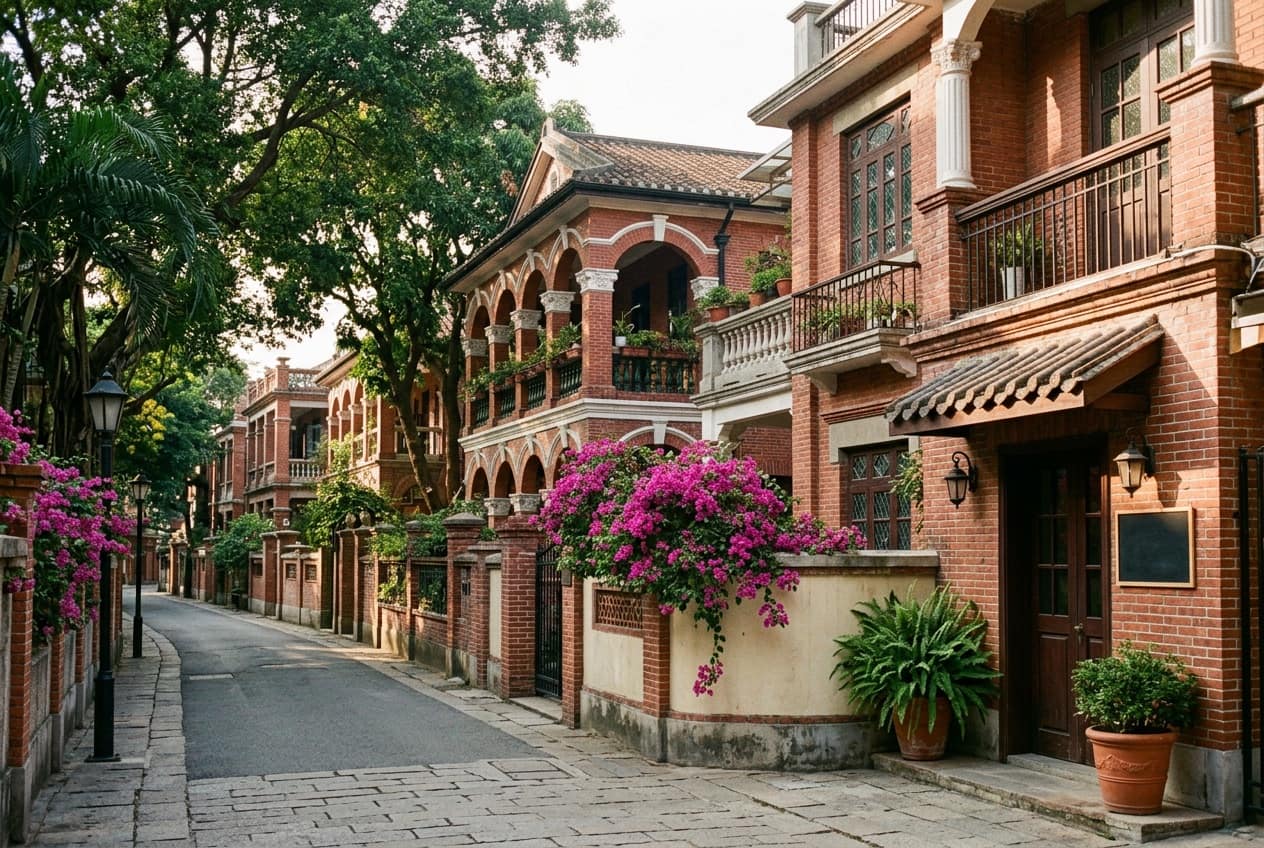
Dongshankou is the quarter most visitors to Guangzhou never hear about. In the 1920s and 30s it was a villa district for officials and businessmen, and what it left behind is a dense stock of red-brick Western-style houses — the Xinhepu area still holds its Republican-era street grid. Red brick, arched verandas, bougainvillea spilling over garden walls, and around most corners an independent café or boutique fitted into one of the old houses. Where the old Xiguan quarters are busy and working-class, this one is quiet — it rewards an unhurried walk, and young Guangzhou treats it as the city's café district.
- Entry
- Free
- Core area
- Xinhepu historic district
- Architecture
- Republican-era red-brick villas
- Bloom
- Bougainvillea in winter–spring
- Metro
- Dongshankou, Lines 1 and 6
- Allow
- 2–3 hours
- Note
- A living neighbourhood — photograph with care
2Tickets
Dongshankou is a free, open residential quarter with no ticket and no reservation. A handful of villas admit visitors as small galleries, usually free or low-cost with hours posted on site. Most of the houses are private homes or institutional offices — look from the street, and do not enter courtyards. There is no single attraction here, which is precisely the point.
| Quarter stroll | Free | Open streets through the day; no booking. |
|---|---|---|
| Villa galleries | Free / low cost | A few houses run exhibitions; hours posted on site. |
| Cafés and boutiques | Pay as you go | Villa conversions — the setting is a large part of what you pay for. |
There is no ticket because there is no gate:The right way to use Dongshankou is to head for the Xinhepu area and then wander without a destination. Detailed route planning works against it — the discoveries are at the corners.
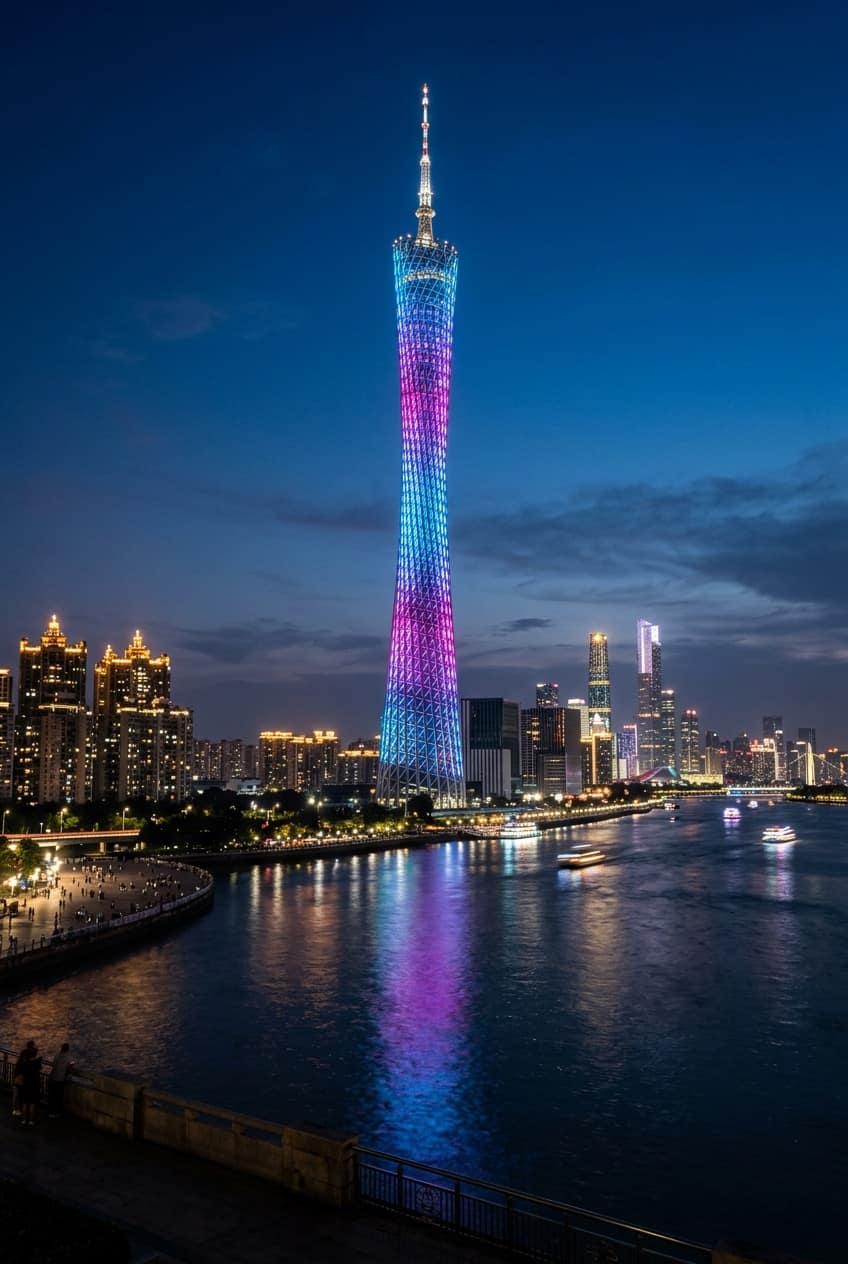
Most of these are free — only going up the tower costs real money:Shamian, Yongqing Fang and Dongshankou are free open quarters, and Chen Clan Hall is a low-priced museum ticket. The only substantial cost in this group is ascending Canton Tower — and even there, the ground-level and river views cost nothing or very little. Decide what you actually need before buying anything.
3Getting There
Dongshankou is in Yuexiu district, and the metro exit puts you at the edge of the quarter.
Dongshankou station on Lines 1 and 6 — the quarter starts at the exit.
About ten minutes from the Beijing Road area.
Roughly twenty minutes from Beijing Road.
Metro to the edge, then everything on foot:The core can be crossed in about an hour of walking, but the pace that suits it is two to three hours with stops. No transport is needed inside the quarter.
4Route & Photos
A two-by-two grid approach works well: take the two main east–west streets as your horizontal axes and two north–south streets as verticals, which loops in the blocks where the villas are densest.
Afternoon light suits red brick:Mid-to-late afternoon side light is when the brick reads warmest. Bougainvillea is at its fullest across the winter and spring months, which roughly doubles how photogenic the walls look.
Recommended Route
- 1
Start at the metro exit
The shopfronts and coffee smell near the station work as a warm-up.
- 2
The densest villa street
Red brick, arcades and bougainvillea — the combination this quarter is known for.
- 3
The canal-side street
Several small bridges cross the channel; shoot villa reflections from them.
- 4
School and church stretch
A century-old school and a red-brick church form one continuous run of buildings.
- 5
Villa gallery and memorial area
A signature villa gallery runs exhibitions, with a free memorial site next to it.
- 6
Finish in a café
Pick any well-regarded villa café — the proper ending here is the length of one coffee.
Best Photo Spots
Red-brick walls with bougainvillea
Brick, blossom and arched veranda together — the signature frame, best in afternoon side light.
From the canal bridges
Reflections and villa silhouettes, and reliably free of crowds.
Lane corners
The quarter's character is in the corners rather than any single facade.
5Food & Stay
| Villa cafésCoffee and dessert | Mid-range | Extremely dense here; the setting is the product. |
|---|---|---|
| Neighbourhood bistrosLight meals | Mid-range | Solid everyday options around the quarter's edges. |
| Beijing Road areaProper meals | Wide range | One metro stop or a short taxi away, with far more choice. |
Coffee is the headline, not a side note:Sitting in one good villa café does more for the experience than speed-walking past ten more houses. Budget time for it rather than treating it as a break.
Where to Stay
- Staying in Yuexiu keeps this quarter and the Beijing Road area within a walk or one metro stop.
- It is a lived-in part of the old city rather than a tourist zone, which is much of the appeal.
6Tips & Pitfalls
- Prices, opening hours, reservation rules and closing days change; verify the official notice for your date.
- Carry your passport — real-name reservation and ticket collection may require the original document.
- Mid-to-late afternoon is the light window — the brick is warmest and the walk is most pleasant.
- Bougainvillea peaks across winter and spring; outside that window the walls are plainer.
- Put a café on the itinerary deliberately — 'villas plus coffee' is what the quarter actually is.
- Skip the detailed plan; circle the Xinhepu area on a map and let the corners do the work.
- Most villas are homes or offices. Exteriors from the street are fine; do not enter courtyards or point a lens into windows.
7Frequently Asked Questions
Does Dongshankou charge admission?
No. It is a free, open residential quarter accessible through the day. A few villas run free or low-cost exhibitions as small galleries, but most of the houses are private homes or offices — exteriors from the street only.
How is Dongshankou different from Yongqing Fang and Shamian Island?
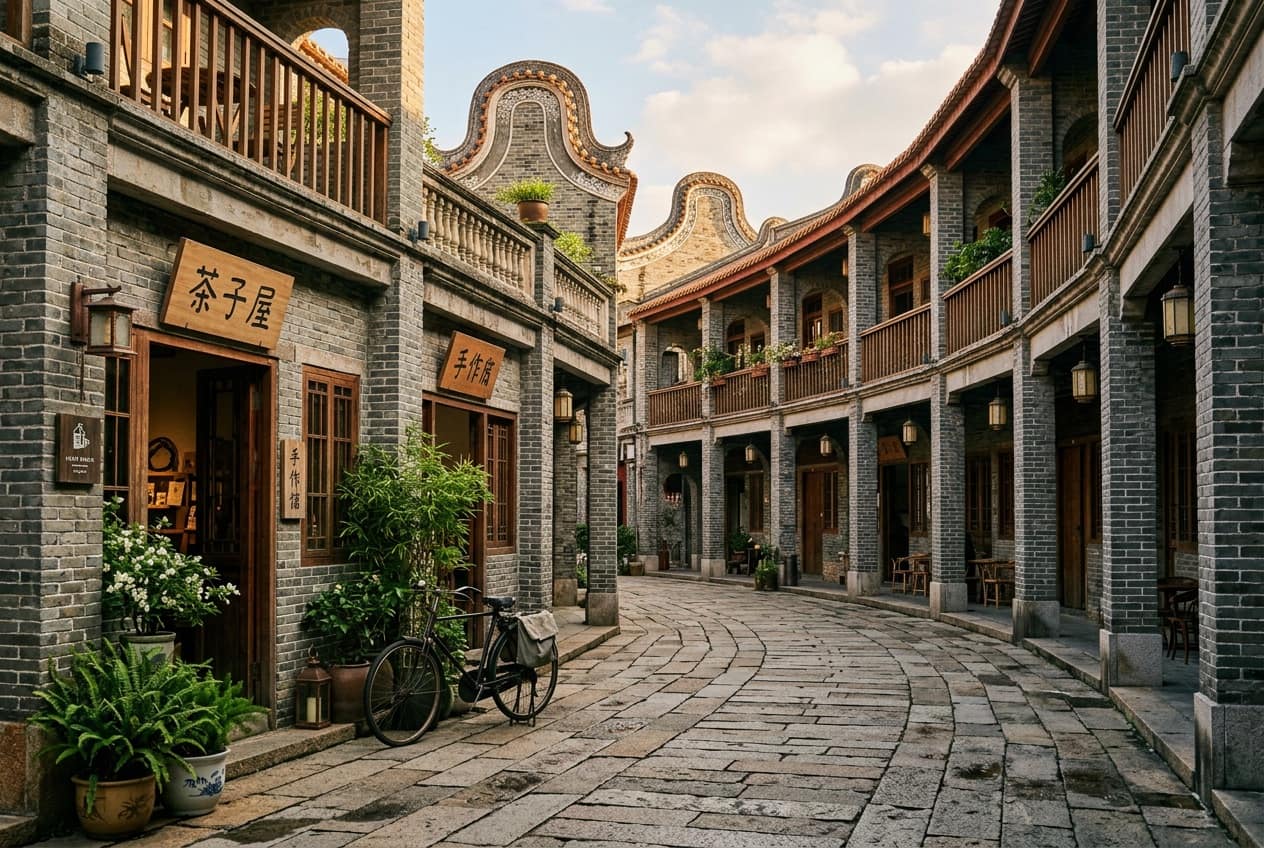
Three quite different moods: Shamian is concession-era European architecture, Yongqing Fang is working-class old Xiguan turned creative quarter, and Dongshankou is quiet Republican-era red-brick villas plus cafés. With enough time give each half a day; otherwise pick by which atmosphere appeals.
What is the best season for photos in Dongshankou?
The winter and spring months, when the bougainvillea is at its fullest — red brick under magenta blossom is the frame this quarter is known for. On any given day, mid-to-late afternoon side light is the best window.
Is Dongshankou worth visiting if I do not drink coffee?
Yes, though you lose part of the point. The architecture walk stands on its own — a continuous stock of Republican-era villas in a quiet, lived-in street grid is rare. But the cafés are how locals actually use the quarter, and a tea or dessert stop serves the same purpose.
How long should I spend in Dongshankou?
Two to three hours. The core can be crossed on foot in about an hour, but the rhythm that suits it is a slow wander plus one café stop — being unhurried is essentially the whole point of coming here.
Combine With
Other Guangzhou sights that genuinely pair well with this one
Before You Go
The practical guides you will actually need here
Sort Your Visa First
All Guangzhou attractions
Yesim
Global eSIM with unlimited data options
Yesim offers travel eSIMs with unlimited data plans for China, which is useful if you stream video or use data-heavy apps. Like other travel eSIMs, it routes through an overseas gateway so blocked sites work without a VPN. Setup is via their app — scan a QR code and you are online on landing.
- Unlimited data plans available — no worrying about running out
- Overseas gateway means Google, WhatsApp and Instagram work without VPN
- App-based setup, activate before you fly
- Plans for 3 to 30 days
Disclosure: this is an affiliate link. We may earn a small commission if you buy through it, at no extra cost to you. We only recommend products we would use ourselves.
GoChinaTravel Editorial Team
Our team of China travel researchers combines on-the-ground contributor insights, official government sources, and traveler community feedback to create the most detailed English-language China guides available. Every guide is fact-checked against primary sources (NIA, 12367, official attraction websites, Railway 12306) before publication.