1Highlights
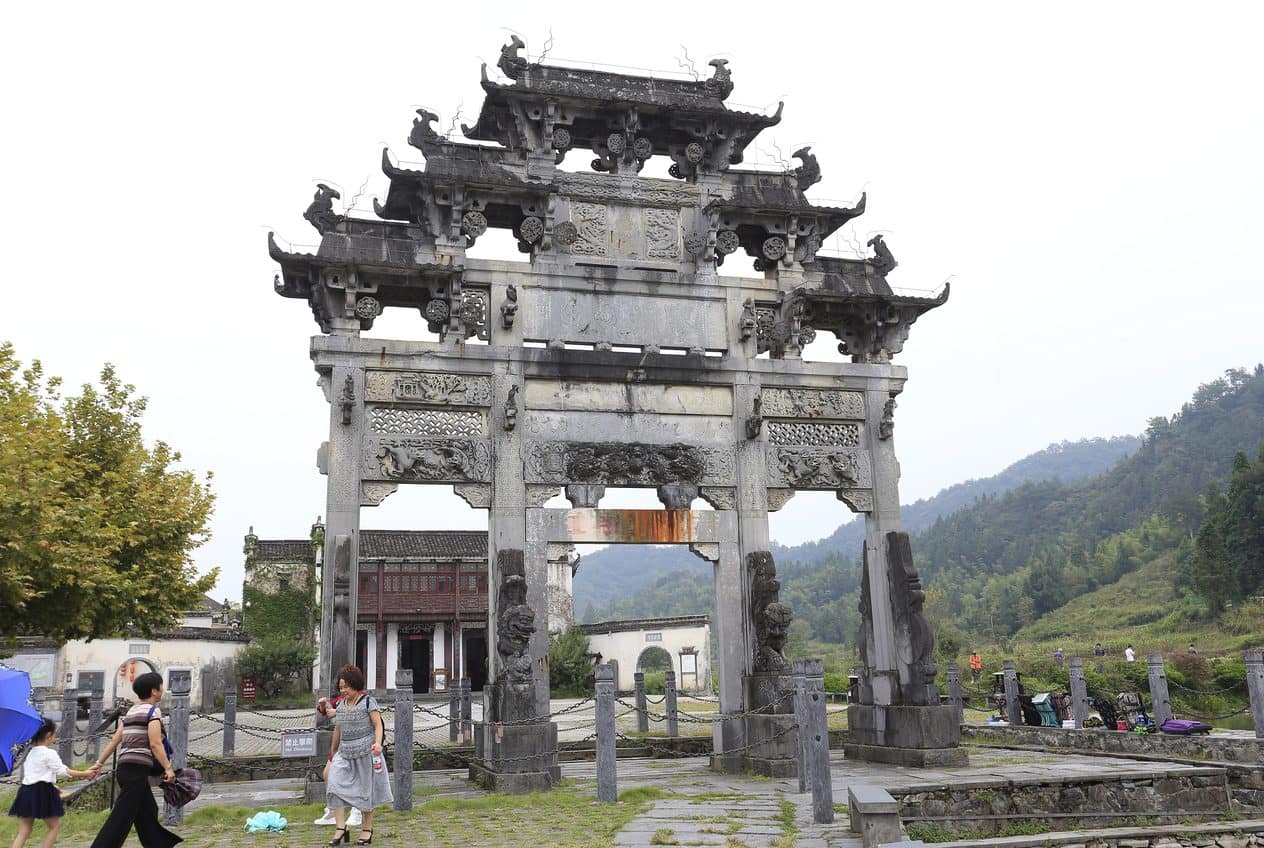
Xidi and Hongcun were inscribed together by UNESCO in 2000, and people routinely treat them as interchangeable. They are not. Hongcun's subject is water — the ponds, the reflections, the channel. Xidi's subject is the building itself. At the village entrance stands the Hu Wenguang memorial arch, a Ming-dynasty stone structure of three bays and four pillars that is the single most recognisable object in either village; behind it sit the great Jing'ai Hall and a grid of deep lanes where every doorway is framed in carved brick and every parlour hung with couplets. It is markedly quieter than Hongcun, which changes how you use it: this is a village to walk slowly, read the inscriptions, and look up. If you only have time for one and you want detail and space rather than the postcard, Xidi is the answer — and it is the one where hiring a guide genuinely changes what you see, because the carvings and couplets are the autobiography of a merchant class and will otherwise read as decoration.
- Online booking
- ¥94, name-verified
- At the window
- ¥104
- Concession
- ¥52 — students, over-60s
- Hours
- 07:30–18:00, entry closes 17:30
- Landmark
- Hu Wenguang arch, Ming dynasty
- Heritage
- UNESCO, 2000, with Hongcun
- To Hongcun
- ¥11 shuttle, about 20 minutes
- Suggested time
- 2–3 hours
2Tickets
Admission is ¥94 booked online in advance, name-verified, against ¥104 at the window — the same ¥10 gap as Hongcun, and the same advice: book the night before and scan in. Concessions are ¥52 for full-time students and visitors aged 60 and over, on production of original documents; exact age bands are set on the booking page. Hours are 07:30–18:00 with entry closing at 17:30, and the village keeps its lighting on after dark, which is one of the better reasons to stay the night. On the combined Hongcun–Xidi ticket: the two villages are ¥94 each, so ¥188 bought separately, and combined prices are quoted inconsistently across channels — compare whatever you are offered against ¥188 before committing, because the difference is often trivial. Official live prices and notices govern.
| Xidi, booked online | ¥94 | Name-verified. Book the night before and enter by ID scan. |
|---|---|---|
| Xidi, at the window | ¥104 | The same ticket for ¥10 more. |
| Concession | ¥52 | Full-time students and ages 60 and over, with original documents. Age bands per the booking page. |
| Xidi → Hongcun shuttle | ¥11 | About 20 minutes. Morning in Xidi, afternoon in Hongcun is the better order. |
| Xidi → Huangshan North | ¥26 | Scenic-area through coach. |
| Xidi → Huangshan South Gate | ¥28 | Which is how you put the village and the mountain in one trip. |
Do Xidi first, Hongcun second:If you are doing both in a day, this order works better than the reverse, for three reasons. Xidi is quieter in the morning, which suits a village whose rewards are small and detailed — carved lintels, hall couplets, the arch in early side light. The ¥11 shuttle takes about twenty minutes, so you arrive in Hongcun around the middle of the day with the afternoon ahead. And Hongcun is the one that improves as the light drops: South Lake in late afternoon, then lanterns. Reversing it puts you in Xidi's lanes when the tour flags arrive and in Hongcun when the pond is at its most crowded.
People live here, and the antiques are mostly new:Two things to get right. First, Xidi is an inhabited village, not an open-air museum — many of the courtyard houses along the lanes are private homes that are not open to visitors, and a door that is closed should stay closed. The ones you may enter are signposted. Second, the village has a lot of antique shops, and items presented as 'old Huizhou ink stones', 'Ming and Qing woodcarving' or family heirlooms are overwhelmingly recent craft pieces. There is nothing wrong with buying one as a souvenir at a souvenir price; the mistake is paying a collector's price for it. If you want something genuinely made rather than genuinely old, the ink and inkstone workshops on Tunxi Old Street are the better place, and they will tell you whether a piece is hand-carved or machined.
3Getting There
Xidi is also in Yixian county, about twenty minutes from Hongcun and very close to the county town — which makes the county town a cheaper and perfectly practical base for seeing both villages.
Scenic-area through coach from the station transport centre
Local bus or taxi from the nearest high-speed station
Village-to-village shuttle, about 20 minutes
Direct to the mountain's main gate at Tangkou
Yixian county town is the cheap base nobody books:Guesthouses inside Xidi run about ¥180–300 and are genuinely worth one night — the village after the day visitors leave, with its lighting on and nobody in the lanes, is a different place. But if you are seeing both villages and want to spend less, chain hotels in Yixian county town are roughly ¥160–260, have proper parking, and are a short ride from both Xidi and Hongcun. The trade-off is clear: you lose the empty village at dawn and dusk, and you save money and get a reliable room. Staying in the villages is for photographers; staying in the county town is for travellers covering ground.
4Route & Photos
Main street and side lanes interlock, and two to three hours covers it: Hu Wenguang arch → Jing'ai Hall → Zhuimu Hall → West Garden → Taoli Garden → Ruiyu Courtyard → the high ground behind the village for the gable panorama. The instruction that matters most is to look up — the carving is in the lintels and the eaves, not at eye level.
Climb to the back of the village for the one view that explains it:Everything inside Xidi is seen at close range — a doorway, a window, a beam — and the effect is cumulative rather than immediate. The high ground behind the village is where it resolves: from up there you see layer on layer of horse-head gables, hundreds of them stepping down the slope, and the thing clicks into place as a single piece of planning rather than a collection of houses. It is a short climb and most visitors never make it, which also means you get it to yourself. Go late in the afternoon when the gables throw shadows on one another.
Recommended Route
- 1
Hu Wenguang memorial arch
Ming dynasty, three bays and four pillars, and the village's face. Early morning side light brings out the relief carving.
- 2
Jing'ai Hall
The Hu clan's ancestral hall, and the largest interior volume in the village. Built to impress a family into behaving.
- 3
Zhuimu Hall
Another hall, with finer beam and bracket carving than its neighbours — worth the detour for the roof structure alone.
- 4
West Garden
A small garden known for its pierced stone window screens. Where the merchants spent money on being tasteful rather than grand.
- 5
Taoli Garden
A merchant's residence doubling as a private school — woodcarving and couplets together, which is Xidi's whole argument in one building.
- 6
Ruiyu Courtyard
Known for its parlour couplets, including the famous one with deliberately altered characters. Ask what it says.
- 7
High ground behind the village
The gable panorama, and the most spectacular image Xidi offers. A short climb almost nobody bothers with.
Best Photo Spots
The arch in early side light
Arch plus flagstones, shot low and into the light before the first groups arrive. It is the one frame that says Xidi.
Layered gables from the back of the village
Hundreds of gables stepping down the slope. Late afternoon, when they shadow each other.
5Food & Stay
| Farmhouse restaurants in the villageStinky mandarin fish, hairy tofu, stone-ear chicken soup | ¥50–100 pp | Slightly cheaper than inside Hongcun, and less rushed. Ask prices before ordering. |
|---|---|---|
| Yixian county townHuizhou restaurants and street food | ¥30–60 pp | Where local people eat, a short ride away. Try the one-pot layered stew if there are two or three of you. |
6Tips & Pitfalls
- Book online: ¥94 against ¥104 at the window. Same ticket, no queue.
- Xidi in the morning, Hongcun in the afternoon. Xidi's details reward quiet; Hongcun improves as the light drops.
- Look up. The brick, wood and stone carving is in the lintels, brackets and eaves — walking at eye level, you will miss the point of the village.
- Get a guide or an audio guide. The couplets and carvings are a merchant family's autobiography; without the reading they are just ornament.
- Climb to the high ground behind the village. The layered gable panorama is the best thing here and almost nobody walks up to it.
- Treat the antique shops as souvenir shops. 'Old' ink stones and 'Ming' woodcarving are overwhelmingly recent craft pieces.
- Closed doors are private homes. People still live along these lanes; the open houses are signposted.
7Frequently Asked Questions
How much is a Xidi ticket?
¥94 booked online in advance against ¥104 at the window, with ¥52 concessions for full-time students and visitors aged 60 and over on production of original documents; the exact age bands are set on the booking page. Official live prices govern.
Which is better, Xidi or Hongcun?
They are answering different questions. Hongcun gives you the photograph — Moon Pond, South Lake, reflections — and the crowd that comes with it. Xidi gives you architecture and quiet: the Ming memorial arch, the ancestral halls, and carving in much greater concentration. If you can only pick one, pick by whether you came to photograph or to look closely. If you have a day, do both; the shuttle between them is ¥11 and twenty minutes.
Do I need a guide at Xidi?
More than at most places, yes. Xidi's value is in the hall couplets, the carved lintels and the family stories behind them — a merchant class writing its own biography into its houses. Without that reading the village is a pleasant walk past attractive doorways. A guide, an English-language tour or at least an audio guide changes it substantially.
Is it worth staying overnight?
Yes, if you want the village without the day visitors. Xidi keeps its lighting on after dark and goes genuinely quiet once the coaches leave, and courtyard guesthouses inside run about ¥180–300. If you would rather save money, chain hotels in Yixian county town are roughly ¥160–260 and are a short ride from both villages.
What should I know about shopping here?
That almost nothing sold as antique is. Items described as old Huizhou ink, Ming or Qing woodcarving, or family heirlooms are overwhelmingly recent craft work — fine as souvenirs at souvenir prices, a bad idea at collector prices. For ink stones and inkstones that are honestly described as hand-made or machined, the workshops on Tunxi Old Street are a better bet. Keep receipts for anything substantial.
Combine With
Other Huangshan sights that genuinely pair well with this one
Before You Go
The practical guides you will actually need here
All Huangshan attractions
Klook
Book tours, tickets and activities in China
Klook lists tickets, tours and activities for many major attractions in China with an English-language booking flow. Product inclusions, available payment methods, reservation steps, ID requirements, voucher redemption and cancellation terms vary by listing and attraction, so check the product page and the attraction's official rules before paying.
- English-language listings for attraction tickets, guided tours and day trips
- Available payment methods are shown on the individual checkout page
- Reservation and real-name ID details vary by attraction and product
- Voucher format and on-site redemption instructions are product-specific
- Read the cancellation policy and official attraction notices before booking
Disclosure: this is an affiliate link. We may earn a small commission if you buy through it, at no extra cost to you. We only recommend products we would use ourselves.
GoChinaTravel Editorial Team
Our team of China travel researchers combines on-the-ground contributor insights, official government sources, and traveler community feedback to create the most detailed English-language China guides available. Every guide is fact-checked against primary sources (NIA, 12367, official attraction websites, Railway 12306) before publication.