Peaks & Hui Villages
Huangshan — The Yellow Mountain, and the Villages at Its Foot
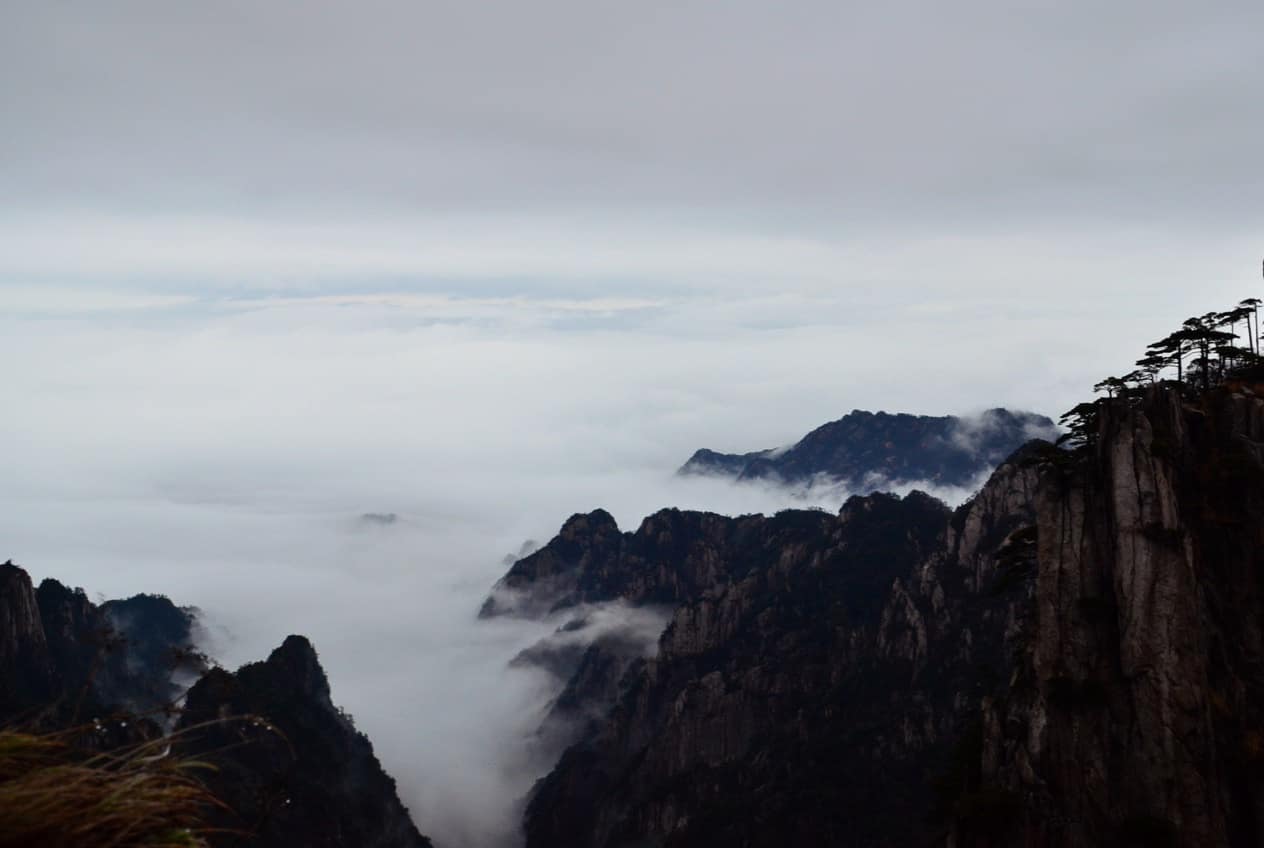
China's most famous mountain — granite peaks above a sea of clouds, and the white-walled Hui villages below it
📅Best Time
April–May and September–November
🗓️Stay
2–3 days (recommended)
✨Vibe
Mountain · Villages · Hui culture
Huangshan is the landscape that appears in a thousand Chinese ink paintings: granite peaks rising out of a rolling sea of cloud, ancient pines clinging to the cliffs, and sunrises that turn the rock gold. It is a UNESCO site for both nature and culture, and it draws enormous crowds — but the reward is one of the great mountain experiences on earth. Below it sit the white-walled, black-tiled villages of Huizhou, Hongcun and Xidi among them, where Ming and Qing houses still line the canals. Treat this as a two-part trip: the mountain, then the villages. And budget properly — entry, shuttle and cable car are three separate charges that together exceed ¥390 before you have eaten anything.
✨ City Highlights
🌲
The summit trails and Greeting Pine
Stone-stepped paths link the granite peaks in a loop past the famous Greeting Pine. The distances are longer than most visitors expect — thousands of steps, not a stroll.
🌅
Sunrise at Guangmingding
The classic Huangshan image, and the single reason to sleep on the mountain. Get up before dawn with a torch; on a clear morning it justifies the cold start.
🥾
West Sea Grand Canyon
The mountain's most dramatic section — a deep gorge crossed by a hanging trail, quieter than the main peaks. The gorge's own funicular is a separate ¥100 each way.
🏘️
Hongcun village
A UNESCO Hui village of white walls and black tiles around a moon-shaped pond, used as a location in Crouching Tiger, Hidden Dragon. ¥94; the pond reflection is best early.
🏡
Xidi village
The quieter alternative — a maze of Ming and Qing houses and carved doorways. Also ¥94. Short on time? Hongcun for the iconic pond, Xidi for fewer people.
🏮
Tunxi Old Street
Back in the city, a restored Ming-Qing commercial street for Hui snacks, tea and an easy evening walk after a day on the steps.
📌 Insider Tips
- ▸Booking is now entirely online and名-verified — the scenic area does not sell tickets at the gate. Reserve on the official Huangshan platform before you travel, and note that no-showing twice can suspend your booking privileges.
- ▸Entry, the shuttle bus and the cable car are three separate charges. Peak-season entry is ¥190, the shuttle is ¥38 return, and a classic Yungu-up / Yuping-down cable combination is ¥170 — about ¥398 before food.
- ▸One ticket is valid for 72 hours from first scan, with unlimited re-entry. That makes a two-day split — summit one day, West Sea Canyon the next — cost the same as a single day.
- ▸The last cable car down runs around 17:10, so you need to be at the station by about 16:00. Missing it means walking thousands of steps in fading light.
- ▸Staying one night on the mountain (Beihai or Guangmingding) is the only reliable way to catch sunrise and beat the day-trippers. Beds are limited, basic for the price and sell out — book well ahead, and expect dormitories or simple rooms.
- ▸The summit is around 1,800m, wind-chilled and can be 10 degrees colder than the town below. Layers and a light rain jacket are essential even on a clear morning.
- ▸Hongcun and Xidi are separate ¥94 tickets and there is a direct shuttle between them for about ¥11. Both are worth it; if time is short, pick one.
🗓️ Day-by-Day Itinerary
Curated routes — what to do, hour by hour
⛰️
Day 1
Up the Mountain & Summit Trails
Shuttle, cable car and the summit loop — then sleep up there.
- 🎫07:30
Confirm your online reservation
There are no gate sales. Have your named booking and ID ready before you reach the transfer centre — peak-season slots go days in advance.
- 🚌08:00
Tangkou → cable station
Take the park shuttle from Tangkou; private cars cannot go up. ¥19 each way. Start early for the first cars.
- 🚡09:00
Yungu cable car up (¥80)
The east cable car reaches the summit area in minutes. At 1,800m it is wind-chilled and about 10°C colder than below — layers and a rain jacket.
- 🌲10:00
Greeting Pine & summit trails
Walk the summit paths past the Greeting Pine, granite peaks and the sea of cloud. The loop is long and heavily stepped — allow plenty of time.
- 🍜13:00
Lunch: what you carried up
Summit prices are high and choice is limited. Buy water, flatbread and snacks in Tangkou before you board.
- 🏨16:00
Check in to your summit hotel
Beihai or Guangmingding. Basic for the price and booked out in season — this is the night that makes the sunrise possible.
- 🌄18:00
Summit sunset
If the weather holds, watch the light turn the rock gold, then get an early night.
🍜 Food Highlights
The dishes you can't leave without trying
🐟Must Try
Stinky mandarin fish
¥80-150
Lightly fermented then braised — the Hui signature, and better than it smells.
🧈Local
Hairy tofu
¥15-30
Mould-aged tofu pan-fried golden, served with chilli paste.
🥮Everyday
Huangshan baked flatbread
¥5-15
Crisp pastry with pork and pickled greens — carry these up the mountain.
🎋Classic
Bamboo shoot & cured pork
¥40-80
Mountain shoots braised with Huizhou cured pork.
🍵Iconic
Huangshan Maofeng tea
¥30-80
One of China's famous green teas, grown on these slopes.
💰 Budget (per person)
Backpacker / Mid-range / Luxury
| Category | 💚 Budget | ✨ Mid-range | 💎 Luxury |
|---|---|---|---|
| 🏨Accommodation | ¥60-200 | ¥250-500 | ¥900+ |
| 🍜Food per day | ¥70-150 | ¥180-300 | ¥450+ |
| ⛰️Mountain entry (peak season) | ¥190 | ¥190 | ¥190 |
| 🚌Park shuttle (return) | ¥38 | ¥38 | ¥38 |
| 🚡Cable cars (Yungu up + Yuping down) | ¥170 | ¥170 | ¥270 (+ canyon funicular) |
| 🏘️Hongcun + Xidi | ¥94 (one village) | ¥188 (both) | ¥188 |
| Total | ¥450/day | ¥850/day | ¥1,800+/day |
The mountain is expensive by Chinese standards: entry ¥190, shuttle ¥38 and the classic cable-car pair ¥170 come to about ¥398 before a single meal. One useful offset — the entry ticket is valid 72 hours with unlimited re-entry, so splitting the mountain across two days costs no more in tickets. A summit bed pushes the budget up sharply.
🏨 Recommended Hotels
| 🎒 | Budget | Guesthouses & inns | Tangkou / Tunxi | ¥60-200 |
| 🏨 | Mid-range | Hotels | Tunxi / Tangkou | ¥250-500 |
| ⛰️ | On-mountain | Beihai / Guangmingding | Summit | ¥500-1,500 |
| 🏡 | Boutique | Hui courtyard hotels | Hongcun / Xidi | ¥400-1,000 |
🗺️ Full Guide
🍜
Eat
- Stinky mandarin fish (臭鳜鱼)
Hui cuisine's signature: mandarin fish lightly fermented then braised. It smells far worse than it tastes, and it is genuinely good. ¥80-150.
- Hairy tofu (毛豆腐)
Tofu aged until a white mould forms, then pan-fried golden and served with chilli paste. ¥15-30 and one of the most distinctive things you will eat in China.
- Bamboo shoot with cured pork
Mountain shoots braised with Huizhou cured pork — the home-style dish to order in a village lunch. ¥40-80 with rice.
- Huangshan baked flatbread (黄山烧饼)
Crisp lard pastry filled with pork and pickled mustard greens, ¥5-15. The thing to carry up the mountain instead of paying summit prices.
🏨
Stay
- Tangkou (the mountain base)
The village at the south gate, closest to the shuttle and cable stations. Best if you want the earliest possible start, and cheapest of the options at ¥60-200 for a guesthouse.
- On the mountain (Beihai / Guangmingding)
The only way to see sunrise properly. Limited, basic and expensive at ¥500-1,500, and it sells out weeks ahead in season. Book through the official channel, not through touts.
- Tunxi
The city proper, around the old street and near Huangshan North station and the airport. Best base for a village day and for arriving or leaving by rail.
- Hongcun / Xidi
Converted Hui courtyard hotels inside the villages themselves, ¥400-1,000. Staying overnight lets you see the moon pond before the tour buses arrive.
🚄
Getting Around
- High-speed rail
Huangshan North station is about 2.5h from Shanghai and well connected to Hangzhou and Hefei. It is the usual way in, and about 1h from the mountain base by shuttle or taxi.
- The park shuttle
Private cars cannot enter the scenic area. Everyone transfers to the park shuttle at a transfer centre — ¥19 each way, ¥38 return, and not optional in practice.
- Cable cars
Yungu (east) ¥80 one way, Taiping ¥80, Yuping (south) ¥90, plus the West Sea Canyon funicular at ¥100. None are included in the entry ticket. Last cars down run around 17:10.
- To the villages
Hongcun and Xidi are in Yixian, roughly an hour from Tunxi. Direct shuttles run from the scenic area and between the two villages (about ¥11 Xidi to Hongcun).
✅ Pre-Departure Checklist
Tick these off before you leave home
⚠️ Heads-Up & Things to Avoid
- ⚠Booking is fully online and name-verified, with no gate sales. Peak-season slots go days ahead, and missing two reservations without cancelling can suspend your booking privileges. Reserve on the official platform, never from a tout.
- ⚠The last cable cars down run around 17:10 and you should be at the station by about 16:00. If you miss them the only way down is thousands of steps on foot, in fading light.
- ⚠Weather can shift from clear to white-out fog in under an hour, hiding the views entirely. Build in flexibility and do not plan the whole trip around one summit day — the 72-hour ticket makes swapping days cheap.
- ⚠On-mountain accommodation is limited, basic for the price, and sells out. Expect dormitories or simple rooms, and book through the official channel.
- ⚠The trails involve far more steps than most visitors expect. Be realistic about your fitness, especially if you are considering skipping the cable car.
Where to Go Next
Routes travellers actually take from here — with rail times and why the pairing works.
Before You Go
The practical guides you'll want open on your phone while you're here.
What to packA China packing list built around what is genuinely hard to get locally: plug types, medication, the apps to install before you fly, documents that matter, and what to leave at home.Best time to visitWhen to visit China by month and region, why Golden Week and Chinese New Year are the two weeks to avoid, and how to pick dates for the Great Wall, Guilin, Harbin or Yunnan.High-Speed RailHow to use China's high-speed rail network as a foreign visitor: booking with a passport, what G, D, C, K and T trains mean, seat classes compared, station procedures, luggage rules and the routes worth taking.Hotels & check-inWhy some Chinese hotels refuse foreign guests, how police registration works, what to book and where, Airbnb legality, deposits, and how to avoid arriving somewhere that cannot check you in.
Explore other cities
GoChinaTravel Editorial Team
Our team of China travel researchers combines on-the-ground contributor insights, official government sources, and traveler community feedback to create the most detailed English-language China guides available. Every guide is fact-checked against primary sources (NIA, 12367, official attraction websites, Railway 12306) before publication.