
Old Town & Snow Mountain
Lijiang — UNESCO Old Town, Naxi Culture and the Gateway to Tiger Leaping Gorge
A UNESCO old town of canals and cobbles beneath a 5,596m glacier peak
📅Best Time
Mar–May and Sep–Nov
🗓️Stay
3–4 days (recommended)
✨Vibe
Old town · Mountains · Naxi culture
Lijiang sits at 2,400 metres in northwest Yunnan, in the homeland of the Naxi people. The old town is a maze of cobbled lanes, running canals and tiled roofs — a UNESCO World Heritage site, thoroughly commercialised, but still genuinely beautiful at six in the morning before the crowds arrive. What lifts Lijiang above a pretty old town is what surrounds it: Jade Dragon Snow Mountain, Tiger Leaping Gorge, and the road north to Shangri-La. It is the best base in China for high-altitude mountain scenery that requires no permit.
✨ City Highlights
🏘️
Lijiang Old Town (Dayan)→
The UNESCO core: 800 years of Naxi architecture and canals, centred on Sifang Street. Go at 6-8am for the version worth seeing; by noon it is a shopping street.
Full attraction guide🏔️
Jade Dragon Snow Mountain→
A 5,596m glacier massif 25km north, with a cable car to 4,506m. Budget for three separate charges — entry, cable car and shuttles — not one ticket. Book the earliest slot.
Full attraction guide💧
Blue Moon Valley→
A chain of startlingly turquoise glacial lakes at the foot of the snow mountain, usually included in the mountain ticket. Worth an hour even if you skip the summit.
Full attraction guide🌉
Shuhe & Baisha old towns→
Shuhe (4km out) is Dayan with a third of the crowds. Baisha (10km) is the original Naxi settlement with 600-year-old temple frescoes.
Full attraction guide🏞️
Tiger Leaping Gorge→
One of the world's deepest river canyons, where the Yangtze squeezes between two 5,000m ranges. 2h by road; a long day trip or a two-day high-trail trek.
Full attraction guide🎼
Naxi music & Dongba culture
Dongba script is widely described as one of the very few pictographic writing systems still used ceremonially. The Dongba museum is small but informative; evening Naxi music is worth one night.
📌 Insider Tips
- ▸Lijiang is 2,400m and the cable car takes you to 4,506m in fifteen minutes. Spend a full day in town first, drink far more water than usual, skip alcohol the night before, and walk slowly at the top.
- ▸Oxygen canisters are sold cheaply at the mountain base and are genuinely useful — carry one up.
- ▸Go into the old town between 6 and 8am. The lanes are empty, mist sits on the canals, and it looks like the photographs. By 10am it is packed. The difference is dramatic.
- ▸Book the Jade Dragon cable car as soon as your date is fixed — there is a daily carrying cap and it sells out in season. Take the earliest slot, as clouds close in on the summit through the day.
- ▸The area levies an old-town maintenance fee of around ¥50, checked at managed sites like Black Dragon Pool rather than at the town entrance, and it covers Shuhe too. Pay it at an official counter and keep the receipt for your whole stay.
- ▸Two days in the old town is plenty. Use Lijiang as a base: the snow mountain, Tiger Leaping Gorge, and the 3-hour drive north to Shangri-La are what make the trip.
- ▸At 2,400m the daily swing is large — a 22-degree April afternoon becomes 6 degrees after dark. Bring layers and a proper jacket regardless of season.
🍜 Food Highlights
The dishes you can't leave without trying
🫓Must Try
Naxi baba flatbread
¥10-20
Layered pan bread, savoury with ham or sweet with brown sugar.
🧀Local
Grilled goat cheese
¥15-25
A Naxi speciality found at street stalls — firm, salty, blistered.
🍄Signature
Wild mushroom hotpot
¥150-300
June to September wild season. Porcini, chanterelle, matsutake.
🍖Classic
Cured pork rib hotpot
¥120-200
The Naxi celebration dish, smoky and slow-simmered.
🍜Everyday
Crossing-the-bridge noodles
¥20-40
Yunnan's most famous dish. A proper local breakfast.
💰 Budget (per person)
Backpacker / Mid-range / Luxury
| Category | 💚 Budget | ✨ Mid-range | 💎 Luxury |
|---|---|---|---|
| 🏨Accommodation | ¥60-250 | ¥300-600 | ¥900+ |
| 🍜Food per day | ¥80-150 | ¥200-350 | ¥500+ |
| 🏔️Jade Dragon Snow Mountain | ¥400 | ¥500 | ¥800 (private car) |
| 🏞️Tiger Leaping Gorge | ¥200 | ¥350 | ¥600 (guided) |
| 🎟️Old-town fee & attractions | ¥50-120 | ¥200 | ¥300+ |
| Total | ¥300/day | ¥750/day | ¥1,800+/day |
Lijiang is cheap to stay in but the day trips are not — the snow mountain alone is ¥400-500. A 4-day trip on a mid budget runs about ¥3,000 excluding transport to Lijiang.
🏨 Recommended Hotels
| 🎒 | Budget | Old-town hostels | Dayan / Shuhe | ¥60-250 |
| 🏡 | Mid-range | Naxi courtyard guesthouses | Old town / Shuhe | ¥300-600 |
| 🏨 | Practical | Chain hotels | New town | ¥200-400 |
| ✨ | Luxury | Banyan Tree / Amandayan | Hillside, snow-mountain views | ¥1,500+ |
🗺️ Full Guide
🍜
Eat
- Naxi baba & grilled goat cheese
Naxi cuisine's two staples: a layered wheat flatbread cooked in a pan, and firm goat's cheese grilled until it blisters. From small storefronts, ¥10-25 — better than any restaurant version.
- Yunnan wild mushroom hotpot
Yunnan has China's best mushrooms; in the June-September wild season this is a genuine highlight. ¥150-300 for two. The broth must boil for the stated time — follow the server, it is a safety rule.
- Crossing-the-bridge rice noodles
Yunnan's most famous dish: scalding chicken broth plus raw ingredients you add in order. ¥20-40, and a proper local breakfast.
- Cured pork rib hotpot (腊排骨)
The Naxi celebration dish — smoky, salty, slow-simmered with potatoes. Go to Xiangge Li Lane or east of Sifang for local rather than tourist versions.
🏨
Stay
- Inside the old town
Hundreds of converted Naxi courtyard guesthouses at ¥200-600. No vehicles enter, so you drag luggage over cobbles, and bar streets are loud until 2am. Ask for a room away from them.
- Shuhe Old Town
4km from Dayan — same architecture and canals with a fraction of the crowds. Better courtyard guesthouses for the money, ¥20 taxi to the main town.
- New town
Modern chain hotels with lifts, parking and reliable hot water at lower prices. Right if you are using Lijiang purely as a launch point.
🚌
Getting Around
- Arriving
Lijiang Sanyi (LJG) has flights from Kunming, Chengdu, Shanghai and Beijing; airport is 28km out (¥80-100 taxi, ¥25 bus). High-speed rail from Kunming is 3.5h via Dali.
- The old town is walk-only
No cars or scooters, and the cobbles are uneven and slippery when wet. Travel with a backpack if you can, and screenshot your guesthouse's location pin — map apps struggle in the lanes.
- Day trips: charter vs tour
Chartering a car through your guesthouse (¥400-600/day, shared) gives you control over timing, which matters for the early cable car. Cheap group tours include long shopping stops.
- Continuing north
Buses and trains reach Shangri-La in about 3h and Dali in 2h. Both worth adding — Lijiang is a useful acclimatisation stop before Shangri-La at 3,200m.
✅ Pre-Departure Checklist
Tick these off before you leave home
⚠️ Heads-Up & Things to Avoid
- ⚠Going from 2,400m to 4,506m by cable car is a real physiological jolt. Headache, nausea and breathlessness are common — move slowly and descend immediately if symptoms worsen.
- ⚠Lijiang has a long-standing problem with cheap tours that are really shopping trips (jade, silver, tea) with high-pressure sales. Book through your guesthouse and confirm there are no shopping stops.
- ⚠Jade and silver shops issue certificates that mean nothing. If you are not an expert, buy only because you like it, at a price you are happy to lose.
- ⚠The old town's bar strip is amplified and runs until 2am. Check a map before booking and message the host about noise if it matters.
🎯 Lijiang Attraction Guides
One in-depth guide per sight: tickets, transport, walking route, photo spots and pitfalls
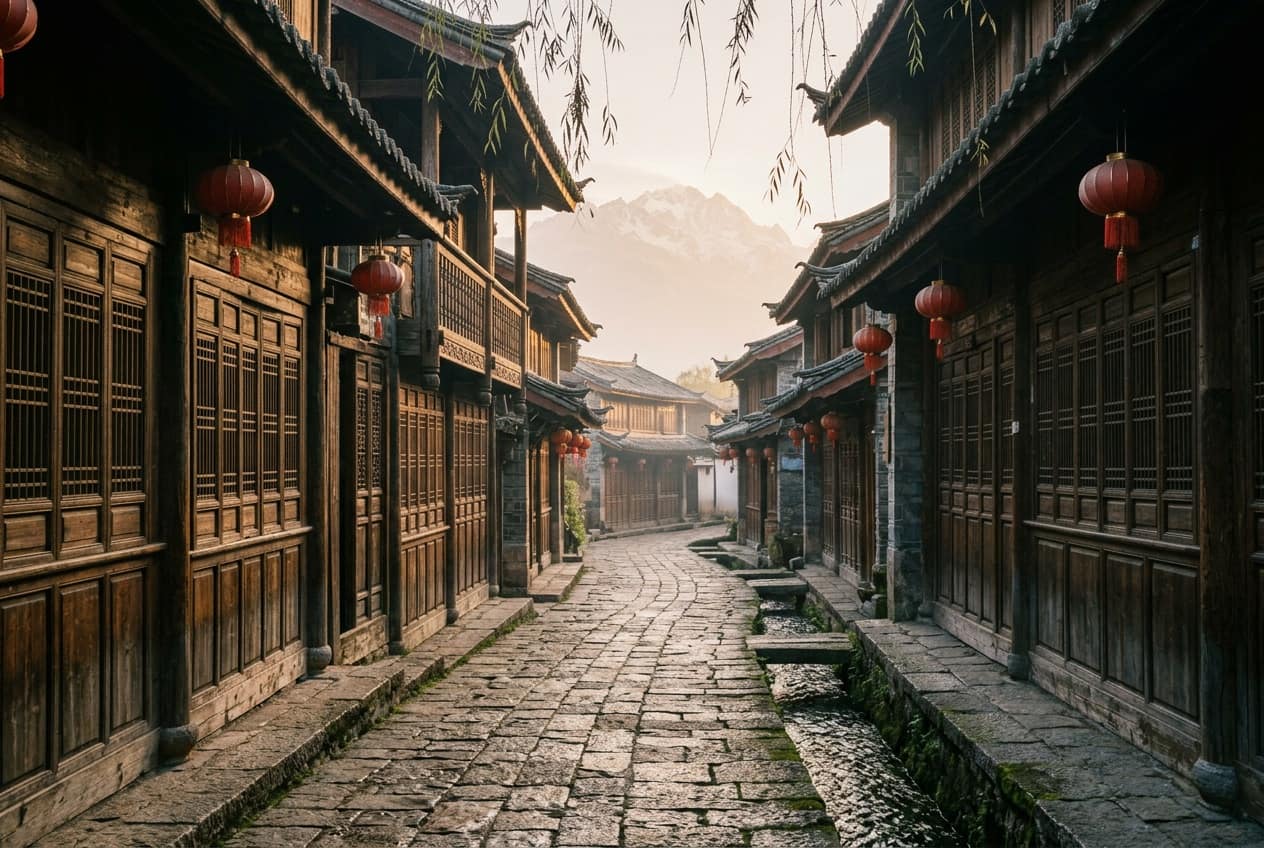
Lijiang Old Town (Dayan)
A UNESCO-listed maze of Naxi stone lanes and running water with no gate and no admission ticket — genuinely beautiful in the two hours after dawn, and a shopping street by mid-morning.
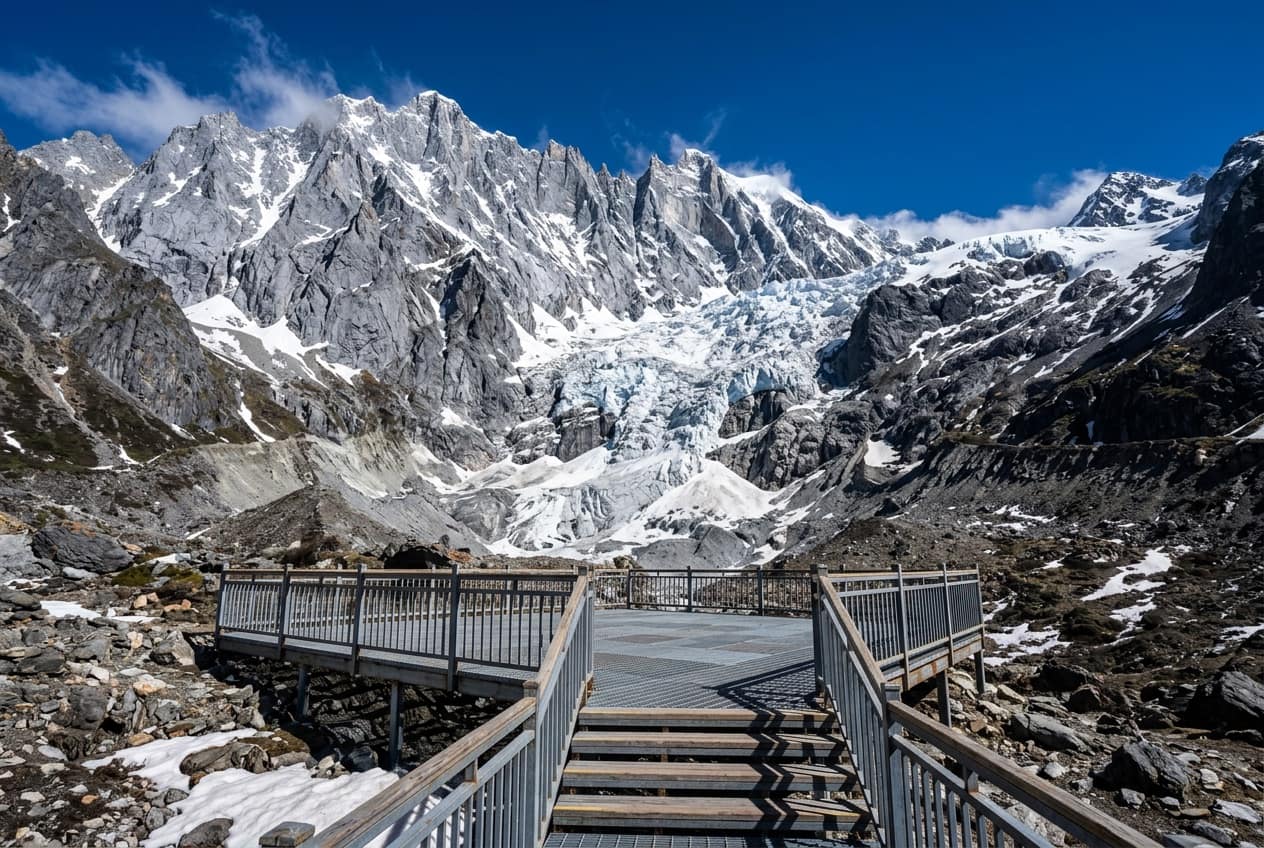
Jade Dragon Snow Mountain
A 5,596 m glaciated massif north of Lijiang with a cable car that climbs to around 4,506 m — among the most accessible high-altitude glacier viewpoints in China, and the one day of your trip that altitude actually governs.
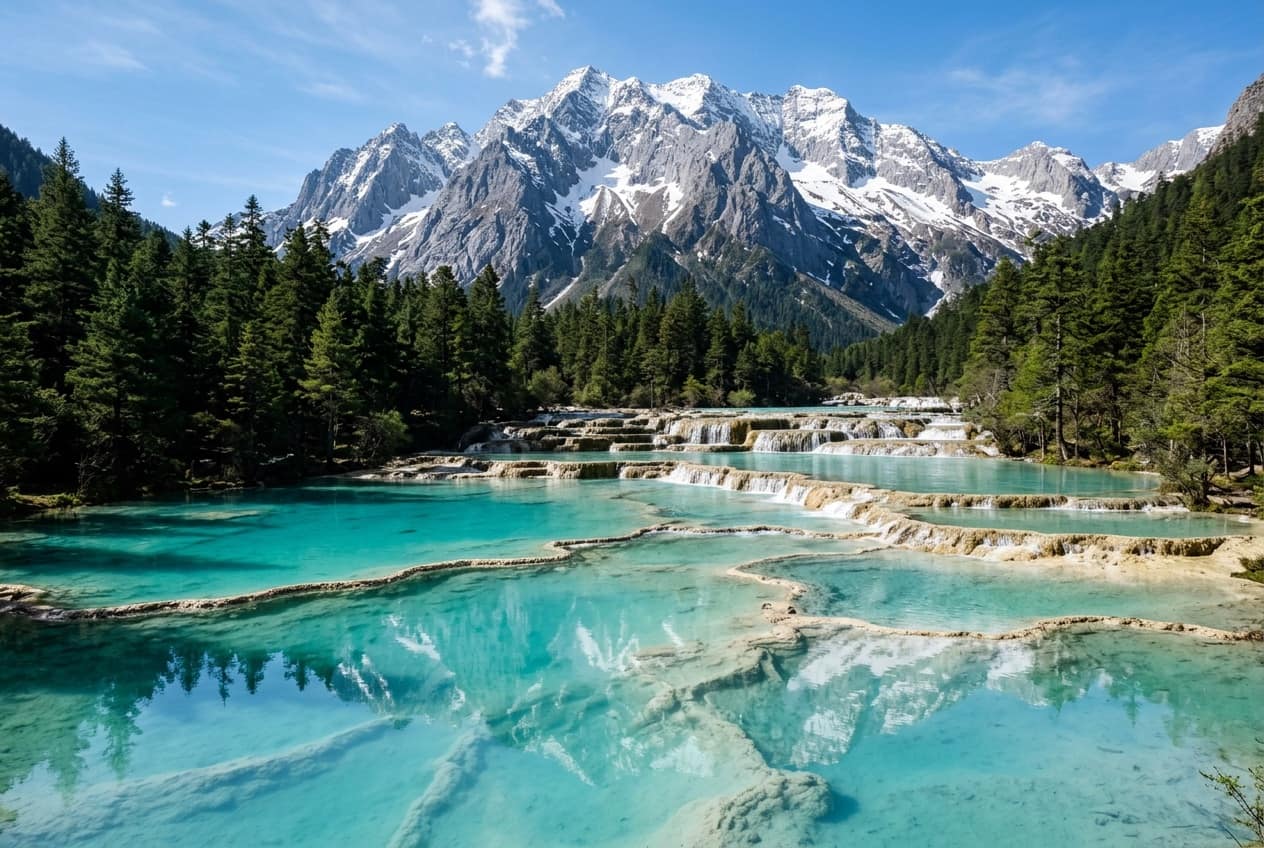
Blue Moon Valley
A chain of turquoise lakes at the foot of Jade Dragon, coloured by calcium carbonate carried down in glacier melt — already covered by the mountain's park entry, and the low-altitude half of that day.
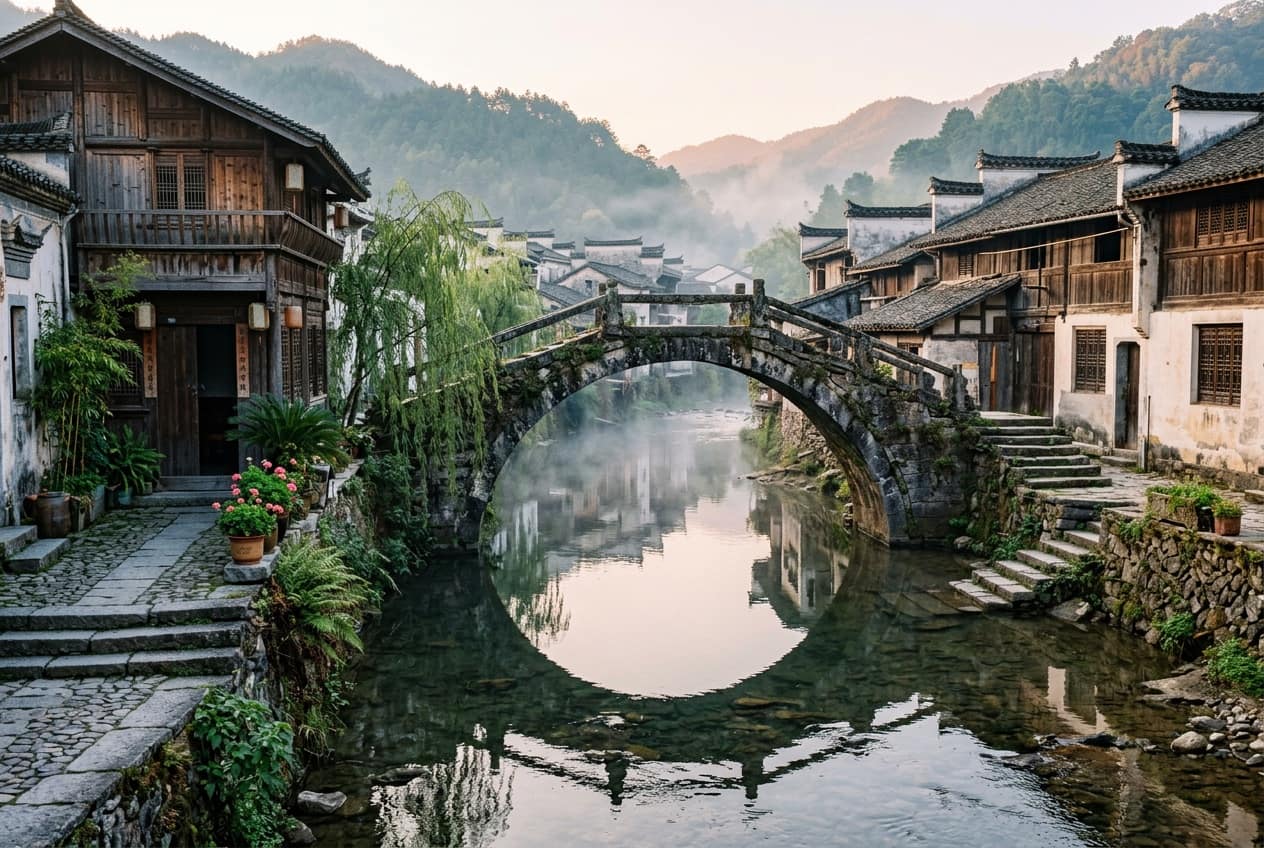
Shuhe Ancient Town
The quieter old town four kilometres from Dayan: the same Naxi architecture and water lanes with a fraction of the crowds, lower prices, and the best-value courtyard stays in the Lijiang area.
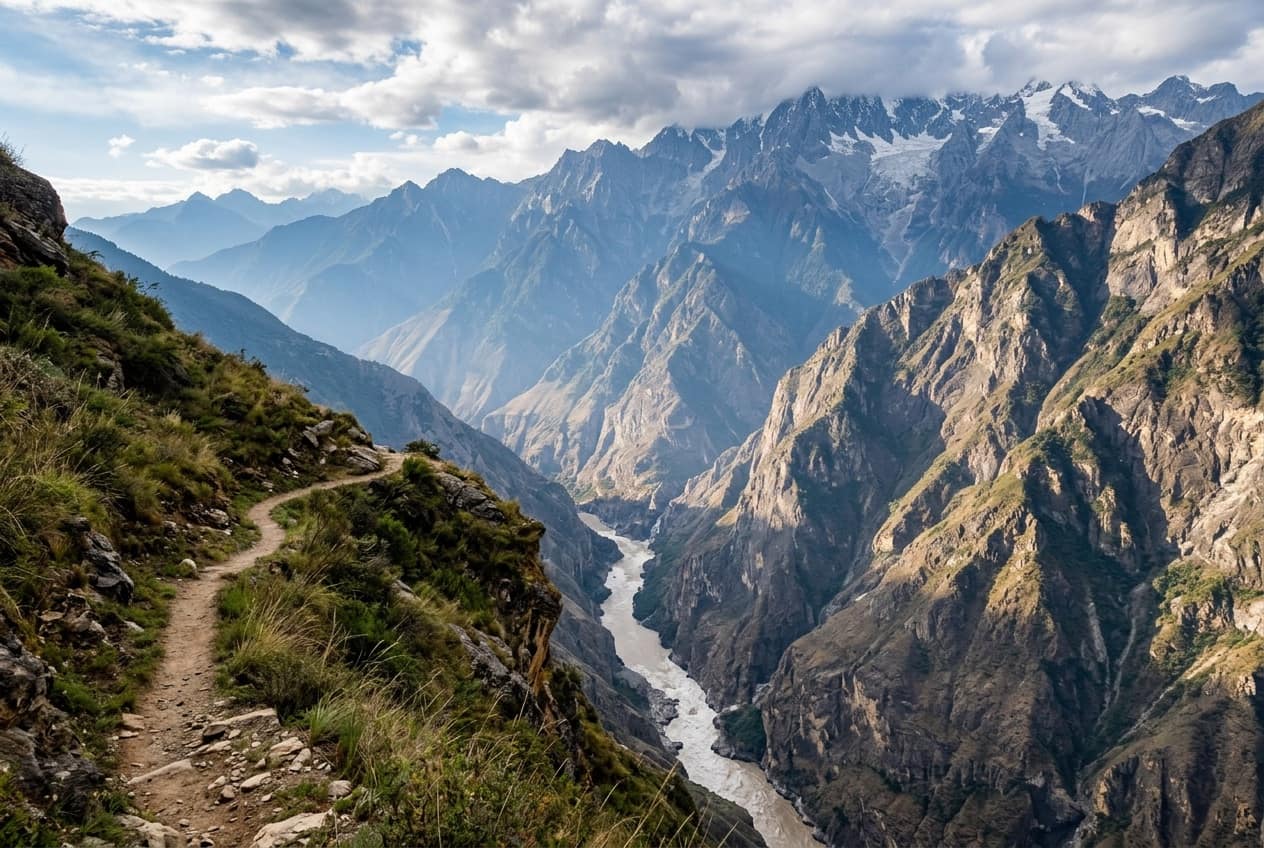
Tiger Leaping Gorge
One of the deepest river gorges on earth, where the upper Yangtze is squeezed between two 5,000 m ranges — a day trip reaches the river, and the two-day High Trail shows the gorge from above.
Where to Go Next
Routes travellers actually take from here — with rail times and why the pairing works.
Before You Go
The practical guides you'll want open on your phone while you're here.
Tiger Leaping Gorge HikeComplete Tiger Leaping Gorge hiking guide: the 2-day high trail from Qiaotou to Tina's, the 28 Bends climb, guesthouse stops, best season, safety, getting there from Lijiang, and continuing to Shangri-La.What to packA China packing list built around what is genuinely hard to get locally: plug types, medication, the apps to install before you fly, documents that matter, and what to leave at home.Best time to visitWhen to visit China by month and region, why Golden Week and Chinese New Year are the two weeks to avoid, and how to pick dates for the Great Wall, Guilin, Harbin or Yunnan.Safety in ChinaHow safe China really is for foreign travellers: street crime, the five scams that actually happen, solo female travel, traffic, emergency numbers, and food and water safety.
Explore other cities
GoChinaTravel Editorial Team
Our team of China travel researchers combines on-the-ground contributor insights, official government sources, and traveler community feedback to create the most detailed English-language China guides available. Every guide is fact-checked against primary sources (NIA, 12367, official attraction websites, Railway 12306) before publication.