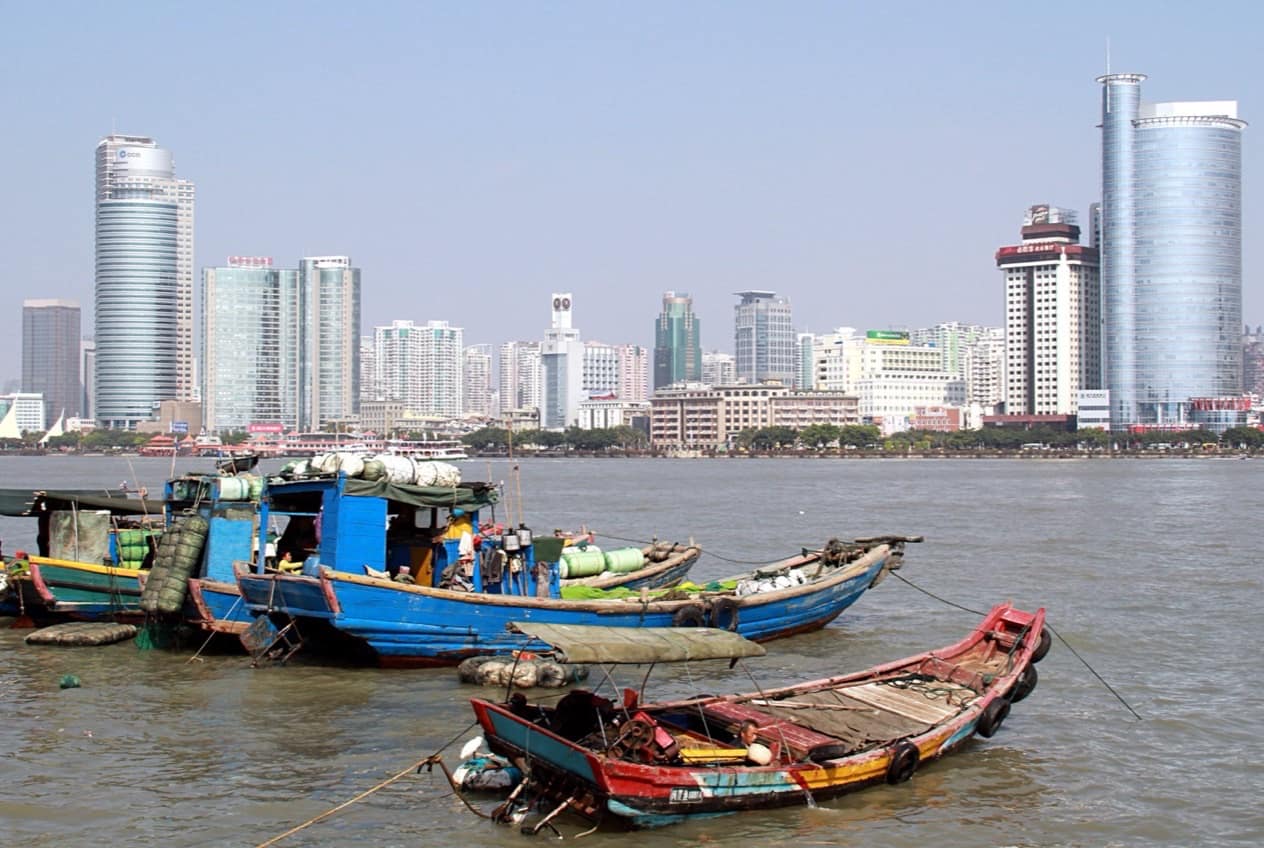
Island & Seafood
Xiamen — Gulangyu, the Arcades and the Fujian Coast
A car-free UNESCO island of piano villas, a relaxed treaty port and some of the best seafood on China's southeast coast
📅Best Time
October–April (mild and dry)
🗓️Stay
2–3 days (recommended)
✨Vibe
Island · Treaty port · Seafood
Xiamen is what happens when a treaty port meets a subtropical island. Opened to foreign trade in the 1840s, it kept a waterfront of arcaded shophouses, consulate villas and churches, then grew into a relaxed modern city looking out across the strait. The centrepiece is Gulangyu, a car-free island ten minutes away by ferry, whose winding lanes hold over a thousand historic buildings and — by reputation — more pianos per resident than anywhere in China. Add the Fujian coast's best seafood, a mild winter and an unhurried pace, and Xiamen is one of the most pleasant city breaks on the southeast coast. Two practical things decide how well the trip goes: booking the ferry early, and buying the island's combined ticket instead of singles.
✨ City Highlights
🏝️
Gulangyu Island
A car-free UNESCO World Heritage island of over a thousand historic buildings from its international-settlement era. Return ferry ¥35 in standard class, reserved online in advance — there are no tickets sold at the pier.
🎫
The island combined ticket
¥90 covers Sunlight Rock, Shuzhuang Garden, the organ museum, Haoyue Park and the calligraphy museum. Bought separately they come to about ¥160, so this is the single biggest saving in the city.
🏫
Xiamen University & Nanputuo
One of China's most beautiful campuses, set between hill and sea, requiring an advance entry slot. Nanputuo Temple next door is free, and its vegetarian restaurant is worth the stop.
🚴
Huandao Road coastal bike path
A purpose-built cycling road along the southern coast, past beaches and the slogan board that faces Kinmen across the strait. The best two hours you can spend on the main island.
🏛️
Zhongshan Road arcades
The treaty-port era arcaded shopping street, full of Minnan snacks and souvenir shops. Look at the architecture by day; the facades are best lit after dark.
🎨
Shapowei & Zengcuo'an
Shapowei is an old fishing harbour turned café-and-gallery quarter, popular with young locals. Zengcuo'an is livelier and far more touristy — worth a wander and a snack, not a meal.
📌 Insider Tips
- ▸Book the Gulangyu ferry before you travel. The island has a daily visitor cap, tickets are named and reserved through the official channel, and there are no sales at the pier. In peak season people book up to two weeks out.
- ▸Buy the ¥90 combined island ticket rather than paying at each gate. Sunlight Rock alone is ¥50 and Shuzhuang Garden ¥30 — the five-site ticket pays for itself if you visit three.
- ▸Take an early boat. The famous sights cluster near the piers and fill up with tour groups by mid-morning; the reward for walking further is the quiet residential lanes, which is where the island is actually beautiful.
- ▸Gulangyu is walk-only and hilly. Wear real shoes — the electric buggies exist but you will spend most of the day on foot and on slopes.
- ▸Seafood is the point of the trip, and also where visitors most often get overcharged. Eat where locals eat rather than on the waterfront strips, and always agree the per-jin price and the exact species before anything is weighed or cooked.
- ▸Typhoons pass through roughly July to September and can suspend the ferry and flights with little warning. If Gulangyu is essential to your trip, avoid the peak typhoon window or keep the island day flexible.
- ▸Xiamen is warm in winter — January averages around 13 degrees — which makes it a genuine escape from a cold northern trip, though it can be grey and windy. High-speed rail reaches Shenzhen in about 3h and Fuzhou in under 2h.
🗓️ Day-by-Day Itinerary
Curated routes — what to do, hour by hour
🏝️
Day 1
Gulangyu Island
Early boat, combined ticket, and the quiet lanes past the piers.
- 🎫07:30
Confirm your ferry reservation
Named online booking only — there are no ticket sales at the pier and the island has a daily cap. Standard class is ¥35 return. Have ID ready.
- ⛴️08:00
Early ferry across
Ten minutes from the cruise terminal piers. Take the earliest boat you can to be ahead of the tour groups.
- 🏛️09:00
Walk the settlement-era villas
Over a thousand historic buildings line the lanes. The famous ones cluster near the piers — walk further into the residential streets, which is where the island is actually beautiful. Walk-only and hilly.
- 🍜12:00
Lunch: island snacks
Satay noodles, oyster omelette and peanut soup are all here, but the tourist strips overcharge. Head into the residential lanes and follow the local queues. ¥30-50 per person.
- 🌅14:00
Sunlight Rock & the combined ticket sites
The island's highest point, over red-tiled roofs and the bay. Use the ¥90 five-site combined ticket rather than paying ¥50 here and ¥30 at Shuzhuang Garden. Afternoon light is better.
- ⛴️18:00
Last ferry back
Returns run frequently but do not miss the last one. Catch the sunset from the island first if the timing works.
🍜 Food Highlights
The dishes you can't leave without trying
🍜Must Try
Satay noodles
¥15-30
Thick peanut-and-seafood sacha broth over wheat noodles — the city's signature.
🦪Classic
Oyster omelette
¥15-30
Fresh oysters in sweet-potato-starch batter, fried until the edges crisp.
🥜Local
Peanut soup
¥8-20
Slow-cooked sweet broth — the Xiamen breakfast, often with a dough stick.
🦆Signature
Ginger duck
¥80-150
Braised in sesame oil, ginger and rice wine — a Minnan winter warmer.
🍢Seasonal
Seafood by the jin
¥100-250
Picked live at a local market. Agree the price and species before weighing.
💰 Budget (per person)
Backpacker / Mid-range / Luxury
| Category | 💚 Budget | ✨ Mid-range | 💎 Luxury |
|---|---|---|---|
| 🏨Accommodation | ¥80-250 | ¥300-600 | ¥900+ |
| 🍜Food per day | ¥80-150 | ¥200-350 | ¥500+ |
| ⛴️Gulangyu ferry (return) | ¥35 | ¥35 | ¥50 (deluxe cabin) |
| 🎫Island combined ticket | Skip — lanes are free | ¥90 (five sites) | ¥90 |
| 🚴Bike rental & transport | ¥30-60 | ¥100 | ¥250 (taxis) |
| Total | ¥280/day | ¥650/day | ¥1,600+/day |
Xiamen is a cheap coastal city — the arcades, the beaches, Nanputuo and the bike path cost nothing, and walking Gulangyu's lanes is free once you are on the island. Seafood and a night on Gulangyu are the splurges. The one deliberate saving is the ¥90 combined ticket instead of about ¥160 in singles.
🏨 Recommended Hotels
| 🎒 | Budget | Hostels & guesthouses | Zengcuo'an / Zhongshan Road | ¥80-250 |
| 🏨 | Mid-range | Business hotels | Zhongshan Road / cruise terminal | ¥300-600 |
| 🏡 | Boutique | Villa guesthouses | Gulangyu Island | ¥300-800 |
| ✨ | Luxury | International five-stars | Yundang Lake / coast | ¥900+ |
🗺️ Full Guide
🍜
Eat
- Satay noodles (沙茶面)
The city's signature: wheat noodles in a thick peanut-and-seafood sacha broth, with toppings you choose yourself. ¥15-30 at a streetside shop, and best at an old-established one.
- Oyster omelette (海蛎煎)
Fresh oysters in a sweet-potato-starch and egg batter, fried until the edges crisp. ¥15-30, and a must at a local stall rather than a tourist strip.
- Peanut soup (花生汤)
Slow-cooked until the peanuts collapse into a sweet broth — the Xiamen breakfast, often with a fried dough stick. ¥8-20.
- Ginger duck (姜母鸭)
Duck braised in sesame oil, ginger and rice wine in a clay pot — a Minnan winter warmer. ¥80-150 for a pot to share.
🏨
Stay
- Zhongshan Road / Lujiang Dao
The practical base for most visitors: walking distance to the arcades, the old market food streets and about ten minutes by taxi to the ferry terminal. Chain hotels at ¥180-400 make it the best value.
- Gulangyu Island itself
Villa guesthouses inside the settlement-era buildings, ¥300-800. The reason to stay is the island after the last ferry leaves — quiet lanes and no day-trippers. Expect to carry your own luggage uphill.
- Near Xiamen University
Close to the campus, Nanputuo and the start of the Huandao Road bike path, and better for a coast-focused trip than a ferry-focused one.
- Cruise terminal area
Business hotels at ¥200-350 within walking distance of the main ferry departure hall. The choice if you are driving or arriving late before an early boat.
⛴️
Getting Around
- The Gulangyu ferry
Tourist ferries run from the cruise terminal piers; standard class is ¥35 return with the return leg valid 20 days, and the deluxe cabin ¥50. Named online reservation only — no pier sales.
- Metro
Line 2 runs to the cruise terminal station, three minutes from the departure hall, and Line 3 connects the airport. Metro plus a short taxi covers almost everything on the main island.
- Shared bikes
How to do Huandao Road. Unlock through Alipay or WeChat; the southern coastal stretch is on a dedicated cycling road separated from traffic.
- High-speed rail
Xiamen North handles most long-distance trains; the island-side Xiamen station is closer to the centre. Shenzhen is about 3h, Fuzhou under 2h, Guangzhou around 4h.
✅ Pre-Departure Checklist
Tick these off before you leave home
⚠️ Heads-Up & Things to Avoid
- ⚠Gulangyu has a daily visitor cap and its ferries are named and strictly ticketed through the official channel. There are no sales at the pier, so do not rely on turning up, and never buy from touts outside the terminal.
- ⚠Typhoon season, roughly July to September, can suspend the ferry and flights at short notice. Keep the island day flexible if you travel then.
- ⚠Seafood restaurants aimed at tourists are known for quoting a low price and then switching species or overcharging by weight. Agree the per-jin price and the exact item before anything is weighed or cooked.
- ⚠Paying at each island gate is the expensive way to do it. Sunlight Rock alone is ¥50 and Shuzhuang Garden ¥30, while the five-site combined ticket is ¥90 — several guides mention the sites without mentioning the combined ticket.
- ⚠Touts for taxis and tours work the area around the ferry piers persistently. Use the metro, a shared bike or a ride-hailing app rather than accepting unsolicited offers.
Sort Your Visa First
Entry rules that matter for this city, including visa-free transit options.
Visa240-Hour TransitHow China's 240-hour (10-day) visa-free transit works in 2026: eligible nationalities, the 60+ entry ports, how the clock is counted, cross-province travel rules, onward-ticket requirements and common mistakes.VisaEntry PortsComplete list of the airports, land and sea ports where China's 240-hour visa-free transit applies in 2026, which provinces they serve, and how to plan an open-jaw itinerary that enters and exits at different cities.
Where to Go Next
Routes travellers actually take from here — with rail times and why the pairing works.
Before You Go
The practical guides you'll want open on your phone while you're here.
Best time to visitWhen to visit China by month and region, why Golden Week and Chinese New Year are the two weeks to avoid, and how to pick dates for the Great Wall, Guilin, Harbin or Yunnan.Chinese Food BasicsA first-timer's guide to eating in China: the regional cuisines explained, dishes to order by region, how spicy Sichuan actually is, breakfast, street food safety, vegetarian options and table etiquette.High-Speed RailHow to use China's high-speed rail network as a foreign visitor: booking with a passport, what G, D, C, K and T trains mean, seat classes compared, station procedures, luggage rules and the routes worth taking.Hotels & check-inWhy some Chinese hotels refuse foreign guests, how police registration works, what to book and where, Airbnb legality, deposits, and how to avoid arriving somewhere that cannot check you in.
Explore other cities
GoChinaTravel Editorial Team
Our team of China travel researchers combines on-the-ground contributor insights, official government sources, and traveler community feedback to create the most detailed English-language China guides available. Every guide is fact-checked against primary sources (NIA, 12367, official attraction websites, Railway 12306) before publication.