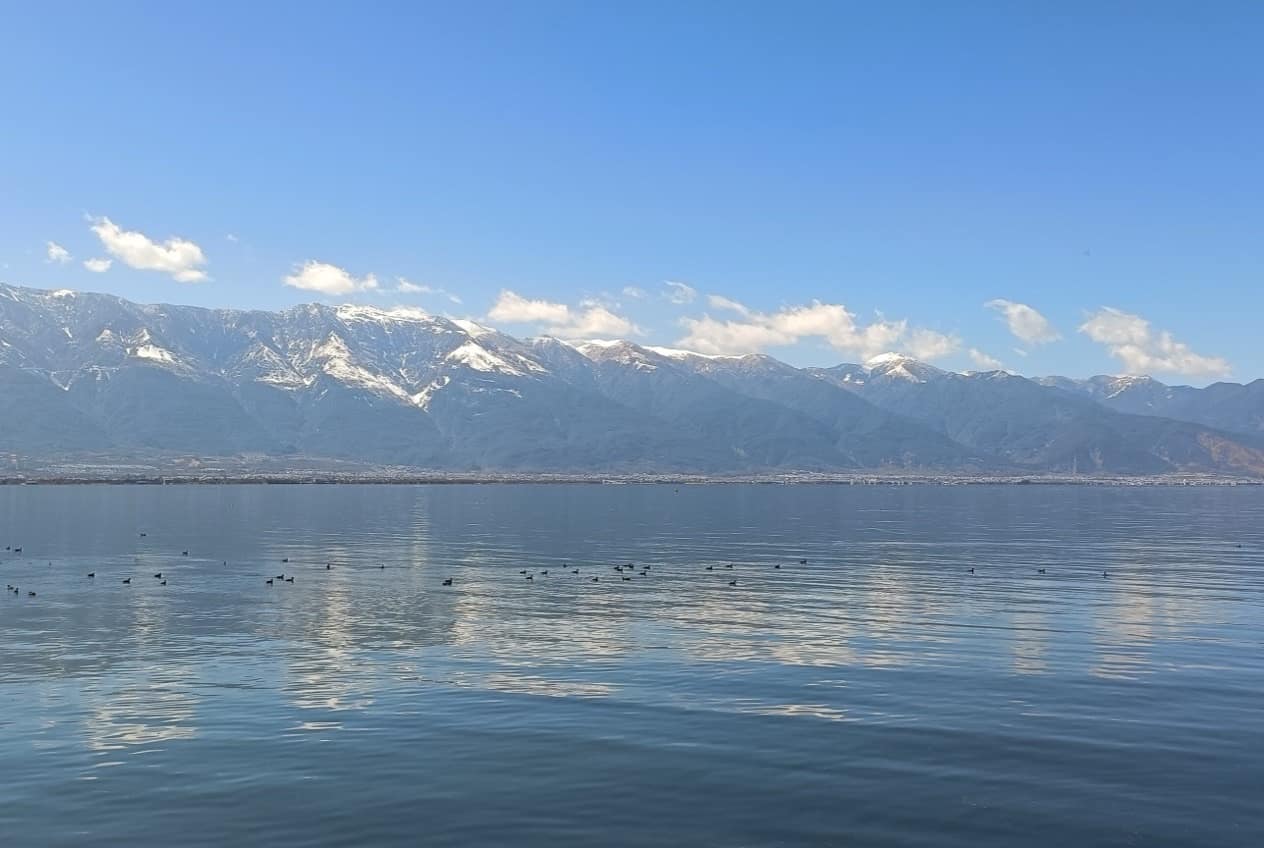
Lake & Bai Villages
Dali — Erhai Lake, Cangshan and the Bai Courtyards Between Them
A lakeside old town beneath the Cangshan range, in the heart of Bai minority country — and one of the cheapest places in China to slow down
📅Best Time
March–May and September–November
🗓️Stay
2–3 days (recommended)
✨Vibe
Lakeside · Bai culture · Slow travel
Dali sits at 2,000 metres on the western shore of Erhai Lake, a long, calm stretch of water backed by the 4,000-metre Cangshan range. It has been a travellers' favourite since the 1990s, and unlike Lijiang's crowded old town it keeps a laid-back, almost bohemian feel: lakeside villages, white Bai courtyards, and long empty stretches of shoreline you can circle by bike or e-scooter. It is not a place of blockbuster sights so much as a place to slow down. The old town, the lakeside path, Xizhou, Zhoucheng and Shuanglang are all free to walk — which is why people come for three days and stay for a week.
✨ City Highlights
🚲
Cycling the Erhai shore
The classic Dali activity, and free apart from the rental. The lakeside greenway along the western shore toward Xizhou is mostly flat with light traffic, and the light is best in the morning.
🏘️
Dali Old Town
A walled town of Bai courtyards and cobbled lanes, free and open at all hours. More relaxed than Lijiang; Fuxing Road is lively at night and much calmer in the morning.
🏯
Three Pagodas (Chongsheng Temple)
Three pagodas about 1,200 years old, backed by the mountain with a reflecting pond in front — Dali's postcard image. ¥75, plus about ¥20 for the internal shuttle if you want it.
🚡
Cangshan cable cars — two options
Gantong cable car is about ¥130 return and usually includes the Cangshan geopark ticket. Ximatan, the long one, is about ¥320 return for the full route or ¥190 half way. Decide which before you budget.
🏡
Xizhou & Zhoucheng
Xizhou is a Bai market town of ornate 'three-fang, one-screen-wall' courtyards; Zhoucheng is the home of Bai indigo tie-dye. Both free to wander, and both better than the old town for a daytime stop.
🌅
Shuanglang and the east shore
The east-shore village famous for sunset views back toward Cangshan. Busier and pricier than it was, but the view across the water is still the reason to go.
📌 Insider Tips
- ▸Almost everything worth doing in Dali is free. The old town, the lakeside greenway, Xizhou, Zhoucheng and Shuanglang cost nothing to enter — the only real tickets are the Three Pagodas at ¥75 and whichever Cangshan cable car you choose.
- ▸Check which Cangshan cable car you are booking. Gantong is the short, cheap one at about ¥130 return; Ximatan is the long one at about ¥320 return, and reaches much higher. Guides that quote a single 'Cangshan cable car' price are usually describing Gantong.
- ▸Dali is at 2,000m. Most people barely notice, but take the first day easy, drink water, and go light on alcohol on arrival.
- ▸The classic way to see Erhai is to rent a bicycle or e-scooter and ride the western shore toward Xizhou. Traffic is light and the road mostly flat, but it is shared — start slowly if you have not ridden an e-scooter before.
- ▸Do not over-schedule. Dali's value is the slow rhythm: a lake ride, a village lunch, a teahouse afternoon. Two or three days beats a rushed day trip from Lijiang.
- ▸High-speed rail now runs Kunming–Dali in about two hours and Dali–Lijiang in under two, which makes Dali a natural middle stop on a Yunnan loop rather than a separate trip.
- ▸Bai tie-dye, embroidery and silver from the villages are genuine local crafts, but quality varies enormously. Buy from a workshop where you can watch the process, and treat 'antique' or certification claims as meaningless.
🗓️ Day-by-Day Itinerary
Curated routes — what to do, hour by hour
🏘️
Day 1
Old Town, Three Pagodas & Cangshan
Take the altitude gently, then the postcard pagodas and a cable car.
- 🏘️09:00
Wander Dali Old Town
At 2,000m, take day one easy and drink water. The walled town of Bai courtyards and cobbled lanes is free and open at all hours; mornings are much calmer than the lively evenings.
- 🏯11:00
Three Pagodas
Three pagodas about 1,200 years old, backed by the mountain with a reflecting pond — the classic photo. ¥75, plus about ¥20 for the internal shuttle. Allow 1.5h.
- 🍜13:00
Lunch: sour-spicy fish
Erhai fish in a tangy broth with local pickles, ¥80-150 for two. Eat outside the old town walls for better value.
- 🚡15:00
Cangshan cable car — pick the right one
Gantong is about ¥130 return and usually includes the geopark ticket; Ximatan is about ¥320 return and goes much higher. Only worth it on a clear day — swap to tomorrow if it is overcast. Bring a layer.
- 🍚19:00
Dinner: erkuai & grilled rushan
Rice cakes and skewered cheese with rose jam at the night market, ¥10-25 from stalls. Graze rather than sit down.
🍜 Food Highlights
The dishes you can't leave without trying
🍚Must Try
Erkuai rice cakes
¥10-25
Pressed rice cakes, stir-fried or in soup — the Bai staple.
🧀Local
Grilled rushan cheese
¥10-25
Firm stretched cow's-milk cheese, grilled and often brushed with rose jam.
🐟Signature
Sour-spicy fish
¥80-150
Erhai fish in a tangy pickled broth — the regional signature.
🫓Classic
Xizhou baba
¥8-15
Layered pan bread, savoury with ham or sweet with brown sugar.
🍵Iconic
Bai three-course tea
¥30-60
Bitter, sweet, lingering — a Bai ritual, usually with song and dance.
💰 Budget (per person)
Backpacker / Mid-range / Luxury
| Category | 💚 Budget | ✨ Mid-range | 💎 Luxury |
|---|---|---|---|
| 🏨Accommodation | ¥50-200 | ¥250-500 | ¥800+ |
| 🍜Food per day | ¥70-140 | ¥180-300 | ¥450+ |
| 🏯Three Pagodas | ¥75 | ¥95 (with shuttle) | ¥95 |
| 🚡Cangshan — Gantong cable car | ¥130 return | ¥130 | ¥130 |
| 🚡Cangshan — Ximatan cable car | Skip | ¥190 (half route) | ¥320 (full route) |
| 🚲Bike / e-scooter rental | ¥30-80 | ¥80-150 | ¥300 (car) |
| Total | ¥250/day | ¥600/day | ¥1,500+/day |
Dali is one of China's cheapest destinations because the lake, the villages and the old town cost nothing to enjoy. Accommodation is where budget and comfort diverge most, and the one decision that can blow the budget is the Ximatan cable car at about ¥320 — Gantong at ¥130 is enough for most visitors.
🏨 Recommended Hotels
| 🎒 | Budget | Hostels & guesthouses | Old town | ¥50-200 |
| 🏡 | Mid-range | Bai courtyard inns | Xizhou / Caicun | ¥250-500 |
| 🌊 | Boutique | Lakeside design hotels | West shore / Shuanglang | ¥500-1,200 |
| ✨ | Luxury | Resort hotels | Shuanglang / lakeside | ¥800+ |
🗺️ Full Guide
🍜
Eat
- Sour-spicy fish (酸辣鱼)
Erhai fish simmered in a tangy broth with local pickles — the regional signature. ¥80-150 for two, and noticeably better value outside the old town walls.
- Erkuai rice cakes (饵块)
Pressed rice cakes, either stir-fried with vegetables and ham or served in soup. The Bai staple, ¥10-25 from a night-market stall.
- Grilled rushan cheese (乳扇)
A firm, stretched cow's-milk cheese, grilled on a skewer and often brushed with rose jam. Unusual for China and worth trying once. ¥10-25.
- Xizhou baba (喜洲粑粑)
A layered pan-baked flatbread from Xizhou, savoury with ham and spring onion or sweet with brown sugar. ¥8-15, eaten warm from the oven.
🏨
Stay
- Dali Old Town
Cheapest and most convenient for evenings and markets, ¥50-200 for a hostel or guesthouse. Book away from Fuxing Road and the bar streets if you want to sleep.
- Xizhou / Caicun
Bai courtyard inns in the villages along the western shore, ¥250-500. The best compromise: rural quiet, right on the cycling route, and 20 minutes from the old town.
- West shore / Shuanglang
Lakeside design hotels with the mountain or the water in front of them, ¥500-1,200. Shuanglang is the sunset side; the west shore looks back at Cangshan.
🚲
Getting Around
- Bicycle & e-scooter rental
The main way to see the lake, ¥30-80 a day depending on type. Rentals cluster in the old town and Caicun. Check the brakes and battery level before you set off.
- Buses and minibuses
Local buses connect the old town with Xiaguan, Xizhou and Shuanglang for a few yuan; the Shuanglang run takes about an hour. Slow but very cheap.
- High-speed rail
Dali station is in Xiaguan, about 30-40 minutes from the old town. Kunming is around 2h and Lijiang under 2h, which is why Dali works as a middle stop.
- Erhai sightseeing bus & boats
A hop-on lakeside sightseeing bus covers the shore villages, and Erhai cruises run about ¥120-180. Neither is necessary if you are cycling.
✅ Pre-Departure Checklist
Tick these off before you leave home
⚠️ Heads-Up & Things to Avoid
- ⚠Guides that quote one 'Cangshan cable car' price are usually describing Gantong at about ¥130 return. Ximatan, the long route, is about ¥320 return — budget for the one you actually intend to ride.
- ⚠E-scooter rentals need care on the lakeside road. Traffic is light but the road is shared, and many visitors have never ridden one. Check the brakes and battery, and start slowly.
- ⚠The altitude plus strong sun catches people out. Drink water, limit alcohol on your first day, and use real sunscreen rather than relying on cloud cover.
- ⚠'Antique' silver, jade and tea are aggressively marketed in and around the old town. Buy only what you can watch being made, and treat certification as meaningless.
- ⚠The old town's main streets are noisy well into the night. If sleep matters, book away from Fuxing Road and the bar streets and confirm with the host before paying.
Where to Go Next
Routes travellers actually take from here — with rail times and why the pairing works.
Before You Go
The practical guides you'll want open on your phone while you're here.
Best time to visitWhen to visit China by month and region, why Golden Week and Chinese New Year are the two weeks to avoid, and how to pick dates for the Great Wall, Guilin, Harbin or Yunnan.What to packA China packing list built around what is genuinely hard to get locally: plug types, medication, the apps to install before you fly, documents that matter, and what to leave at home.High-Speed RailHow to use China's high-speed rail network as a foreign visitor: booking with a passport, what G, D, C, K and T trains mean, seat classes compared, station procedures, luggage rules and the routes worth taking.Hotels & check-inWhy some Chinese hotels refuse foreign guests, how police registration works, what to book and where, Airbnb legality, deposits, and how to avoid arriving somewhere that cannot check you in.
Explore other cities
GoChinaTravel Editorial Team
Our team of China travel researchers combines on-the-ground contributor insights, official government sources, and traveler community feedback to create the most detailed English-language China guides available. Every guide is fact-checked against primary sources (NIA, 12367, official attraction websites, Railway 12306) before publication.