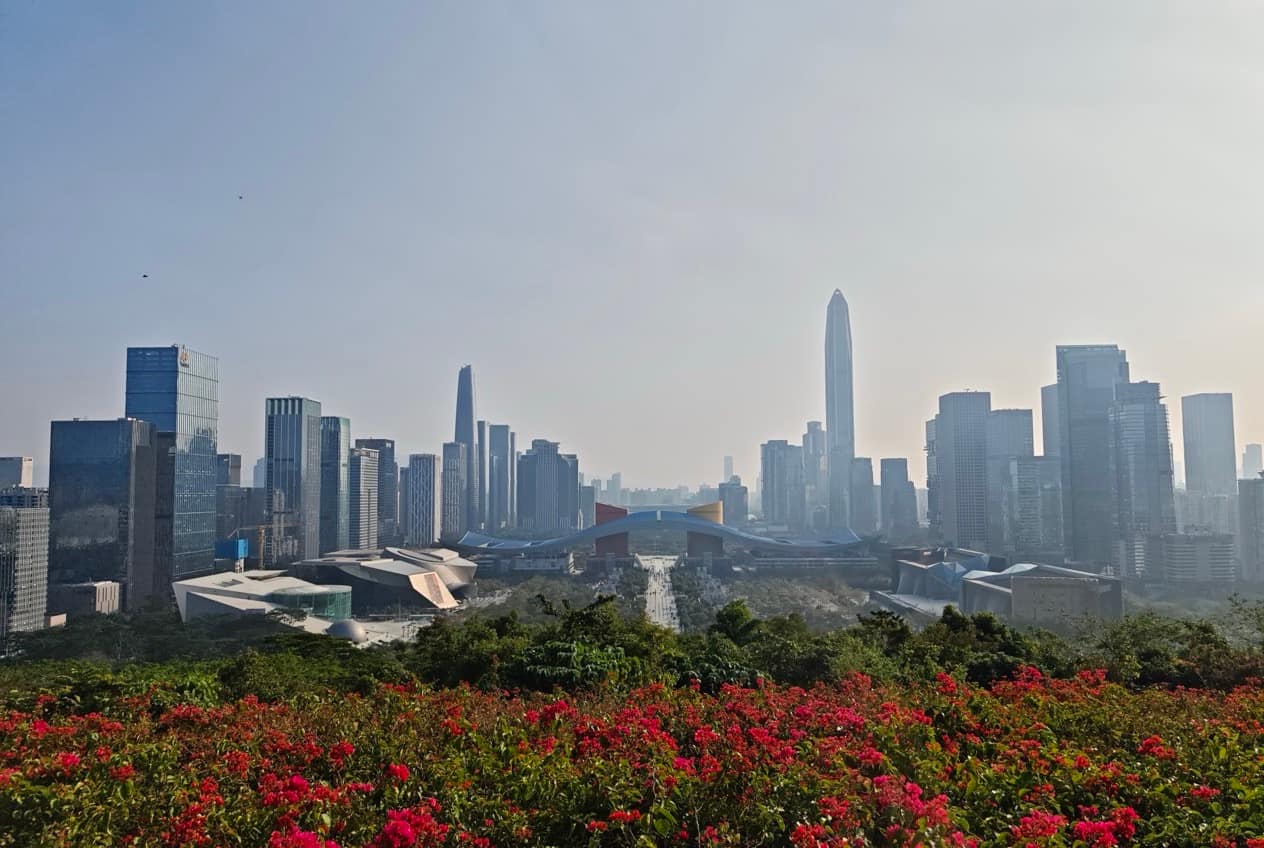
Skyline & Parks
Shenzhen — Fifty Years from Fishing Town to Tech Capital
China's youngest megacity — a futuristic skyline, genuinely clean coastal parks and the mainland's easiest hop to Hong Kong
📅Best Time
October–April (dry and mild)
🗓️Stay
2–3 days (recommended)
✨Vibe
Modern · Green · Cross-boundary
Shenzhen did not exist as a city fifty years ago. In 1980 it was a fishing town of a few tens of thousands; today it is a metropolis of over seventeen million and the headquarters of Huawei, Tencent and DJI. For visitors that means something rare in China: a city with almost no historical monuments, but superb modern architecture, coastal parks that are actually clean, and the mainland's smoothest crossing to Hong Kong. It is not a place to tick off temples — it is the place to see the China that is still being built.
✨ City Highlights
🏙️
Futian CBD & Ping An Finance Centre
Shenzhen's tallest building at 599m. The Free Sky observation deck on level 116 is ticketed — recently about ¥180 online and ¥200 on the door — not free, despite what many guides claim. Book through the official mini-programme or a platform that takes overseas cards.
⛰️
Lianhuashan Park
This is the free skyline view. A 20-minute climb from the Civic Centre axis puts the whole Futian CBD in front of you with the Ping An tower behind. Best at dusk, and it costs nothing.
🌊
Shenzhen Bay Park
A 13km coastal strip of mangroves, boardwalks and dedicated bike paths looking across the water to the hills of Hong Kong. Rent a shared bike for the mangrove stretch — the best cycling in the city.
🎨
OCT-LOFT Creative Park
A former electronics factory turned galleries, design studios and cafés. Shenzhen's closest thing to a bohemian quarter, and a genuine relief after the malls.
🛍️
Huaqiangbei electronics market
The world's largest electronics bazaar — floor after floor of components, repair stalls and gadgets. Fascinating even if you buy nothing. Prices are negotiable and 'branded' goods are frequently not genuine.
🏖️
Dameisha & Xiaomeisha beaches
Shenzhen's east-coast beaches, with real sand and swimmable water — rare for a Chinese megacity. About 1.5h out by metro and bus, and packed at weekends.
📌 Insider Tips
- ▸Shenzhen has a large resident foreign population and the service industry is used to non-Chinese visitors — English menus and signage are more common here than almost anywhere else in China.
- ▸The city is part of China's visa-free transit network, with the current arrangement running up to 240 hours (10 days) for eligible nationalities. Policy changes, so confirm your own eligibility on an official source before booking.
- ▸Shenzhen is spread out and built for the metro, not for walking. The system is clean, cheap and bilingual — base yourself within a few minutes of a Line 1 or Line 2 station.
- ▸Summer (June–September) is hot, humid and in the typhoon window. October to April is dry and roughly 18–26 degrees, which is the reason to come then.
- ▸For Hong Kong, the Futian and Luohu ports connect directly to the MTR for Central and Kowloon; Shenzhen Bay is a bus crossing for the western New Territories. Avoid Friday evening and Monday morning, when the ports are at their worst.
- ▸Hong Kong is a Special Administrative Region with its own immigration rules. Carry your passport and check the entry requirements for the SAR separately — a mainland visa does not automatically cover it.
- ▸The food is Cantonese at its core. A proper dim sum lunch, Chaoshan beef hotpot and a late-night seafood supper are all local strengths — coconut chicken hotpot is the dish most associated with the city itself.
🗓️ Day-by-Day Itinerary
Curated routes — what to do, hour by hour
🏙️
Day 1
Futian Skyline & Creative Quarter
The tower, the art district and the free skyline viewpoint at dusk.
- 🏙️09:00
Ping An Finance Centre — Free Sky
Metro Line 1/3 to Shopping Park (Exit D), or Line 2/11 to Futian. The observation deck on level 116 is ticketed at roughly ¥180 online / ¥200 on the door; bring ID and book ahead. Clear days only — it is not worth it in haze. Allow 1–1.5h.
- 🍜12:00
Lunch: Cantonese dim sum
Har gow, siu mai and rice rolls with tea at a teahouse around Futian CBD, about ¥80-150 for two.
- 🎨14:00
OCT-LOFT Creative Park
A former factory turned galleries, studios and cafés — the antidote to the malls. Allow 2h.
- ⛰️17:00
Civic Centre & Lianhuashan Park
Walk the Civic Centre axis, then climb Lianhuashan — free, about 20 minutes — for the full skyline with the Ping An tower behind it. This is the best view in the city and it costs nothing.
- 🍲19:30
Dinner: coconut chicken or Chaoshan beef hotpot
Coconut chicken (¥150-250 for two) is the Shenzhen signature; Chaoshan beef hotpot (¥120-200) is the other local strength.
🍜 Food Highlights
The dishes you can't leave without trying
🥥Signature
Coconut chicken hotpot
¥150-250
Chicken poached in fresh coconut water — light, clean and the dish most identified with the city.
🥟Must Try
Dim sum
¥80-150
Har gow, siu mai and rice noodle rolls — Guangdong's breakfast ritual, done properly here.
🥩Classic
Chaoshan beef hotpot
¥120-200
Hand-sliced fresh beef, seconds in clear broth, with sacha sauce.
🦞Local
Late-night seafood
¥200-400
Picked live and paid for by the jin, in Yantian or Shekou. Agree the price first.
🍜Everyday
Rice noodle rolls
¥15-30
Cheung fun — the everyday Cantonese breakfast, sold everywhere.
💰 Budget (per person)
Backpacker / Mid-range / Luxury
| Category | 💚 Budget | ✨ Mid-range | 💎 Luxury |
|---|---|---|---|
| 🏨Accommodation | ¥100-300 | ¥350-700 | ¥1,000+ |
| 🍜Food per day | ¥80-160 | ¥200-400 | ¥600+ |
| 🚇Metro & local transport | ¥20-40 | ¥50 | ¥200 (taxis) |
| 🏙️Ping An Free Sky deck | Skip — Lianhuashan is free | ¥180-200 | ¥180-200 |
| 🚇Hong Kong day trip | ¥150 | ¥300 | ¥800+ |
| Total | ¥350/day | ¥800/day | ¥2,000+/day |
Shenzhen is cheaper than it looks because its best things — the coastal parks, OCT-LOFT, the Lianhuashan skyline view — are free. Accommodation and the Hong Kong side trip are the real costs, and the Free Sky deck is the one ticket worth deciding on deliberately.
🏨 Recommended Hotels
| 🎒 | Budget | Business inns & hostels | Luohu / Futian | ¥100-300 |
| 🏨 | Mid-range | Chain hotels | Futian CBD | ¥350-700 |
| 🎨 | Boutique | Design hotels | OCT-LOFT / Shekou | ¥600-1,200 |
| ✨ | Luxury | Ritz-Carlton / St. Regis | Futian / Luohu | ¥1,000+ |
🗺️ Full Guide
🍜
Eat
- Cantonese dim sum
Shenzhen does Guangdong food properly. Har gow, siu mai and rice noodle rolls with a pot of tea, roughly ¥80-150 for two. Teahouses cluster around Futian CBD and Luohu.
- Coconut chicken hotpot
The dish most identified with Shenzhen itself: chicken poached in fresh coconut water, clean and light rather than fiery. About ¥150-250 for two.
- Chaoshan beef hotpot
Hand-sliced fresh beef cooked for seconds in clear broth, eaten with sacha sauce. Precise, not spicy, and a Guangdong speciality. ¥120-200 for two.
- Late-night seafood
Pick live fish and shellfish by the jin at a Shekou or Yantian seafood street, ¥200-400 for two. Agree the per-jin price and the exact species before anything is cooked.
🏨
Stay
- Futian CBD
The obvious base: metro Lines 1, 2, 3 and 11 all converge nearby, the Hong Kong port at Futian is a few stops away, and the skyline and parks are on your doorstep. Business-hotel pricing.
- Shekou
The waterfront district with the largest foreign community — English menus everywhere, Sea World for evenings, and the ferry and bay crossing close by. Quieter and more relaxed than Futian.
- Luohu
The oldest part of the city, next to the Luohu port and the original railway station. Cheapest of the three and convenient for Hong Kong, but the least pleasant to walk around.
🚇
Getting Around
- Metro
Dense, bilingual and spotless, covering the whole city for ¥2-9 with an Alipay or WeChat QR code. Line 1 runs east-west through Futian and Luohu; Line 2 serves the coast and Shekou.
- Shared bikes
The way to do Shenzhen Bay Park and the coastal paths. Unlock through Alipay or WeChat; the 13km bay strip is almost entirely on dedicated bike lanes.
- To Hong Kong
Futian and Luohu ports link to the MTR; Shenzhen Bay is a bus crossing. Central and Kowloon are under an hour from Futian. Carry your passport and check the SAR's own entry rules.
- High-speed rail and air
Shenzhen North is about 30 min to Guangzhou and 3h to Xiamen. Bao'an airport (SZX) is on the metro Line 11 and has international routes.
✅ Pre-Departure Checklist
Tick these off before you leave home
⚠️ Heads-Up & Things to Avoid
- ⚠Hong Kong is a Special Administrative Region with its own immigration rules, separate from the mainland's. Carry your passport and check the SAR's entry requirements yourself — do not assume a mainland visa covers it.
- ⚠Typhoons between roughly June and September can suspend ferries, flights and port services at short notice. Keep one flexible day in your plan if you travel then.
- ⚠In Huaqiangbei and similar markets, 'branded' goods are frequently counterfeit and prices are arbitrary. Know the fair price before you start, and buy only from sellers you have vetted.
- ⚠Several widely-copied guides claim the Ping An observation deck is free. It is not — budget roughly ¥180-200, or go to Lianhuashan Park instead, which genuinely is free.
Sort Your Visa First
Entry rules that matter for this city, including visa-free transit options.
Visa240-Hour TransitHow China's 240-hour (10-day) visa-free transit works in 2026: eligible nationalities, the 60+ entry ports, how the clock is counted, cross-province travel rules, onward-ticket requirements and common mistakes.VisaEntry PortsComplete list of the airports, land and sea ports where China's 240-hour visa-free transit applies in 2026, which provinces they serve, and how to plan an open-jaw itinerary that enters and exits at different cities.VisaVisa-Free CountriesWhich countries can enter China without a visa in 2026, how long each group can stay, the difference between unilateral visa-free entry and transit exemption, and which route to choose for your passport.
Where to Go Next
Routes travellers actually take from here — with rail times and why the pairing works.
Before You Go
The practical guides you'll want open on your phone while you're here.
Paying in ChinaComplete guide to paying in China as a foreign visitor: setting up Alipay and WeChat Pay with an overseas card, the 3% fee threshold, whether cash still works, ATM charges, tipping, and what to do when a payment is declined.Internet & VPNHow to get online in China as a visitor: eSIM vs local SIM vs roaming compared, which sites and apps are blocked, whether you need a VPN, wifi availability, and the setup to do before you fly.Best eSIM for ChinaHonest comparison of the best eSIM for China travel: Yesim, Airalo, Saily, Holafly & more. Real prices, speed tests, and step-by-step setup guide. Google & WhatsApp work — no VPN required.High-Speed RailHow to use China's high-speed rail network as a foreign visitor: booking with a passport, what G, D, C, K and T trains mean, seat classes compared, station procedures, luggage rules and the routes worth taking.
Explore other cities
GoChinaTravel Editorial Team
Our team of China travel researchers combines on-the-ground contributor insights, official government sources, and traveler community feedback to create the most detailed English-language China guides available. Every guide is fact-checked against primary sources (NIA, 12367, official attraction websites, Railway 12306) before publication.