1Highlights
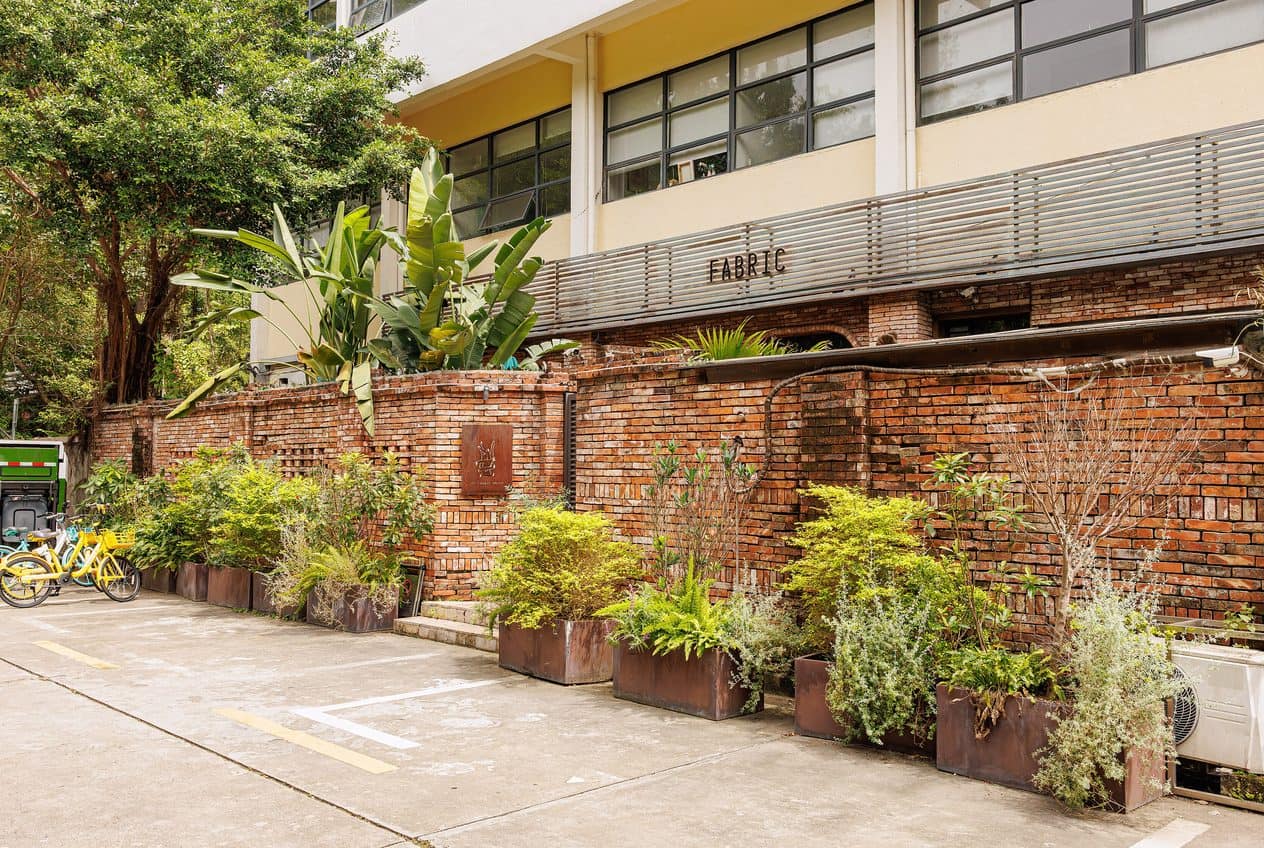
OCT-LOFT occupies about 150,000 square metres of 1980s electronics factories in Nanshan that were converted rather than demolished — the red brick, the structural bays and the loading yards are all still there, now holding roughly 300 design studios, galleries, bookshops and cafés. The grounds are free and open around the clock; individual shops and galleries run roughly 10:00 to 22:00. It splits into two halves that feel different enough to be worth knowing about in advance: the South Zone is the art side, with OCAT Shenzhen, studios and quieter restaurants, while the North Zone is the commercial and social side, with most of the cafés, the live-music venue and the market square. After a day of Shenzhen's malls and towers this is the correct antidote, and the honest framing is that it rewards sitting down more than it rewards walking around.
- Admission
- Free
- Grounds
- Open 24 hours
- Shops and galleries
- Roughly 10:00–22:00
- Layout
- South Zone art, North Zone cafés
- Allow
- 2–4 hours
- T Street market
- Selected weekends only
2Tickets
Nothing here charges admission. The park is free, the grounds never close, and most galleries are free too — only the occasional special exhibition sells a ticket, and some of those ask for advance booking. The one thing worth correcting from most English write-ups concerns the market, below.
| Park grounds | Free | Open 24 hours, no reservation. Lanes, brickwork and street art cost nothing at any time. |
|---|---|---|
| Galleries including OCAT Shenzhen | Usually free | Regular programming is generally free; check the day's listing on arrival. |
| Special exhibitions | Varies | Occasional ticketed shows, some of which require booking ahead. |
The T Street market is not every weekend:English guides routinely describe the creative market as a standing weekend fixture. In practice it runs on selected weekends — commonly the first and third of the month — and the schedule shifts for weather and events. If the market is the reason you are going, confirm the date on the park's own channel first; on an ordinary weekday the park is pleasant but quiet.
Some galleries close Monday:The art institutions keep museum hours and several shut on Mondays, even though the grounds themselves stay open. If exhibitions are the point of your visit, avoid Monday.
3Getting There
Two stations serve the park and they land you in two different halves of it, which is the single most useful thing to know before setting out.
Exit A, then 5–10 minutes on foot to the North Zone — the cafés, the market square and most of the food.
Exit B, then 10–15 minutes on foot to the South Zone — OCAT, the studios and the quieter end.
From Futian 15–25 minutes. Give the driver the address on Jinxiu North Street rather than the English name.
Both sit in the OCT district, one or two stops apart on Line 1 — an easy same-afternoon pairing.
Enter at the North Zone if you only have one visit:Line 1 Exit A drops you into the denser, more photogenic half with the coffee and the brick lanes. Walk south from there if you want the galleries; the two zones are a short walk apart.
4Route & Photos
Two hours if you walk it, three or four if you do it properly — which here means stopping. Mid-to-late afternoon is the best light and the least heat.
Recommended Route
- 1
Start in the North Zone brick lanes
The converted bays, external staircases and street art are concentrated here. Around 15:00–17:00 the light through the trees onto the white walls is the best of the day.
- 2
Old Heaven Books
Independent bookshop, vinyl and coffee in one room. The most-loved single address in the park and a legitimate reason to come on its own.
- 3
Walk south to OCAT and the studios
Contemporary art institutions and design offices, generally free. Check which shows are open — several close Mondays.
- 4
Sit down somewhere for an hour
This is not a tick-box district and treating it as one is the common mistake. A courtyard table with a coffee is the actual experience.
Best Photo Spots
Red brick walls, mid-afternoon
Industrial texture against planting, with soft side light from about 15:00. The signature frame of the park.
External staircases and loading bays
Hard geometry left over from the factory years — the clearest evidence of what this place used to be.
Courtyard cafés at dusk
Warm interior light against the brick once the sky drops. Ask before photographing people at tables.
5Food & Stay
| Park cafésCoffee and light meals | ¥30–80 per person | Priced for the setting rather than the plate — but the setting is the point here. |
|---|---|---|
| Restaurants in the South ZoneCantonese and international | ¥80–150 per person | Quieter and better for a proper sit-down dinner than the North Zone. |
| OCT district outside the parkMalls and chains | ¥60–120 per person | Cheaper and more reliable if you are feeding a group or children. |
Weekday lunch is the calm window:Popular restaurants queue at weekends. Before 11:00 or after 14:00 avoids the worst of it, and a weekday removes the problem altogether.
Where to Stay
- OCT and Nanshan: walking distance to the park, close to Window of the World and Happy Valley, and on Metro Line 1. Roughly ¥400–800 a night.
6Tips & Pitfalls
- Confirm the T Street market date before planning around it — it is not a weekly fixture, whatever most guides say.
- Avoid Monday if exhibitions matter to you; the grounds stay open but several art institutions close.
- Mid-to-late afternoon is the right time — best light on the brick, and it flows naturally into dinner.
- Wear comfortable shoes. The two zones are further apart than the maps suggest and it is all outdoors.
- Summer evenings bring mosquitoes to the planted courtyards; repellent is worth carrying from June to September.
7Frequently Asked Questions
Is OCT-LOFT free to visit?
Yes, it is free and no reservation is needed. The grounds are open around the clock, individual shops and galleries run roughly 10:00 to 22:00, and most gallery programming is free — only occasional special exhibitions sell tickets.
Does the T Street creative market run every weekend?
No. It runs on selected weekends, most commonly the first and third of the month, and the schedule shifts for weather and events. Confirm the date on the park's own channel before travelling specifically for it.
How do I get to OCT-LOFT?
Metro Line 1 to Qiaocheng East, Exit A, then 5–10 minutes on foot to the North Zone; or Line 2 to Qiaocheng North, Exit B, then 10–15 minutes to the South Zone. If you are only visiting once, take Line 1 to the North Zone.
What is the difference between the North and South zones?
The North Zone holds most of the cafés, the live-music venue and the market square, and is the denser, more photogenic half. The South Zone is the art side — OCAT Shenzhen, design studios and quieter restaurants. They are a short walk apart.
How long should I spend at OCT-LOFT?
Two hours to walk both zones, three or four if you stop properly. It is a district built for sitting down rather than ticking off sights, and visitors who treat it as a checklist tend to leave disappointed within half an hour.
Combine With
Other Shenzhen sights that genuinely pair well with this one
Before You Go
The practical guides you will actually need here
Sort Your Visa First
All Shenzhen attractions
Klook
The paid half of the OCT district, one stop away
OCT-LOFT costs nothing and needs no booking. What sits in the same district and does need booking is Window of the World and Happy Valley, both one or two stops away on Metro Line 1, plus the city tours and cross-boundary Hong Kong SAR day trips most visitors arrange from Shenzhen. Klook lists these with an English checkout. Check the inclusions, whether a timed entry is part of the price, and the cancellation terms before paying — and note that entering the Hong Kong SAR requires its own permit or visa.
- The creative park itself is free — this is for the rest of the district
- Window of the World and Happy Valley are one or two stops on Line 1
- Confirm whether a timed entry slot is included in the price
- SAR entry formalities are separate from any tour booking
Disclosure: this is an affiliate link. We may earn a small commission if you buy through it, at no extra cost to you. We only recommend products we would use ourselves.
GoChinaTravel Editorial Team
Our team of China travel researchers combines on-the-ground contributor insights, official government sources, and traveler community feedback to create the most detailed English-language China guides available. Every guide is fact-checked against primary sources (NIA, 12367, official attraction websites, Railway 12306) before publication.