1Highlights
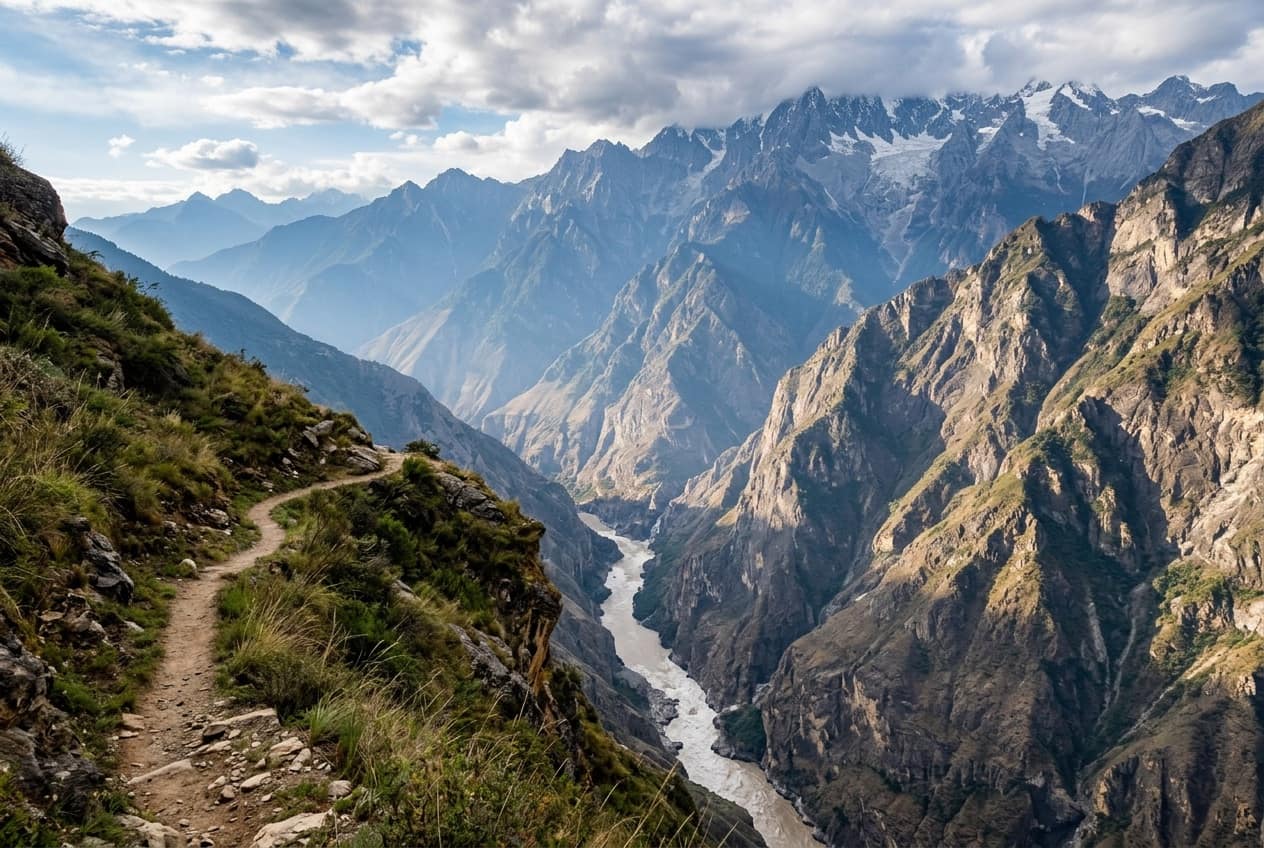
Tiger Leaping Gorge is where the Jinsha River — the upper Yangtze — is forced through a gap between the Jade Dragon and Haba ranges, both of which rise above 5,000 m on either side. Measured from the ridgelines down to the water it is one of the deepest river gorges anywhere, and the reason it is worth two hours from Lijiang is that the scale is legible in a way that photographs do not convey. The thing to settle before booking any transport is which gorge you actually want, because there are two and they are not versions of the same visit. From the Lower Gorge boardwalk you descend to the Tiger Leaping Stone and stand close enough to feel the river working — loud, physical, and about half a day. From the two-day High Trail you climb the switchbacks above the gorge, sleep at a guesthouse on the ridge and walk out the next day, and what you get is the gorge as a whole with both ranges in frame. One is a viewpoint; the other is a hike. Both are genuinely worth doing and neither substitutes for the other. What they share is that weather is not a detail here: the rainy months make the descents slick and bring rockfall onto sections of trail, and the gorge is the one place in this cluster where that changes the risk rather than just the comfort.
- What it is
- Among the deepest river gorges on earth
- River
- Jinsha River, the upper Yangtze
- Two ways to do it
- Lower Gorge day trip or two-day High Trail
- Entry
- Reference ~¥45-65; official current prices govern
- From Lijiang
- Roughly two hours to Qiaotou
- Altitude range
- Roughly 1,800 to 2,600 m
- Avoid
- Peak rainy months — slick trail and rockfall
2Tickets
Gorge entry is charged at the scenic area gate. The two-day trek adds guesthouse nights on the ridge, and a few boardwalk or ladder sections take small extra charges on the spot. Figures below are reference amounts — official current prices govern.
| Gorge entry | Reference ~¥45-65 | Charged at the scenic area gate; official current prices govern |
|---|---|---|
| Boardwalk and ladder sections | Small extras on the spot | Optional descent routes down to the water, run locally |
| High Trail guesthouse night | Reference ~¥100-200 per night | Simple ridge guesthouses; book ahead in season |
Day trip or two-day trek: two completely different things:People book transport to Tiger Leaping Gorge before deciding which gorge they actually want, and that is the mistake worth avoiding. A day trip descends to the Lower Gorge boardwalk and the Tiger Leaping Stone, where you stand close enough to feel the river's force off a platform — genuinely impressive, roughly half a day of walking, and back in Lijiang for dinner. The two-day High Trail starts at Qiaotou, climbs the switchbacks known as the 28 bends onto the ridge above the gorge, sleeps at a trail guesthouse, and descends the following day; what it buys is the view down onto the whole gorge with both 5,000 m ranges in frame, and it is a real hiking day rather than a viewpoint visit. The river up close and the gorge from above are not substitutes for each other, and the logistics, fitness and booking differ completely — so decide which one you want before you arrange the ride.
Some descents to the river are locally run and charge separately:Beyond the main gate fee, several of the ladder and boardwalk routes down to the water are operated locally and take a small charge at the top. They are optional in the sense that you can look from the platforms instead, but if you intend to reach the river itself, budget for them and carry some cash. These routes are steep and exposed in places, and they are not the right choice in rain or if you are unsure of your footing.
Klook
What a gorge product can genuinely solve is the transport
The gorge is roughly two hours from Lijiang with no direct public transport to the lower viewing area, and bus services back are infrequent enough that missing the last one is a real risk. That transport problem is what a booked day trip actually fixes, along with paying by overseas card and having a confirmed departure time in English. Before booking, check whether the itinerary reaches the river itself or stops at the platforms, and whether the locally charged descent routes are included, because those are the two things products differ on most.
- Check whether the itinerary descends to the river or stops at the viewing platforms
- For two-day trekking products, confirm which guesthouse and whether the ridge night is included
- Pay with an overseas Visa or Mastercard, which is the practical reason to book ahead rather than at a counter in Lijiang
- Cable car time slots, shuttle departures and gorge boardwalk access follow the scenic area's notice for your own date
- Read the cancellation terms before booking — high-altitude and mountain-road itineraries do get called off for weather
Disclosure: this is an affiliate link. We may earn a small commission if you buy through it, at no extra cost to you. We only recommend products we would use ourselves.
3Getting There
Buses run from Lijiang to Qiaotou, the town at the gorge entrance, in roughly two hours. Chartering is the most flexible way to do the lower gorge in a day; trekkers start on foot from Qiaotou.
Lijiang to Qiaotou, roughly two hours; check the return times before you go
Return from Lijiang with the driver waiting; the most flexible for a day trip
Transport plus entry; confirm whether it reaches the river or only the platforms
From the gorge to Shangri-La in roughly two to three hours — no need to return to Lijiang
Altitude shapes the order of your whole Lijiang itinerary:This is not a single-page warning, it is the premise of the whole trip. Lijiang town is already at roughly 2,400 m, the Jade Dragon cable car tops out near 4,506 m, and Tiger Leaping Gorge runs between roughly 1,800 and 2,600 m. Headache, breathlessness and poor sleep are common in the first day or two and have nothing to do with fitness. The practical consequence is an ordering rule: spend your first full day in town or in the old towns, and put the mountain on day two or later — not on your arrival day. Go easy on alcohol the first night, walk more slowly than feels natural at the top, and treat worsening symptoms as a reason to descend rather than to push on.
Check the last bus before you commit to public transport:Services between Lijiang and Qiaotou are not frequent, and the last departure is earlier than visitors expect. Confirm the return time before you set out, and if you are cutting it close, prefer a chartered car with a driver who waits. Trekkers heading onward have the better deal here: finishing the High Trail at the far end and continuing to Shangri-La avoids the return leg entirely.
4Route & Photos
Two itineraries, chosen in advance. The day trip is the Lower Gorge boardwalk and the Tiger Leaping Stone in about half a day of walking. The two-day trek starts at Qiaotou, climbs the 28 bends to the ridge, sleeps at a trail guesthouse, and descends the following day.
Recommended Route
- 1
Lower Gorge boardwalk
The day-trip route: down towards the water, where the river's force becomes physical rather than scenic.
- 2
Tiger Leaping Stone
The rock the legend is named for, shot from the platform rather than from the water's edge.
- 3
The 28 bends (two-day route)
The High Trail's hard section, gaining several hundred metres. Slow and steady beats strong and fast.
- 4
Ridge guesthouse for the night
Simple rooms with a terrace looking across both ranges; the sunset here is the payoff of day one.
- 5
Descend and continue onward
Day two drops to the river, and from the far end a bus continues to Shangri-La without backtracking.
Best Photo Spots
The upper viewing platform
Head-on at the river hammering the leaping stone — the one shot that conveys the volume of water.
Ridge guesthouse terrace
The classic High Trail frame: the whole gorge below with both ranges above, best in late light.
5Food & Stay
| Qiaotou restaurantsHome-style stir-fries | Reference ¥30-60 per person | Eat here before a day trip; options inside the gorge are thin. |
|---|---|---|
| Trail guesthousesFried rice and noodles | Reference ¥20-40 per person | Simple and filling rather than good; that is the correct expectation. |
| Your own trail foodSnacks and water | — | Carry more water than the distance suggests; there is little shade on the climb. |
Carry cash and your own water on the trail:Ridge guesthouses and the small charges on the locally run descents are often easier to settle in cash than by app, and mobile signal along the trail is patchy. Fill water bottles before you start climbing rather than counting on buying along the way, and assume the guesthouse kitchen closes early. None of this is a hardship, but it is the difference between a smooth day and an awkward one.
Where to Stay
- Lijiang or Shangri-La — the right base for a day trip, since you return the same evening either way. Lijiang is the usual choice because the transport is denser.
- Ridge guesthouses on the High Trail — simple rooms with terraces over the gorge, roughly ¥100-200 a night, and the reason the two-day route works at all. Book ahead in season rather than arriving and asking.
6Tips & Pitfalls
- Decide day trip or trek before you book transport. The river up close and the gorge from above are different experiences with different logistics. Booking the ride first is how people end up on the wrong one.
- Avoid the peak rainy months for the High Trail. Rain makes the descents slick and brings rockfall onto sections of the trail. For a first visit, the drier shoulder seasons are the sensible choice.
- Treat the 28 bends as the day's real work. Several hundred metres of gain at altitude on an open slope. Start early, pace slowly, and carry more water than the distance suggests.
- Trekkers can continue to Shangri-La. Finish the High Trail, descend at the far end, and take a bus onward in roughly two to three hours — no need to backtrack to Lijiang at all.
- Ticket prices, cable car fares, shuttle costs and reservation windows all change. Verify the official listing for your own travel date rather than relying on any figure quoted online, including the reference figures on this page.
- Lijiang town itself sits at roughly 2,400 m. Give yourself a full day here before any high-altitude day, go easy on alcohol the first night, and drink more water than usual.
- The old towns are paved in uneven stone and vehicles cannot enter the cores. A backpack beats a roller case, and rain makes the lanes genuinely slippery.
7Frequently Asked Questions
Day trip or the two-day High Trail — which should I choose?
It depends on what you want to come away with rather than on how much time you can spare. If you want to stand near the water and feel the river's force, the Lower Gorge day trip delivers exactly that in about half a day of walking, and you are back in Lijiang the same evening. If you want to see the gorge as a whole, with both 5,000 m ranges in the frame from above, that view only exists from the High Trail and it takes two days with a night on the ridge. They are different experiences, not a shorter and longer version of the same one.
How hard is the High Trail?
It is a real hiking day rather than a technical one. The trail is clear and does not require scrambling, but the switchbacks known as the 28 bends climb several hundred metres on an open slope at altitude, which is the section people underestimate. Reasonable fitness, an early start and a dry forecast make it manageable for most walkers; a guesthouse waits at the top of the climb. Rain changes the equation, because the descents become slick and rockfall is more likely on some sections.
How do I get to Tiger Leaping Gorge from Lijiang?
There are three usual ways. Buses run from Lijiang to Qiaotou at the gorge entrance in roughly two hours for around ¥30-50, which is cheapest but requires checking the return times carefully because services are not frequent. A chartered car with the driver waiting is the most flexible for a day trip, in the region of ¥600-800 for the day. A bundled day tour covers transport and entry from around ¥150-300 per person — worth confirming whether it reaches the water or only the viewing platforms.
Can I continue to Shangri-La without returning to Lijiang?
Yes, and for trekkers it is the better plan. Finish the High Trail on the second day, descend to the river at the far end of the gorge, and take a bus onward to Shangri-La in roughly two to three hours. That turns the gorge into a through-route rather than an out-and-back, and saves you the return leg to Lijiang entirely. Confirm departure times locally on the day, since schedules change.
When is the best time to visit?
The drier shoulder seasons on either side of the summer rains are the sensible windows: firmer trail, clearer air and moderate temperatures. The peak rainy months are when the gorge is at its most dramatic but also when the descents are slickest and rockfall is most likely on parts of the trail, which is a real rather than theoretical concern here. Winter is cold and quiet with very clear air, though the short daylight hours matter if you are walking.
Combine With
Other Lijiang sights that genuinely pair well with this one
Before You Go
The practical guides you will actually need here
All Lijiang attractions
Saily
eSIM by the team behind NordVPN
Saily is a newer travel eSIM from the NordVPN team, which brings a privacy-first approach to the eSIM space. China plans route through an overseas gateway so blocked sites work without a VPN. The app is clean and simple, and plans are competitively priced. A good option if you already use NordVPN products or want a privacy-focused eSIM.
- Built by the NordVPN team — privacy-first infrastructure
- Overseas gateway means blocked sites work without VPN
- Clean, simple app with easy setup
- Competitive pricing for China plans
Disclosure: this is an affiliate link. We may earn a small commission if you buy through it, at no extra cost to you. We only recommend products we would use ourselves.
GoChinaTravel Editorial Team
Our team of China travel researchers combines on-the-ground contributor insights, official government sources, and traveler community feedback to create the most detailed English-language China guides available. Every guide is fact-checked against primary sources (NIA, 12367, official attraction websites, Railway 12306) before publication.