1Highlights
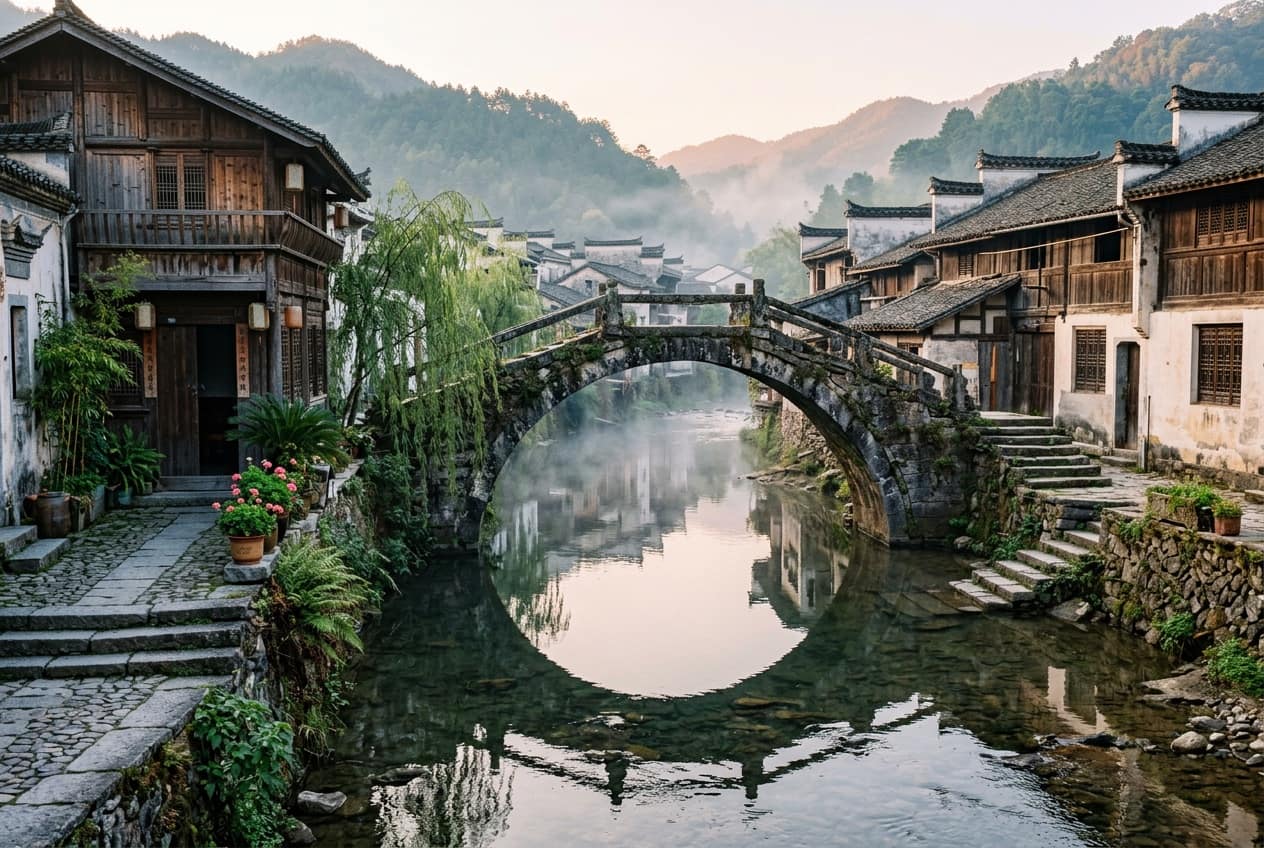
Shuhe was a staging post on the old Tea Horse Road, and it has the same Naxi timber-and-stone architecture and snowmelt channels as Lijiang Old Town four kilometres away. Like Dayan, it has no gate and no admission ticket, and the heritage maintenance fee that applies here is the same one — a single payment covers both towns. The reason to care about it is not that it has more to see. It has less: Sifang Street, the four-hundred-year Qinglong Bridge, the spring at Jiuding Dragon Pool and a Tea Horse Road museum add up to a comfortable half day. What it has instead is room to breathe. Crowd pressure is a fraction of Dayan's, the same dish costs noticeably less, and for the same nightly budget the courtyard you sleep in is clearly better. That combination is why a large share of repeat visitors to Lijiang sleep here and commute into Dayan for the dawn hour. It is not undiscovered, and it would be dishonest to sell it that way — the main street has shops and touts of its own. The quiet is in the deep lanes, in the early morning, and in your own courtyard. If you want the version that is rawer still, Baisha ten kilometres on is the next step out.
- Admission
- Free — no gate ticket; shares Dayan's heritage fee
- Crowds
- Markedly lighter than Dayan
- Distance from Dayan
- About 4 km, a short taxi ride
- Core sights
- Sifang Street, Qinglong Bridge, Dragon Pool
- Baisha side trip
- About 10 km further; murals ticketed separately
- Best seasons
- March-May and September-November
- Suggested time
- Half a day, or a multi-night base
2Tickets
Shuhe has no admission ticket. The heritage maintenance fee is the same one that applies in Lijiang Old Town and is checked at managed sites inside, such as the Tea Horse Road museum. The Baisha murals on the side trip are ticketed separately. Figures below are reference amounts — official current prices govern.
| Town entry | Free | Public lanes, no gate and no ticket |
|---|---|---|
| Heritage maintenance fee | Reference ~¥50 | The same fee as Lijiang Old Town; one payment covers both — keep the receipt |
| Baisha murals (Dabaoji Palace) | Reference ~¥30-50 | Optional side trip about 10 km on; photography is not permitted inside the hall |
How the heritage maintenance fee works:Lijiang Old Town and Shuhe have no gate and no admission ticket — you walk in freely. Separately from that, the area levies a heritage maintenance fee of around ¥50, which funds upkeep of the protected old towns. It is not collected at a town entrance but checked at the entrances of specific managed sites inside, such as Black Dragon Pool park, Mu Palace and the Tea-Horse Road museum. One payment covers both towns and stays valid for the duration of your stay, so keep the receipt rather than paying twice. Amounts, collection points and validity are set by the local administration and revised from time to time — take the official notice on the day as authoritative, and settle it at the counter rather than with anyone approaching you in the lane.
One heritage fee covers both old towns:If you have already settled the fee in Lijiang Old Town, you do not pay it again in Shuhe — it is the same levy for the same protected area, and the receipt is what proves it. Keep it somewhere you can find it rather than in a bag you leave at the inn. If you start your trip in Shuhe, the same applies in reverse when you go into Dayan.
3Getting There
Shuhe is about four kilometres from Dayan, which is a short taxi ride, a cheap bus, or a half-hour on a shared bike. From the airport it takes roughly as long as reaching Dayan does.
Ten to fifteen minutes each way
Several routes run between downtown and Shuhe
Dayan to Shuhe in roughly half an hour, mostly flat
Sanyi Airport to Shuhe, roughly 40 minutes
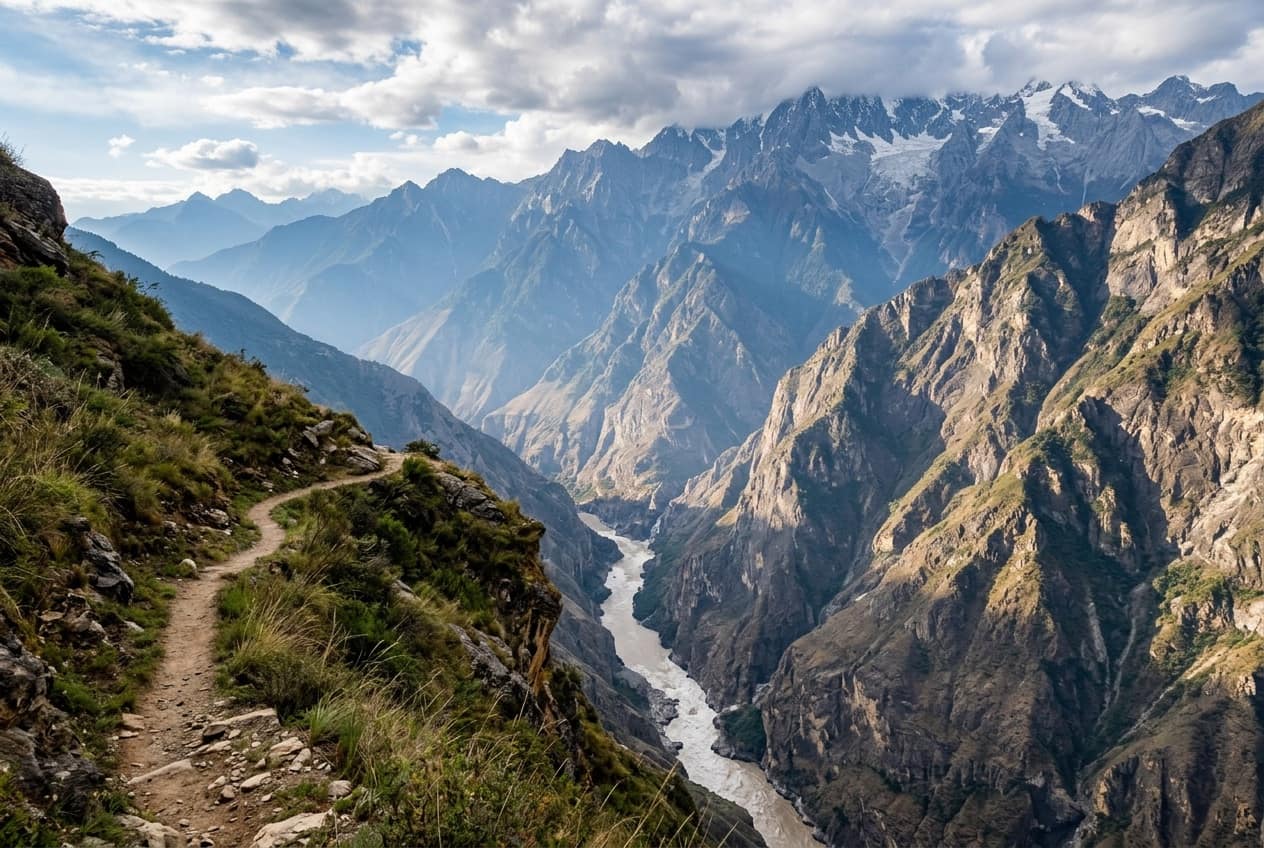
Altitude shapes the order of your whole Lijiang itinerary:This is not a single-page warning, it is the premise of the whole trip. Lijiang town is already at roughly 2,400 m, the Jade Dragon cable car tops out near 4,506 m, and Tiger Leaping Gorge runs between roughly 1,800 and 2,600 m. Headache, breathlessness and poor sleep are common in the first day or two and have nothing to do with fitness. The practical consequence is an ordering rule: spend your first full day in town or in the old towns, and put the mountain on day two or later — not on your arrival day. Go easy on alcohol the first night, walk more slowly than feels natural at the top, and treat worsening symptoms as a reason to descend rather than to push on.
Evening buses thin out — use a ride-hailing app after dark:Bus services between Shuhe and Dayan become infrequent once it is dark, which matters if you are basing here and going into Dayan for the evening. A ride-hailing app is the reliable option late, and the fare over four kilometres is small. Agree nothing with drivers who approach you on foot in the lanes; use the app or a hotel-arranged car.
4Route & Photos
Shuhe rewards being taken slowly rather than efficiently. The core sights are a comfortable half day on foot; the afternoon is better spent either sitting in a courtyard or riding out to Baisha than hunting for more to tick off.
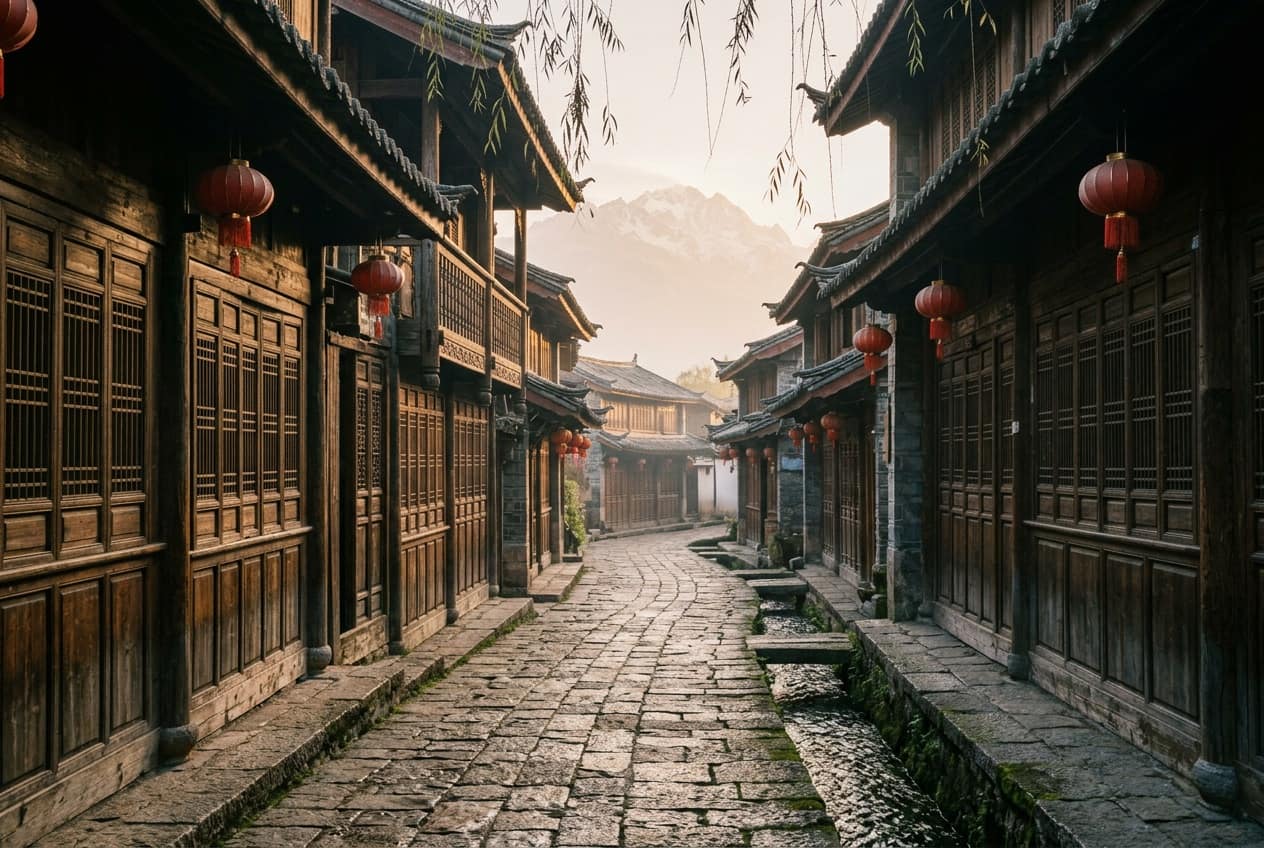
The dawn window is what these old towns are actually for:Both Lijiang Old Town and Shuhe are free to walk into at any hour, which means the only thing standing between you and the town in the photographs is what time you arrive. Between roughly 6 and 8 in the morning the stone lanes are empty, mist sits on the canals, the shutters are down and there is no amplified music — the architecture is legible because nothing is competing with it. By mid-morning both towns are shopping streets, and by evening Dayan in particular is a bar district. Dusk, when the lanterns come on, is the second-best hour. None of this changes by season. If your schedule only allows a midday visit, it is worth adjusting expectations in advance: what you will see is the commerce, not the town.
Recommended Route
- 1
Shuhe Sifang Street
The central square — the same layout idea as Dayan's, at a fraction of the crowd pressure.
- 2
Qinglong Bridge
A four-hundred-year stone arch and the town's landmark; empty at dawn.
- 3
Jiuding Dragon Pool
The spring that feeds the town's channels, clear to the bottom on still days.
- 4
Tea Horse Road museum
The caravan history that explains why a town exists here at all; low crowds.
- 5
Baisha, ten kilometres on
The earliest Naxi settlement, rawer lanes, and the Dabaoji Palace murals.
Best Photo Spots
Qinglong Bridge at dawn
The four-hundred-year bridge with nobody on it — a shot Dayan can no longer reliably give you.
Jiuding Dragon Pool
Spring water with the mountain reflected in it; needs a clear, still morning.
5Food & Stay
| Pork-rib or mushroom hotpotNaxi speciality | Reference ¥100-200 per person | Noticeably cheaper here than the same dish in Dayan. |
|---|---|---|
| Courtyard cafésCoffee and light meals | Reference ¥40-80 per person | Sitting in the sun is the point rather than the menu. |
| Baisha farmhouse cookingSimple local food | Reference ¥40-80 per person | Eat out there while on the side trip rather than coming back for lunch. |
Prices here are the quiet argument for basing in Shuhe:The same Naxi dishes typically cost meaningfully less here than on Dayan's main lanes, and the difference compounds across several days of eating. Combined with better courtyards at the same nightly rate, that is the practical case for sleeping in Shuhe even if you spend your mornings in Dayan. As anywhere in the area, agree the price for anything sold by weight before it is cooked.
Where to Stay
- Shuhe Naxi courtyard inns — the best value in the Lijiang area: the same nightly budget buys a noticeably better courtyard than in Dayan, and the nights are quiet. Roughly ¥300-600 a night.
- Baisha guesthouses — one step further out for a genuinely slow stay, rawer and quieter again, at the cost of needing a taxi for most things. Roughly ¥200-500 a night.
6Tips & Pitfalls
- Sleep here, visit Dayan at dawn. A short taxi puts you in Lijiang Old Town for the empty hour, and you come back to a quiet courtyard instead of a bar street. This is the single best structural decision in a Lijiang trip.
- Shuhe is commercialising too. Being honest about it: the main street has shops and touts. The quiet is in the deep lanes, in the early morning, and inside your own courtyard.
- No photography inside the Baisha mural hall. Dabaoji Palace holds genuinely old Naxi frescoes, and the no-camera rule inside exists to protect them. Respect it rather than testing it.
- Ticket prices, cable car fares, shuttle costs and reservation windows all change. Verify the official listing for your own travel date rather than relying on any figure quoted online, including the reference figures on this page.
- Lijiang town itself sits at roughly 2,400 m. Give yourself a full day here before any high-altitude day, go easy on alcohol the first night, and drink more water than usual.
- The old towns are paved in uneven stone and vehicles cannot enter the cores. A backpack beats a roller case, and rain makes the lanes genuinely slippery.
7Frequently Asked Questions
Does Shuhe charge admission?
No. There is no gate and no admission ticket — the lanes are public. The heritage maintenance fee that applies in this area is the same one as Lijiang Old Town, and it is checked at the entrances of managed sites inside, such as the Tea Horse Road museum. One payment covers both towns for the duration of your stay, so keep the receipt. Amounts and arrangements are set by the local administration, so take the official notice on the day as authoritative.
Shuhe or Dayan — where should I actually stay?
Shuhe for sleeping, Dayan for the morning. Shuhe's courtyards are quieter and cheaper, and the same budget buys a clearly better room. A short taxi reaches Dayan in about ten minutes, which means you can be in the old town for the dawn window and back somewhere quiet by night. The case for Dayan is convenience — amenities and the main sights on your doorstep, at the cost of bar-street noise and higher rates.
Is the Baisha side trip worth it?
Yes, if you have a spare half day and the appeal of Shuhe is its quiet rather than its shops. Baisha was the Naxi people's earliest settlement and is rawer again than Shuhe, and the Dabaoji Palace murals are genuinely old rather than reconstructed. They are ticketed separately, in the region of ¥30-50, and photography is not permitted inside the hall. A taxi or bike from Shuhe takes fifteen to twenty minutes.
How do I get between Shuhe and Dayan?
A taxi takes ten to fifteen minutes for roughly ¥20-30, which is the default. Several city bus routes connect downtown and Shuhe for a couple of yuan. A shared bike takes about half an hour on mostly flat ground. After dark, bus services thin out, so use a ride-hailing app rather than waiting at a stop.
Is Shuhe genuinely quiet, or is that just marketing?
Both things are true. Crowd pressure is a fraction of Dayan's and the nights are meaningfully calmer, which is real. But the main street has its own shops and touts, so anyone promising an undiscovered village will be disappointing you. The quiet you can count on is in the deep lanes, in the first hours after dawn, and in the courtyard of wherever you are staying. For a further step, Baisha is quieter again.
Combine With
Other Lijiang sights that genuinely pair well with this one
Before You Go
The practical guides you will actually need here
All Lijiang attractions
Klook
The town is free — what pays off is booking the days out from here
Shuhe has nothing to sell you at the gate, and the courtyard afternoons that make it worth basing here cost nothing either. What does repay booking ahead is what you do on the days you leave it: the capped Glacier Park cable car on Jade Dragon, and the Tiger Leaping Gorge trips that have no direct public transport to the lower viewing area. Many products will pick up from Shuhe as well as Dayan, so check the pickup point before booking.
- Check whether the pickup point includes Shuhe rather than only Dayan
- Pay with an overseas Visa or Mastercard, which is the practical reason to book ahead rather than at a counter in Lijiang
- Cable car time slots, shuttle departures and gorge boardwalk access follow the scenic area's notice for your own date
- Read the cancellation terms before booking — high-altitude and mountain-road itineraries do get called off for weather
Disclosure: this is an affiliate link. We may earn a small commission if you buy through it, at no extra cost to you. We only recommend products we would use ourselves.
GoChinaTravel Editorial Team
Our team of China travel researchers combines on-the-ground contributor insights, official government sources, and traveler community feedback to create the most detailed English-language China guides available. Every guide is fact-checked against primary sources (NIA, 12367, official attraction websites, Railway 12306) before publication.