1Highlights
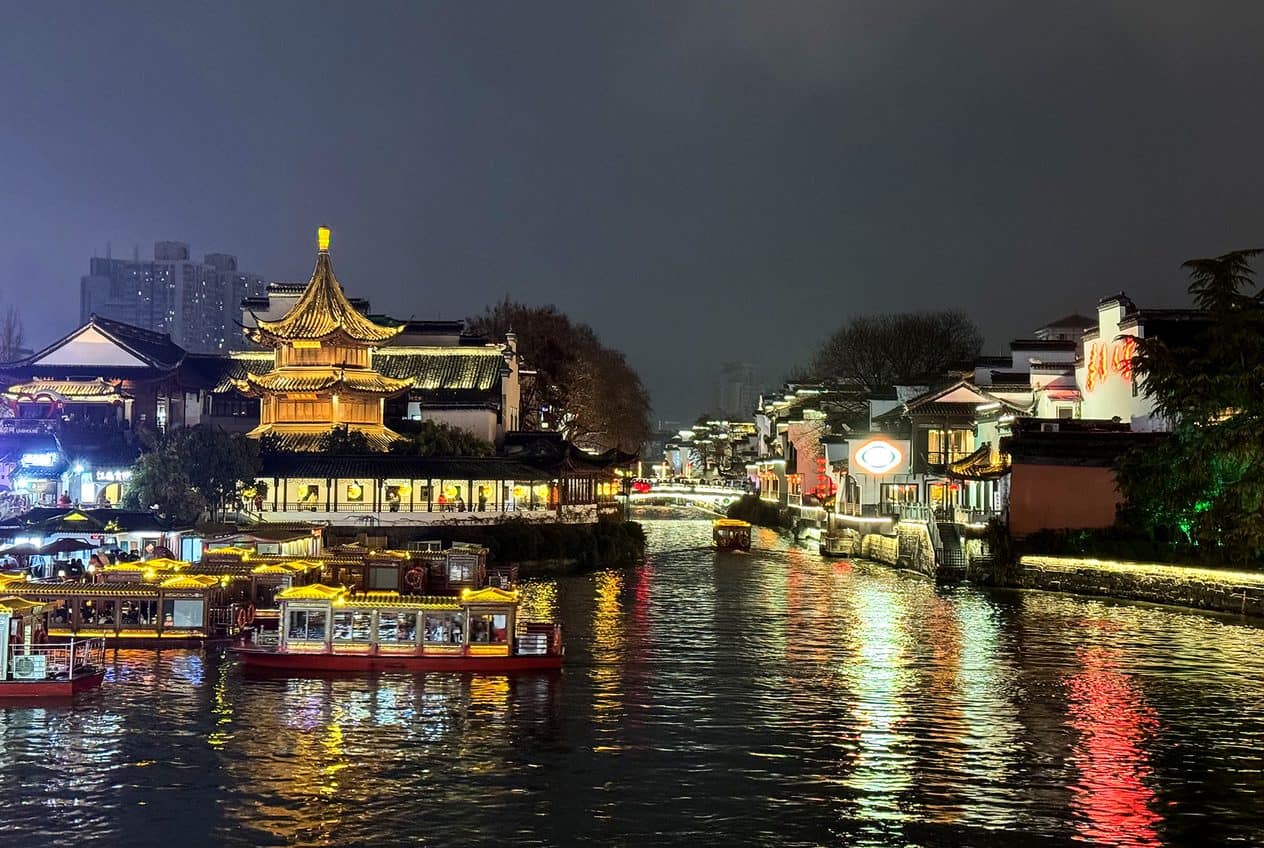
For five centuries this was where candidates sat the imperial examinations — the Jiangnan Examination Hall next door was the largest examination compound in the country, with over twenty thousand cells. The scholars brought money, the money brought the riverfront houses, and the Qinhuai became the most written-about stretch of water in Chinese literature. Today the streets, the riverbank and Wuyi Lane are free and open around the clock, and the halls inside them are not. It comes alive when the lanterns are switched on at about 18:30; before that you are looking at half of it. One honest warning carried over from the drafts and worth keeping: this is the most tourist-priced place to eat in Nanjing.
- District
- Free, open 24 hours
- Dacheng Hall
- About ¥30
- Examination Museum
- About ¥50
- Two-hall combination
- About ¥70
- Painted boats
- ¥80 day, ¥100–120 night
- Lanterns on
- About 18:30
2Tickets
The confusion here is that 'free' and 'ticketed' sit side by side within fifty metres. Walking the streets, the riverbank, Wuyi Lane and the Tianxia Wenshu archway costs nothing and needs no booking, at any hour. What charges: Dacheng Hall at about ¥30, the Imperial Examination Museum at about ¥50, with a ¥70 combination for both; Zhanyuan garden separately at about ¥40; and the painted boats from the Panchi quay at roughly ¥80 by day and ¥100–120 at night, for a circuit of about forty minutes. Children under 1.2 metres generally ride free, and the boats do not take the student or senior concessions the halls do.
| The district, the riverbank, Wuyi Lane | Free | Open 24 hours, no booking. The lanterns, the bridges and the river views cost nothing. |
|---|---|---|
| Dacheng Hall (the temple proper) | About ¥30 | Roughly 9:00–21:00. Student and 60–69 concessions at half price. |
| Imperial Examination Museum (Jiangnan Gongyuan) | About ¥50 | Largely underground and the most substantive thing to pay for here. A ¥70 combination with Dacheng Hall saves about ¥10. |
| Qinhuai painted boat | About ¥80 day, ¥100–120 night | About forty minutes from the Panchi quay. Last departures roughly 21:30; buy at the official quay or the official mini-programme. |
Buy boat tickets at the official quay only:Touts work the approach streets offering cruise tickets and photography. Buy at the Panchi quay window or through the official mini-programme, and ignore anyone selling on the street — this is the most persistent hassle in the district.
This is the most expensive place to eat in Nanjing:The food on the main tourist strip is priced for people who will not come back. See the lanterns here and eat ten minutes away in Laomendong or near the universities, where the same dishes cost a third to half as much.
Last boat is around 21:30:Halls generally stop admitting around 21:00–21:30 and the last boats leave about 21:30, earlier in winter. The lanterns stay on later than the things you can buy tickets for.
Klook
Booking the boat, when the quay queue is the problem
The district itself is free and needs no booking. The boat does, in peak season: the Panchi quay queues badly on holiday evenings and the official sales channel is a Chinese-language mini-programme. Klook lists Qinhuai cruises and Nanjing city itineraries with an English checkout. Before paying, confirm which route the boat takes (the eastern and western lines differ in price and length), whether the departure is a fixed time slot, and the cancellation terms. Note that street sellers near the quay are not an official channel regardless of what they show you.
- The streets and the riverbank stay free — this is only for the boat
- Eastern and western routes differ in both price and duration
- Last departures are around 21:30, earlier in winter
- Street sellers near the quay are not an official channel
Disclosure: this is an affiliate link. We may earn a small commission if you buy through it, at no extra cost to you. We only recommend products we would use ourselves.
3Getting There
Three metro lines reach the district and the walk in from any of them is short.
Exit 2 or 3, about three minutes to the archway. The most direct option.
A slightly longer walk in from the north, through the shopping streets.
Line 3 direct, no changes, about 20–25 minutes — useful if you arrive by high-speed rail with time before check-in.
Under two kilometres north through Laomendong, and the best approach to the district.
Do not drive at weekends or holidays:The core is pedestrianised and the surrounding streets jam badly. If you must, the Lianziying car park is roughly ¥6 an hour capped around ¥48 a day, five minutes' walk out.
4Route & Photos
Arrive about 16:00 and you get the halls in daylight and the river after dark on one visit. That is the whole scheduling trick here.
Recommended Route
- 1
Arrive around 16:00 at the archway
Enough daylight left for the ticketed halls, which close earlier than the streets do.
- 2
The Imperial Examination Museum
Built down into the ground on the site of the examination compound. The reconstructed cells make the scale of the system land in a way text never does.
- 3
Dacheng Hall, then Wuyi Lane
The temple proper, then the lane Liu Yuxi wrote about in the ninth century — the most quoted address in the district.
- 4
Wende Bridge at 18:30, when the lanterns come on
The best free viewpoint in the district, and the blue half-hour after is when the photographs work.
- 5
A boat, or the bank
Forty minutes on the water for ¥100–120, or walk the bank for nothing. Both are legitimate — the bank is better value, the boat is a better story.
- 6
Walk out to Laomendong for dinner
Ten minutes, and the single best financial decision available in this district.
Best Photo Spots
Wende Bridge at blue hour
Lanterns on, sky not yet black, reflections doubled in the water. About 18:30–19:00 and free.
The riverfront houses from the opposite bank
The tiered wooden frontages reflected in the Qinhuai, with boats crossing the frame.
The Tianxia Wenshu archway after 22:00
Still lit, crowds gone. The only time you can photograph the archway without a hundred people in it.
5Food & Stay
| LaomendongJinling snacks and restaurants | ¥40–100 per person | Ten minutes' walk and a different price level. Where to actually eat. |
|---|---|---|
| University and residential districtsDuck blood soup, local snacks | ¥20–50 per person | Normal city prices and, generally, better cooking than the tourist strip. |
| The main tourist stripSnack stalls | ¥50–120 per person | Listed for completeness. Eat a sesame cake if you like, but not a meal. |
Where to Stay
- Confucius Temple area: closest to the night views, hostels from about ¥80 and hotels to ¥300, but noisy until late.
- Xinjiekou: fifteen minutes away on Line 3 or 1, quieter and better connected for Purple Mountain. Roughly ¥300–600 a night.
6Tips & Pitfalls
- Come at 16:00, not 19:00. The halls close around 21:00 but the daylight for them is gone long before the lanterns are worth photographing.
- The streets are free. Only the halls, the gardens and the boats charge — do not let anyone tell you otherwise on the approach.
- Buy boat tickets at the official quay or mini-programme, never from a tout.
- Eat in Laomendong. Ten minutes' walk saves roughly half on the same dishes.
- Keep your bag in front of you on holiday evenings. The lantern area gets genuinely shoulder to shoulder.
7Frequently Asked Questions
Is the Confucius Temple district free?
The streets, the riverbank, Wuyi Lane and the archways are free and open 24 hours with no booking. Individual attractions charge: Dacheng Hall about ¥30, the Imperial Examination Museum about ¥50, a combination of the two about ¥70, and Zhanyuan garden about ¥40 separately.
How much is a Qinhuai boat ride?
Roughly ¥80 by day and ¥100–120 at night from the Panchi quay, for a circuit of about forty minutes. Children under 1.2 metres generally travel free, and the boats do not offer the student and senior concessions the halls do. Last departures are around 21:30, earlier in winter. Buy at the official quay or mini-programme rather than from street sellers.
When is the best time to visit?
Arrive about 16:00. That gives you daylight for the ticketed halls, which close earlier than the streets, and puts you on Wende Bridge at about 18:30 when the lanterns come on. The half hour after that is the best light of the day, and after 22:00 the crowds thin while the lanterns stay lit.
How do I get to the Confucius Temple?
Metro Line 3 to Fuzimiao station, Exit 2 or 3, about three minutes' walk. Line 1 to Sanshanjie also works from the north. From Nanjing South railway station, Line 3 runs direct in about 20–25 minutes.
Is the food at the Confucius Temple good?
It is the most tourist-priced food district in Nanjing, and the quality does not match the price. Walk ten minutes to Laomendong, or go to the university and residential districts, where the same dishes cost roughly a third to a half as much and are generally better cooked. See the lanterns here; eat elsewhere.
Combine With
Other Nanjing sights that genuinely pair well with this one
Before You Go
The practical guides you will actually need here
Sort Your Visa First
All Nanjing attractions
GoChinaTravel Editorial Team
Our team of China travel researchers combines on-the-ground contributor insights, official government sources, and traveler community feedback to create the most detailed English-language China guides available. Every guide is fact-checked against primary sources (NIA, 12367, official attraction websites, Railway 12306) before publication.