1Highlights
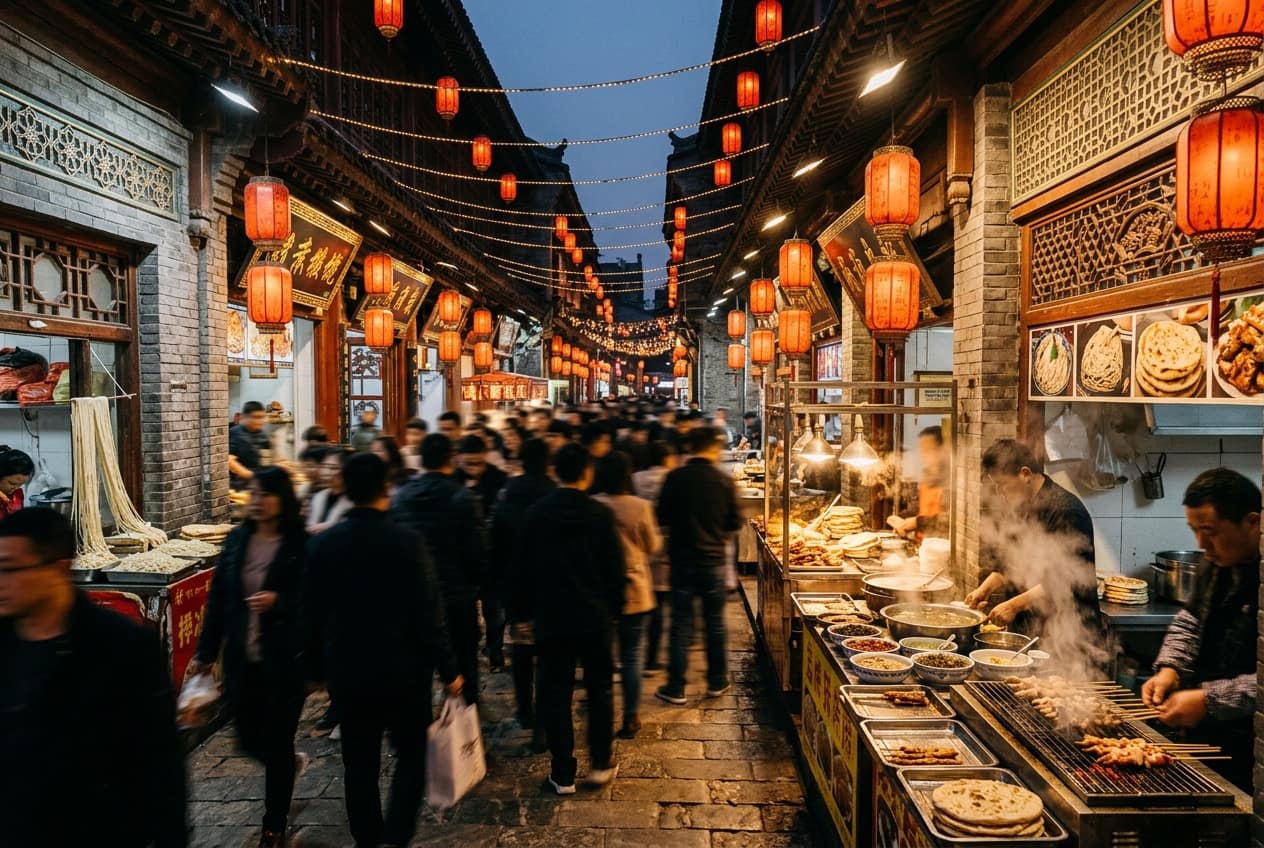
The single most useful correction to make before you go: what visitors call the Muslim Quarter is a residential and commercial district of roughly a dozen lanes, and the famous one is the least representative of them. Beiyuanmen, the lantern-hung street running north from the Drum Tower, is the image on every search result — and it is the most commercial, most visitor-priced part of the whole area. The food that Xi'an residents actually travel for sits one or two turns off it, in Xiyangshi, Dapiyuan, Beiguangji Street and the smaller lanes behind them, and the everyday version of the district carries on further west around Sajinqiao, where the clientele is local and the prices follow. None of this makes Beiyuanmen a trap exactly — it is a genuinely atmospheric street after dark, and a reasonable place to walk and photograph. It is simply the wrong place to commit your appetite. The quarter is also not a ticketed attraction: the lanes are public streets, free to walk, and the named venues inside them — the Great Mosque on Huajue Lane, the Drum Tower, the Gao family courtyard house — each have their own arrangements. Treat the whole thing as a neighbourhood you are visiting rather than a food court with a theme, and both the eating and the etiquette get easier.
- What it actually is
- About a dozen connected lanes
- Admission
- Public streets are free
- The photogenic street
- Beiyuanmen, north of the Drum Tower
- Where locals eat
- Dapiyuan, Xiyangshi, Beiguangji
- Nearest metro
- Bell Tower station
- Best timing
- Mid-afternoon or early morning
- Allow
- 2–4 hours for a tasting walk
- Pork
- Do not bring it into the quarter
2Tickets
There is no admission ticket for walking the lanes, and you should be sceptical of anyone who offers you one. What does cost money is specific: individual venues, individual meals, and optional experiences. The Drum Tower at the quarter's southern edge is a ticketed monument. The Great Mosque on Huajue Lane is an active place of worship with its own visiting arrangement. The Gao family courtyard house on Beiyuanmen charges a modest entry for the compound and its shadow-puppet performances. Everything else you pay for here is food.
| Walking the public lanes | Free | Beiyuanmen, Xiyangshi, Dapiyuan and the connecting lanes are ordinary public streets. |
|---|---|---|
| Great Mosque, Huajue Lane | Venue-specific | An active mosque with visiting hours; it closes in the evening, so this is a daytime stop. |
| Drum Tower | Ticketed monument | At the southern end of Beiyuanmen; a separate ticket from anything else here. |
| Gao family courtyard house | Modest entry fee | A Ming–Qing courtyard residence on Beiyuanmen with shadow-puppet and folk-opera performances — the quietest place in the quarter. |
| Any general quarter pass | Does not exist | If someone sells you an all-area ticket for the Muslim Quarter, decline it. Pay only for a named venue, a meal or a clearly described experience. |
Tell a working mosque from a paid photo set:The area has acquired a number of antique-styled courtyards and paid photo spots, some presented in ways that suggest a historic mosque. The distinction is straightforward: a functioning mosque has an imam, a congregation, visible religious activity and a published visiting arrangement; a commercial set charges for entry to photograph and is otherwise empty or converted to other use. Navigate to the Great Mosque by its proper name on Huajue Lane rather than following someone who approaches you on the street.
No pork, no alcohol, no smoking in religious spaces:This matters more than it sounds, because the mistake is so easy to make: visitors routinely finish a skewer on Beiyuanmen and carry food into the mosque courtyard to photograph it. Non-halal food and alcohol should not be brought into the mosque at all, and smoking is prohibited inside. Eat before you enter, not inside. More broadly, this is a Muslim neighbourhood — do not bring pork products into the quarter.
Decline the hand on your sleeve:Touts who steer you into a specific shop, unsolicited guides and people offering to take you somewhere better operate here as in any busy food district. The lanes are small and easy to navigate yourself; there is no shop here so hidden that you need an escort to reach it.
3Getting There
The quarter sits immediately northwest of the Bell Tower, in the middle of the walled city, and the only sensible way to move inside it is on foot. The useful decision is not how to arrive but where to enter and where to leave, because walking out the far side puts you at a different metro line.
Metro Lines 2 and 6. Surface and walk toward the Drum Tower; the Beiyuanmen archway is directly beyond it. This is the standard entrance.
Metro Line 1, at the quarter's western side. Worth knowing because it lets you walk the whole district in one direction and leave without backtracking — and Sajinqiao itself is the most local-feeling stretch.
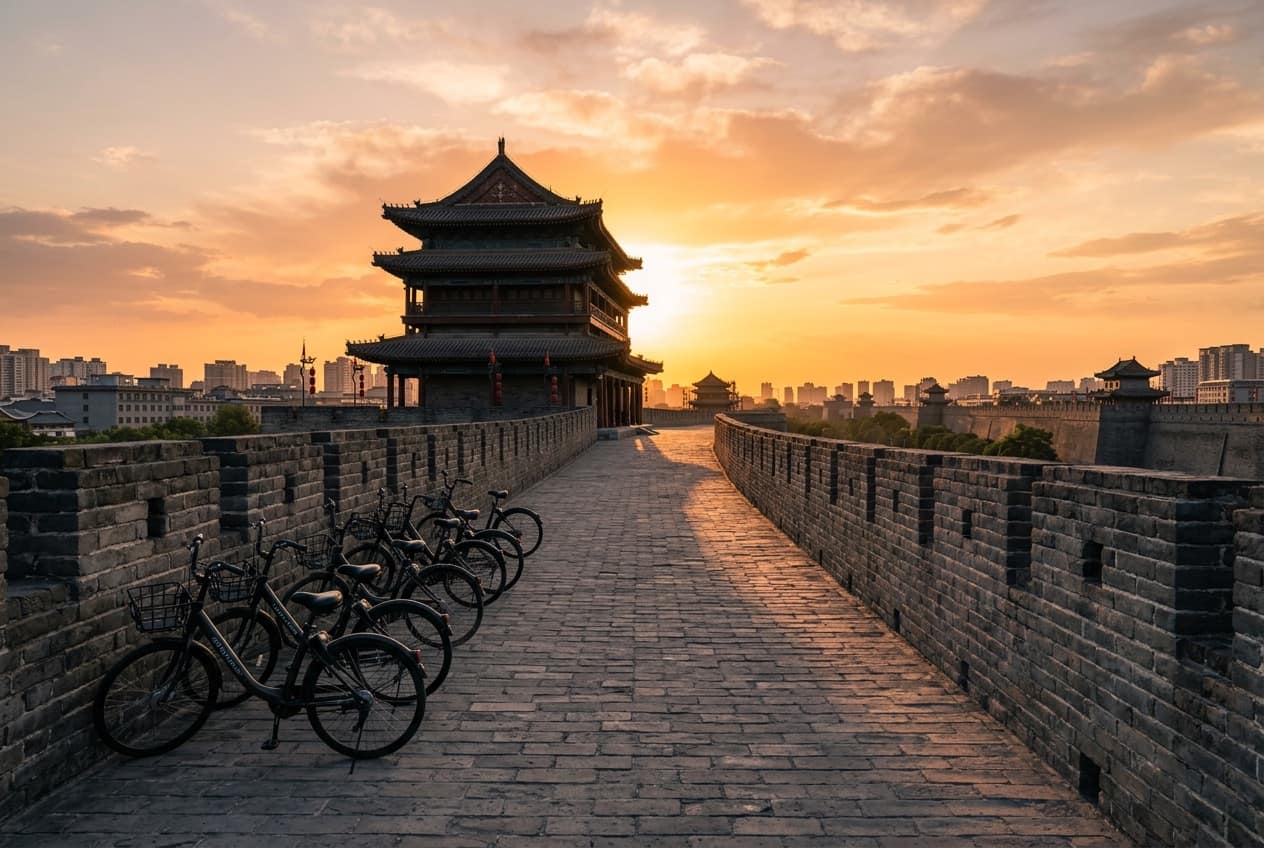
The quarter is walkable from the wall's western and southern stretches, which makes it a natural second half to a wall visit.
Set a pickup point on a wider road rather than asking a driver into the lanes, which are pedestrian-dense and effectively impassable at meal times.
Many routes stop around the Bell Tower and Drum Tower squares, within a short walk of the archway.
Walk one direction and exit at the other end:The efficient route is linear rather than a loop: enter near the Drum Tower, work west and northwest through the lanes, and come out at Sajinqiao for Line 1. You see the commercial street, the food lanes and the residential end in sequence, and you never retrace your steps. Doubling back to the Bell Tower through the same crowd at the end of the evening is the least pleasant part of most visits.
This is a living neighbourhood, not a set:People live, work and worship in these lanes. Dress and behave as you would in any residential street, keep doorways clear when you stop to photograph, and do not photograph worshippers or residents without consent — particularly not by moving in front of someone at prayer to improve a composition.
4Route & Photos
Eat in small portions across several stops rather than treating any one shop as the meal. The standard mistake is ordering a full bowl of something at the first place on Beiyuanmen and being finished — physically and financially — before reaching the lanes where the good version is.
One sit-down meal, several standing snacks:The structure that works: pick exactly one dish to sit down for — paomo or a small-fry version of it is the usual choice — and make everything else a few bites bought standing. Also note the local rule on paomo: order the soaked-bread version or the stir-fried version, not both. They are large, and one of each defeats most people.
Recommended Route
- 1
Start at the Great Mosque, while it is open
Huajue Lane, reached by turning off the main street rather than staying on it. A Chinese courtyard compound built to an Islamic function, which is the most interesting thing in the quarter and the one thing that closes in the evening — so do it first, not last. Eat nothing on the way in.
- 2
Walk Beiyuanmen for the atmosphere, not the appetite
The lantern-lit main street from the Drum Tower archway northward. Photograph it, feel the scale of the crowd, and keep walking. Prices here are set for people who will not turn the corner.
- 3
Turn into Xiyangshi for standing food
This is where the tasting walk properly starts. Buy small: a persimmon cake, a jingao rice cake, a skewer, a cup of something. Compare two or three sellers of the same thing before committing — the gap between adjacent stalls is real.
- 4
Sit down in Dapiyuan
The lane where the serious eating is, and the right place for the one dish you commit to. This is also where you will see the most local customers at non-peak hours, which is the only reliable signal in a district this busy.
- 5
Continue to Beiguangji Street for what to take home
The cured beef and lamb end of the quarter. If you want a souvenir from Xi'an that is not a fridge magnet, this is it — bought by weight, from a shop with a queue of people who are clearly not tourists.
- 6
If you have energy, push on to Sajinqiao
Seven or eight minutes further west through Miaohou Street. This is the district without the audience: ordinary prices, local customers, breakfast culture. Then leave from Sajinqiao station rather than walking back.
Best Photo Spots
The Beiyuanmen archway at dusk
From the southern end of the street, framing the archway with the Drum Tower behind it. The twenty minutes after the lanterns come on and before full dark is the window; stand to one side so you are not blocking the flow.
The Great Mosque courtyards
Chinese timber architecture serving an Islamic plan — pavilions, a minaret built as a Chinese tower, Arabic inscription on carved wood. Stay on the public paths, keep worshippers out of frame, and photograph the architecture rather than the people in it.
Dapiyuan shopfronts in the morning
Before the crowds, when shutters are going up and the old signage is readable. The most honest photograph of the quarter and the hardest one to get, because it requires being here at an hour nobody wants to be.
Street food in production
Hands working — bread being pulled, meat being chopped, a cake being lifted out of a steamer. Ask before pointing a lens at someone's face; nobody minds a photograph of the work.
Sajinqiao in the morning
If you made it this far west, this is the reward: a breakfast street with no performance in it. Wide shots of the lane work better here than close-ups of dishes.
5Food & Stay
| Yangrou or niurou paomoSit-down bread-and-soup | Varies | The dish to commit to. You may be given a bread round to tear yourself — tear it small, roughly soybean-sized, which is what lets it take up the soup properly. Choose this or the stir-fried version, not both. |
|---|---|---|
| RoujiamoFlatbread with meat | Varies | In this district the filling is beef or lamb, not pork — do not accept a generic translation that says otherwise. Choose a shop where both the bread and the meat are hot, not a pre-stacked tray. |
| Guantang baoziSoup dumplings | Varies | Beef or lamb filled. The local method: open a small window in the skin, drink the soup, then eat the rest. Order the dumplings and stop there rather than adding stir-fried dishes. |
| Snacks to buy standingWalking food | Varies | Zenggao steamed rice cake, jingao, persimmon cakes, mahjiang liangpi, honey cold zongzi, chilled sour-plum drink, and the egg-and-fermented-rice bowl in cold weather. Small portions, several stops. |
Share rather than each ordering a dish:Portions here are generous by design. A group that orders one dish per person will be full and disappointed after the first stop; a group that orders two dishes between four and keeps walking will eat five times as many things. Also skip the mid-street combo platters priced for visitors — a set with a skewer and a yoghurt for the price of a proper meal is the clearest signal you are in the photography part of the quarter, not the eating part.
Where to Stay
- Staying near the Bell Tower or Drum Tower puts the quarter at the end of your street, which is genuinely convenient — and loud. Ask for a room away from the main road if you are a light sleeper.
- Staying elsewhere inside the city walls is the better balance: the quarter is a short walk or one metro stop away, and the evening noise stays where it belongs.
- If you want the breakfast version of this neighbourhood, being within walking distance matters more than any other amenity — the local morning trade is over before most visitors have finished their hotel buffet.
6Tips & Pitfalls
- Prices, opening hours, transport schedules and reservation rules can change; verify the official notice for your date.
- Keep your passport or the original ID used for a booking available; a screenshot may not be accepted.
- Remember that the famous street is the expensive one. Beiyuanmen is for walking and photographs; Dapiyuan, Xiyangshi and Beiguangji Street are for eating. The difference in both price and quality over a distance of one turn is the single most useful thing to know here.
- Time of day matters more than day of week. Mid-afternoon, roughly between the lunch and dinner rushes, is the most comfortable window; early morning gets you the local version. Midday on a public holiday is the worst combination available.
- Check posted prices before ordering, especially for anything sold by weight or as a combination platter. Ask what the number refers to — a portion, a skewer, or 500 grams.
- Small cash or a working mobile payment method both help. Many of the best small shops are not set up for the payment methods an overseas visitor arrives with, which is worth solving before you are hungry and standing at a counter.
- The quarter's Muslim character is not a theme — it is the neighbourhood's actual life. Do not bring pork products in, and keep non-halal food and alcohol out of religious spaces entirely.
- The Gao family courtyard house on Beiyuanmen is the escape valve. When the street becomes too much, a modest ticket buys you a quiet Ming–Qing compound with shadow-puppet and folk-opera performances, fifty metres from the crowd.
- If a shop sells one thing, that is a good sign, not a limitation. The strongest places in the quarter are usually single-dish operations that have done the same item for decades.
7Frequently Asked Questions
Is Xi'an Muslim Quarter free to visit?
Yes, walking the lanes is free — they are ordinary public streets. What costs money is specific: the Drum Tower is a ticketed monument, the Gao family courtyard house charges a modest entry, the Great Mosque on Huajue Lane has its own visiting arrangement, and everything else you pay for is food. If anyone offers you a general Muslim Quarter ticket, decline it; no such thing exists.
Which lanes should I actually eat in?
Dapiyuan for the one dish you sit down for, Xiyangshi for small things eaten standing, and Beiguangji Street for cured beef and lamb to take away. Beiyuanmen — the lantern-hung main street everyone photographs — is the most visitor-priced part of the district and the weakest place to commit your appetite. If you have time and energy, continue west to Sajinqiao, where the prices and the clientele are local.
What should I eat in the Muslim Quarter?
Commit to one sit-down dish — yangrou or niurou paomo, or its stir-fried version, but not both, because they are large. Then graze: roujiamo with beef or lamb filling, guantang soup dumplings, zenggao rice cake, jingao, persimmon cakes, mahjiang liangpi, honey cold zongzi and chilled sour-plum drink. Order small portions at several stops and share rather than each person ordering a full dish.
Is roujiamo pork here?
No. The filling varies by region and by shop across China, but in this district — a Muslim neighbourhood — beef and lamb versions are what you will find. A generic English translation that renders it as a pork sandwich is simply wrong for this location. Ask the seller if you are unsure.
How do I tell a real mosque from a paid photo spot?
A functioning mosque has an imam, a congregation, visible religious activity and a published visiting arrangement. A commercial antique-styled courtyard charges admission to photograph and is otherwise empty or repurposed. Several of the latter have appeared around the quarter. Navigate to the Great Mosque by its proper name on Huajue Lane, and do not follow someone who approaches you offering to show you a temple or mosque.
What etiquette applies in the quarter?
Treat it as a residential and religious neighbourhood rather than an attraction. Do not bring pork products into the quarter. Non-halal food, alcohol and smoking do not belong in the mosque at all — eat before you enter rather than carrying a skewer into the courtyard, which is the most common lapse. Dress reasonably, keep doorways clear when photographing, and do not photograph worshippers or residents without consent, especially not by stepping in front of someone at prayer.
How long should I spend there?
Two to four hours covers a relaxed walk with several small tastings and one sit-down dish. Add time if you are visiting the Great Mosque, the Drum Tower or the Gao family courtyard house, and add more if you intend to walk the full line west to Sajinqiao. The efficient plan is linear: enter near the Drum Tower and exit at Sajinqiao station rather than retracing your steps through the evening crowd.
Is it worth going if I only have one evening in Xi'an?
Yes, with an adjustment. One evening means the Great Mosque will already be closed, so you lose the quarter's most interesting building and are left with the food and the street. That is still a good use of an evening — but spend it one turn off Beiyuanmen rather than on it, and if you can manage a morning instead, the quarter at breakfast is a better experience than the quarter at nine at night.
Combine With
Other Xi'an sights that genuinely pair well with this one
Before You Go
The practical guides you will actually need here
All Xi'an attractions
Klook
Compare Xi'an food walks and local guided experiences
Klook may list English-language food walks or guided experiences here, and a guide who knows which lane to turn into can be worth more in this district than in most. Compare the route, which lanes are actually covered, tasting inclusions, language, meeting point and cancellation terms — and remember the public streets themselves need no ticket.
- Compare the exact product inclusions and meeting point
- Check current reservation, ID, redemption and cancellation rules
- Do not treat a listing as a guarantee of entry or queue-free access
- Cross-check the attraction's official notice before paying
Disclosure: this is an affiliate link. We may earn a small commission if you buy through it, at no extra cost to you. We only recommend products we would use ourselves.
GoChinaTravel Editorial Team
Our team of China travel researchers combines on-the-ground contributor insights, official government sources, and traveler community feedback to create the most detailed English-language China guides available. Every guide is fact-checked against primary sources (NIA, 12367, official attraction websites, Railway 12306) before publication.