1Highlights
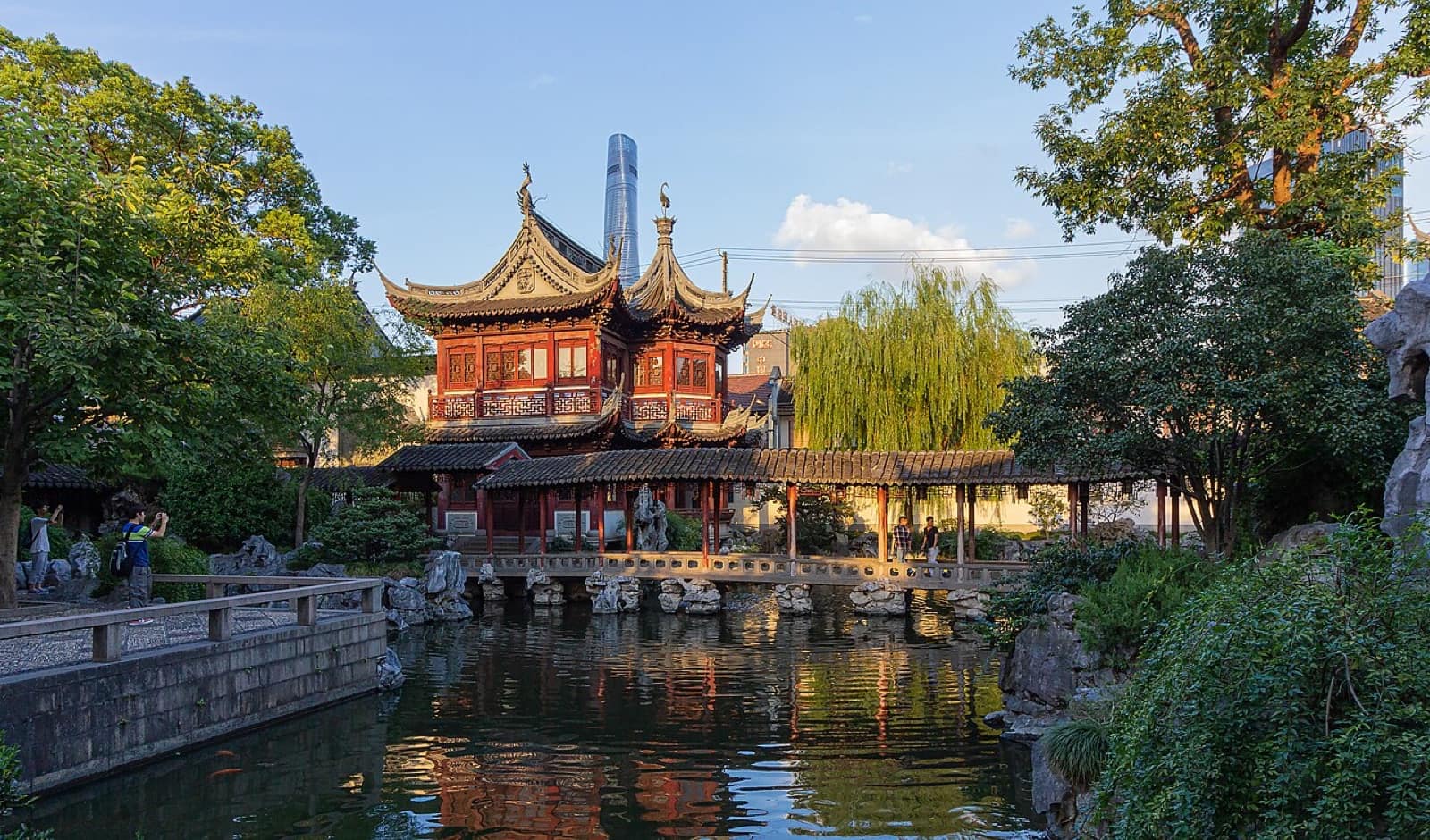
More visitors get this one wrong than any other attraction in Shanghai, and the reason is a naming problem. Three separate places share the name Yuyuan. The first is Yu Garden itself, a classical Jiangnan garden begun in 1559 and now a protected national monument — walled, ticketed, open only in daylight, and closed on Mondays. The second is the Yuyuan Bazaar, the surrounding block of Ming-and-Qing-styled shopping streets including the Nine-Bend Bridge and the Mid-Lake Pavilion teahouse: free, open late, lit at night, and the source of almost every photograph tagged Yu Garden. The third is the City God Temple, an active Taoist temple nearby with its own modest admission. So the common experience runs like this: a visitor walks the bazaar, crosses the zigzag bridge, eats a dumpling, photographs red lanterns, and leaves believing they have seen Yu Garden — having never passed through its gate. The garden is worth passing through. It occupies only about two hectares, yet uses folded corridors, pierced walls and water to cut that space into so many layers that the view changes every few paces; its prize rockery is Ming work by a master stone-stacker, and its celebrated Exquisite Jade Rock is counted among the three famous stones of the Jiangnan region. Two hard rules govern a visit: it closes on Mondays outside public holidays, and it stops admitting visitors in the late afternoon. Get those wrong and the gate decides your day for you.
- Founded
- 1559, Ming dynasty
- Garden admission
- Ticketed, with a peak and off-peak tier
- Bazaar and Nine-Bend Bridge
- Free, and lit in the evening
- City God Temple
- A separate site with its own ticket
- Closed
- Mondays, except public holidays
- Last admission
- Late afternoon — the garden does not open at night
- Allow
- 1.5–2 hours in the garden, half a day with the bazaar
- Nearest metro
- Yuyuan Garden station, about 5 minutes on foot
2Tickets
Only the walled garden charges, and the first thing to settle is that you are buying the right thing. Admission is sold through the garden's own official channel and at the windows beside its north and south gates, with real-name timed entry — typically a morning block and an afternoon block rather than a precise minute. The price has a peak and an off-peak tier, and the split is counter-intuitive: the hot months of high summer and the cold months of winter are the cheaper off-peak periods, while spring and autumn are peak. Students and older visitors have had half-price concessions, with free entry for small children by height and age and for several document-holding categories. Figures, tiers, concession bands and the booking channel all change, so confirm on the official channel for your date — and ignore anyone in the bazaar quoting you a special price, because the garden has no discount sellers.
| Yu Garden admission | Peak and off-peak tiers | The walled classical garden only. Real-name timed entry, sold in a morning and an afternoon block. This is the thing most visitors never actually buy. |
|---|---|---|
| Student and senior concession | Half price | Bring the original document; concession tickets have been limited to one per person per day. |
| Free-entry categories | No charge | Small children by height and age, with a limit on how many one adult may bring, plus several document-holding categories. |
| Yuyuan Bazaar, Nine-Bend Bridge, Old Street | Free | Open all day and lit in the evening. Everything most people picture when they hear Yu Garden is in this free zone. |
| City God Temple | Separate modest ticket | An active Taoist temple, not part of the garden and not covered by its ticket. Entry is optional. |
| Evening garden programme | Priced separately | A distinct night-time product when running, not interchangeable with a daytime ticket. The garden's normal hours are daylight only. |
Closed on Mondays — this is the classic wasted trip:Most travellers know to check Monday closures for museums and never think to check them for a garden. Yu Garden closes on Mondays outside public holidays, and because the surrounding bazaar stays open and busy, nothing about the scene tells you the gate is shut until you are standing at it. If your Shanghai Monday is otherwise free, note that the Terracotta-style rule applies here and not at the bazaar: you can still walk the bridge, eat, and photograph the lanterns — you simply cannot enter the garden.
The garden shuts in the late afternoon, the bazaar does not:Last admission is in the late afternoon and the garden clears shortly after, while the bazaar outside runs into the evening and switches its lights on around dusk. This mismatch produces the second most common disappointment here: arriving at five or six for what looks like a lively, open attraction, and finding the only ticketed part of it already closed for the day. If the garden is your priority, it has to be a morning or early-afternoon plan.
Nobody in the bazaar can get you into the garden:Two pitches circulate in the surrounding streets: a free guided walk that will take you into Yu Garden, and a special price on today's ticket. Neither is real. The garden sells through its own official channel and its gate windows, with real-name entry, and the only thing a bazaar approach reliably leads to is a shop. If you want commentary, the garden's own guiding service is arranged inside, at the visitor desk.
Klook
Check Yu Garden admission and guided old-city options
Use Klook only for a clearly described Yu Garden admission or guided product. The critical check here is whether the listing covers the ticketed walled garden or merely the free bazaar area — the two are routinely conflated. Also confirm the date is not a Monday, and check ID requirements, redemption, language and cancellation conditions.
- Confirm the listing covers the paid walled garden, not just the free bazaar
- Check the date is not a Monday, when the garden is closed
- Note the garden admits visitors only until the late afternoon
- Verify real-name and ID requirements before paying
Disclosure: this is an affiliate link. We may earn a small commission if you buy through it, at no extra cost to you. We only recommend products we would use ourselves.
3Getting There
The old city is dense, low-rise and genuinely confusing on a map, which makes the metro the only sensible approach — there is no visitor parking and the surrounding lanes gridlock on holidays. The useful thing to know is which gate you want, because the garden has two and they serve different purposes.
Metro Lines 10 and 14, then about five minutes on foot to the north gate on Fuyou Road. The straightforward approach, and the one to use if you are heading for the garden rather than the shops.
The main entrance, used by both groups and individual visitors, with ticket windows alongside. Start here and exit south, so you finish beside the bridge and the bazaar.
At the foot of the Nine-Bend Bridge, individual visitors only. Convenient as an exit; as an entrance it means walking through the busiest part of the bazaar first.
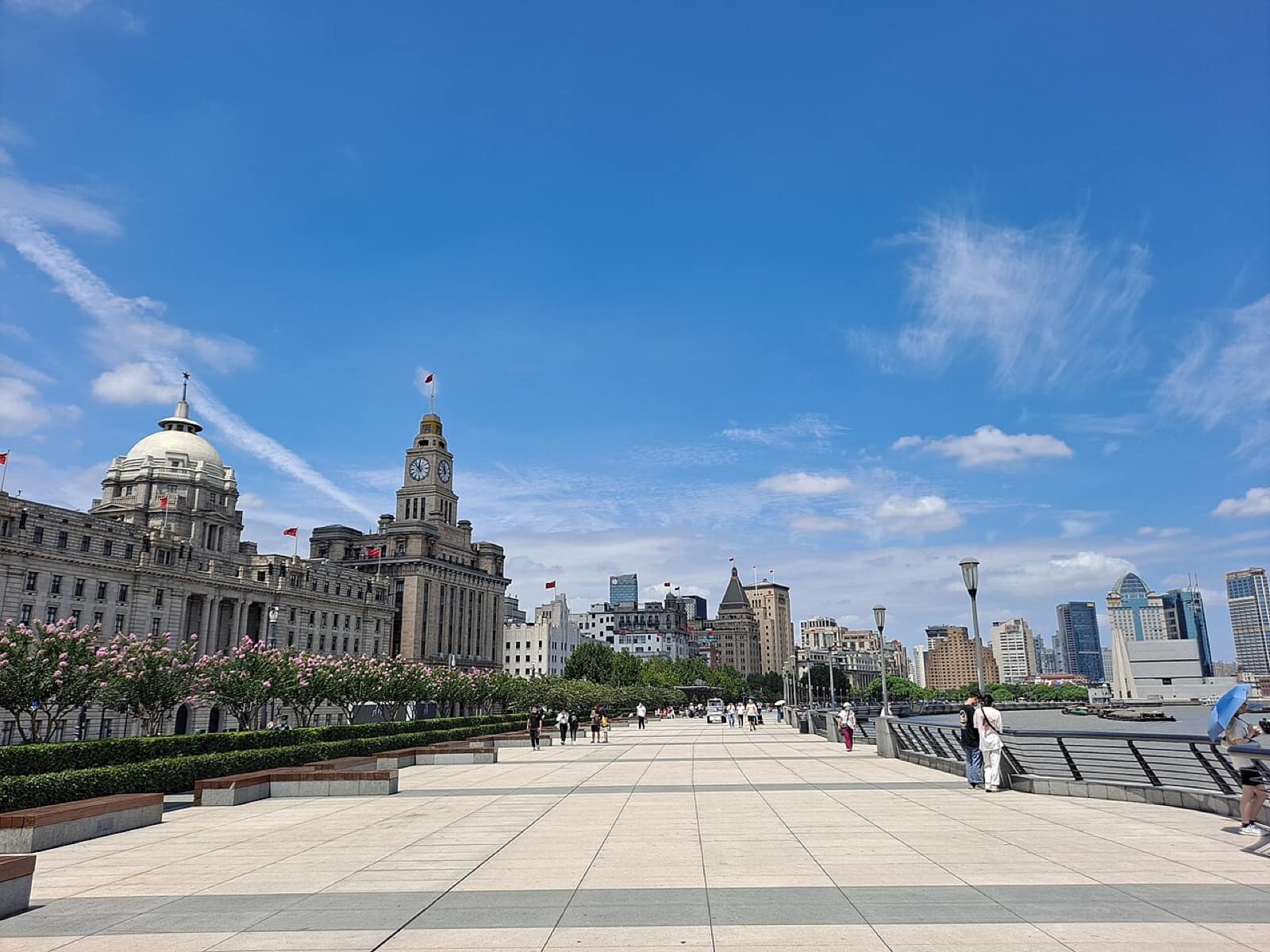
About fifteen minutes northeast through the old city. The classic pairing: garden in the morning, Bund as the light goes.
Numerous routes stop at the old-city edge, closer to the gates than the metro exit in some cases.
Set down on a through road at the edge of the old city rather than attempting the lanes. There is no visitor car park and holiday congestion here is severe.
Pair it with the Bund, in that order:The two are fifteen minutes apart on foot and their schedules fit together almost perfectly: the garden only works in daylight and closes in the late afternoon, while the Bund is at its best as the light goes and the facades come on. Garden first, bazaar and a meal in the middle, Bund for the blue hour. Doing it the other way round means finding the garden gate locked.
The bazaar is the evening half, and it is free:If you only have an evening in this part of town, you have not lost much — the lanterns, the Nine-Bend Bridge reflected in the pond, the old-street shopfronts and the dumpling queues are all in the free zone and all look their best after the lights come on around dusk. Just know in advance that the garden is not part of that evening, so you can decide whether to return for it another morning.
4Route & Photos
Inside the garden, the single most useful tactic is to refuse the obvious direction. Tour groups enter and march straight down the central axis, so if you turn left into the side corridor on entry and let them pass, you get the main halls to yourself a few minutes later. The garden is small enough that this costs you nothing and changes the experience entirely.
Go at opening, not at eleven:The garden is close to empty for the first hour it is open and solidly busy from mid-morning, when the coach groups arrive and the Nine-Bend Bridge outside becomes a queue rather than a bridge. In a garden built on sightlines and framed views, having the corridor to yourself is not a luxury — it is the difference between reading the design and shuffling past it.
Recommended Route
- 1
Book, and check it is not a Monday
Buy through the garden's official channel or at a gate window, choosing the morning block if you can. Then confirm your date is not a Monday outside a public holiday — the single most common planning failure at this attraction.
- 2
Enter at the north gate, then turn aside
Clear the gate at opening time and immediately take a side corridor rather than following the flow down the axis. Let the first group go through; you will meet the main halls in relative quiet shortly afterwards.
- 3
Sansui Hall and the great rockery
The first main hall, built for literary gatherings, with carved timber work worth a close look. Behind it the Ming rockery rises — yellowstone stacked by a master of the craft, with a viewing terrace that lets you read the whole composition rather than just stand under it.
- 4
The dragon wall and the Exquisite Jade Rock
The undulating firewall topped with a carved dragon is the garden's most photographed detail. Nearby stands the Exquisite Jade Rock, a pierced Taihu limestone counted among the Jiangnan region's three famous stones — look for the qualities it is prized for: slender, perforated, hollowed and wrinkled.
- 5
Dianchun Hall and the old stage
The garden's heaviest piece of history: this hall served as a command post during an 1853 uprising, and the adjacent stage carries an elaborately carved caisson ceiling. Give this one more time than its size suggests.
- 6
Finish in the Inner Garden
The smallest and quietest section, enclosed by rockery and water, and the part tour groups generally skip. If you want one minute in this garden where it feels like a private residence rather than an attraction, it is here.
- 7
Exit south to the bridge and the bazaar
The south gate puts you at the foot of the Nine-Bend Bridge. From here the free half begins: the pond, the Mid-Lake Pavilion teahouse, the old street, the dumpling queues. Come back at dusk if you want the lanterns lit.
Best Photo Spots
The Nine-Bend Bridge from the far side
The classic Shanghai frame is the pavilion reflected in the pond with the zigzag bridge leading to it. The better vantage is not on the bridge but across the water — and the upper walkway of the building opposite gives you the full composition from above. Best after the lights come on at dusk.
The dragon wall
The carved dragon riding the undulating wall crest. Shoot along the wall so the curve carries the eye, rather than square on, which flattens it into decoration.
Framed views through the corridors
This is what the garden is actually designed around: moon gates, lattice openings and corridor ends that compose a view for you. Stand where the architecture tells you to and photograph through the opening rather than stepping past it.
The Exquisite Jade Rock
A pierced stone that rewards backlight — shoot so the light comes through its holes and the structure reads. Morning gives the better angle before the crowd closes in around it.
Lanterns in the bazaar at dusk
Free, and the strongest image of the area at night. The twenty minutes after the street lighting comes on, while the sky still holds colour, beats full dark — the same blue-hour rule that applies at the Bund.
5Food & Stay
| Nanxiang-style soup dumplingsThe local institution | Varies | The bazaar's signature, with a famously long queue at the best-known counter. Several nearby shops sell a comparable version with a fraction of the wait — ask which window is for takeaway and which for sit-down before you join a line. |
|---|---|---|
| Mid-Lake Pavilion teahouseHistoric teahouse | Tiered by floor | A century-old teahouse in the pond. Prices differ substantially between the ground floor and the upper view seats — ask for the list before you sit down, not after. |
| Old Street snacksWalking food | Varies | Pear-syrup candy, steamed cakes, sesame products and other old-Shanghai confectionery. Buy small and compare, as quality across the street varies more than price does. |
| Eat outside the garden, not insidePlanning note | — | There is no dining inside the walled garden. Plan to eat before you enter or after you exit south — the bazaar immediately outside has everything. |
Queue length is not a quality signal here:The longest queues in the bazaar belong to the most famous names, and fame in a district this heavily visited tracks recognition rather than cooking. Walking one lane deeper into the old-city streets generally buys a better version at a lower price with no wait. Check posted prices for anything sold by weight, and settle the price of a teahouse seat before taking it.
Where to Stay
- Staying in the old-city area around Yu Garden is the value play in central Shanghai: cheaper than the Bund, one metro stop or a fifteen-minute walk from it, and it lets you be at the garden gate when it opens.
- Being able to reach the garden at opening matters more here than at most attractions, because the first hour is the difference between an empty garden and a queue on the Nine-Bend Bridge.
- If you are staying near East Nanjing Road or the Bund instead, the pairing still works easily — just do the garden first in the morning and walk back toward the river for the evening.
6Tips & Pitfalls
- Prices, opening hours, transport schedules and reservation rules can change; verify the official notice for your date.
- Check that your date is not a Monday. The garden closes on Mondays outside public holidays, while the bazaar around it stays open — so nothing on site warns you until you reach the gate.
- The garden is daytime only. Last admission is in the late afternoon. If you arrive in the evening you can still enjoy the free bazaar, but the ticketed garden will be shut.
- Arrive at opening. The first hour is close to empty; from mid-morning the coach groups land and the Nine-Bend Bridge becomes a queue.
- On entry, turn into a side corridor and let the group ahead of you take the central axis. You will have the main halls to yourself a few minutes later.
- The off-peak tier covers high summer and winter, which is the opposite of what most people assume. If you are visiting in July or January you are paying the lower price, though you are also getting Shanghai's harshest weather.
- Ignore anyone offering to take you into the garden for free or at a special price. The garden sells through its own channel and its gate windows only, and real-name entry applies.
- There is no food inside the walled garden, and the pond, bridge and teahouse are all outside it. Plan the garden as a focused ninety minutes, then eat.
7Frequently Asked Questions
Is Yu Garden free?
Partly, and the split is the single most important thing to understand here. The walled classical garden is ticketed. The Yuyuan Bazaar around it — including the Nine-Bend Bridge, the Mid-Lake Pavilion, Old Street and all the lantern-lit scenes in the photographs — is free and open into the evening. The City God Temple nearby is a third, separate site with its own modest ticket. Most visitors experience only the free part and believe they have seen the garden.
Is Yu Garden open on Mondays?
No. The garden closes on Mondays outside public holidays, and this catches a lot of people because travellers associate Monday closures with museums rather than gardens. The bazaar, the bridge and the shops stay open and busy, so there is no visible clue until you reach the gate. During the Spring Festival period the arrangement follows the published notice rather than the usual rule.
How much is a Yu Garden ticket?
The garden has a peak and an off-peak price, and the periods are counter-intuitive: high summer and the winter months are the cheaper off-peak tier, while spring and autumn are peak. Students and visitors aged sixty and over have had half-price concessions with original documents, and small children by height and age enter free, along with several document-holding categories. Confirm the current figures on the garden's official channel for your date.
Can I see Yu Garden at night?
Not the garden itself under normal operation — it admits visitors until the late afternoon and clears shortly after. What you can see at night is the free bazaar, which is lit around dusk and is genuinely the better evening experience: the pavilion reflected in the pond with lanterns above it. Separately, a distinct evening garden programme has run at times; it is priced separately and is not interchangeable with a daytime ticket.
What should I not miss inside the garden?
The great rockery, which is Ming work by a master stone-stacker and best read from the terrace rather than from below; the Exquisite Jade Rock, a pierced Taihu stone counted among the Jiangnan region's three famous stones; the dragon wall; and Dianchun Hall with its old stage, which served as a command post during an 1853 uprising and carries the garden's heaviest history. Finish in the Inner Garden, the smallest and quietest section, which most groups skip.
How long do I need at Yu Garden?
An hour and a half to two hours inside the walled garden is right if you intend to look rather than walk through. Add the bazaar, the bridge, a teahouse stop and a meal and the whole area absorbs half a day comfortably. The garden is compact — two hectares — but it is laid out so the view changes every few paces, which means it takes longer to read than its size suggests.
Is the City God Temple part of Yu Garden?
No. It is an active Taoist temple nearby, with its own separate and modest admission, and it is not covered by a garden ticket. The confusion is understandable because the whole district is often referred to by the temple's name, and the bazaar grew up around it. Visiting it is optional and takes little time; treat it as a third decision rather than something included.
Is Yu Garden worth visiting, or is the bazaar enough?
If you have seen a classical Chinese garden elsewhere — Suzhou, say — the bazaar alone is a defensible evening and you will not feel robbed. If you have not, the garden is worth the ticket and the ninety minutes: it is the best-preserved Ming garden in Shanghai, and it demonstrates the specific trick these gardens are built on, which is making two hectares feel unmappable. The bazaar is a shopping street with good photographs in it. They are different products that happen to share a name.
Combine With
Other Shanghai sights that genuinely pair well with this one
Before You Go
The practical guides you will actually need here
Sort Your Visa First
All Shanghai attractions
Yesim
Keep the booking channel and the closure notices reachable
The garden's timed booking runs through a Chinese online channel, and closure or holiday adjustments are announced the same way. Being able to check the day's arrangement before you walk to the gate — and to reopen your booking record at the window — is the practical reason to sort mobile data before you arrive.
- Check China coverage and whether the plan needs a local app to activate
- Confirm your phone supports eSIM and is carrier-unlocked before buying
- Activate and test the data connection before you leave the hotel
- Treat an eSIM as data access, not as a substitute for any reservation
Disclosure: this is an affiliate link. We may earn a small commission if you buy through it, at no extra cost to you. We only recommend products we would use ourselves.
GoChinaTravel Editorial Team
Our team of China travel researchers combines on-the-ground contributor insights, official government sources, and traveler community feedback to create the most detailed English-language China guides available. Every guide is fact-checked against primary sources (NIA, 12367, official attraction websites, Railway 12306) before publication.