1Highlights
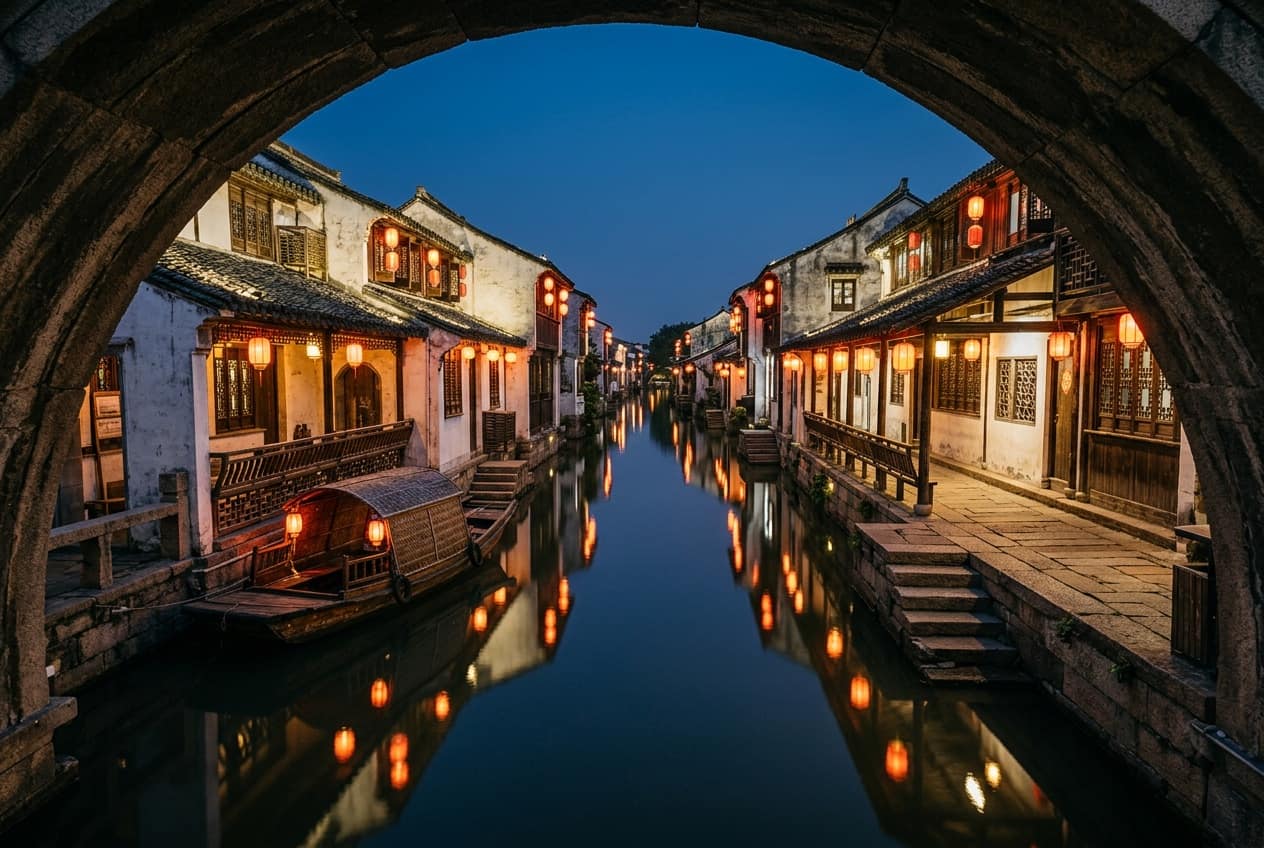
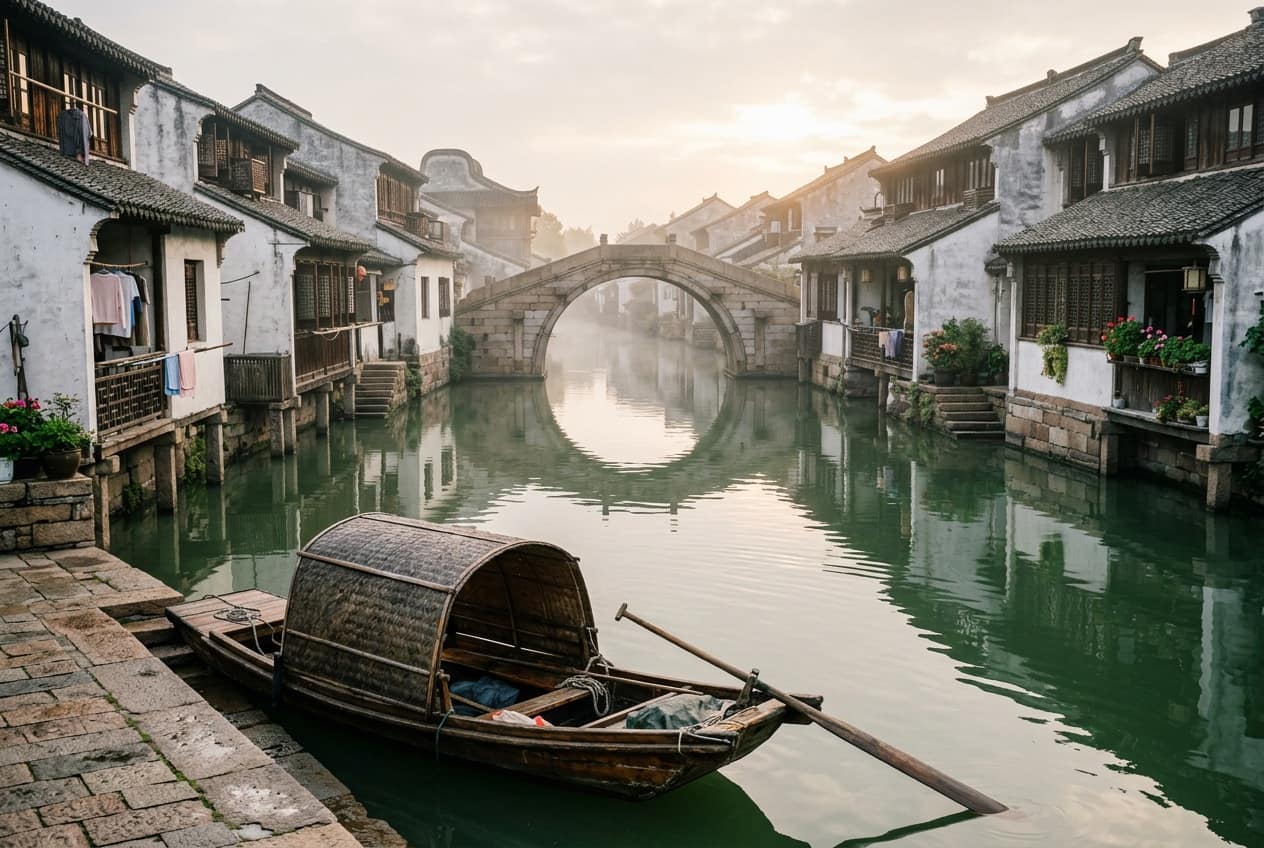
Pingjiang Road is one of the best-preserved canal lanes in Suzhou's old town, with a documented history of more than eight hundred years. The Pingjiang River runs slowly along one side of a stone-paved lane, and the other side is white walls, grey tiles, houses built out over the water, old residences, teahouses and small shops. It is free, has no gate, and is open all day, which makes it the one thing on this list you can turn up to without planning. It is also frequently described as the most lived-in street in the city — and that is true at the right hours and misleading at the wrong ones. The main street is commercial: snack counters, souvenir shops, cafés. What is still genuinely residential is the network of side lanes running back from the water, and the canal itself early in the morning, when people are still washing at the steps. Which Pingjiang Road you see is almost entirely a function of when you arrive.
- History
- More than 800 years of continuous use
- What to see
- Houses over the water, old bridges, lanes
- Entry
- Free, no gate, open all day
- Paid options
- Rowing boats and whatever you buy along the way
- Best hours
- Around 8 AM, and after dark
- Location
- Northeast old town, by the garden and museum
- Length
- Roughly 1.5 km along the canal
- Suggested time
- 2–3 hours unhurried
2Tickets
There is no ticket and no gate — this is a public street, open around the clock, and nobody selling you entry to it is legitimate. What does cost money is the rowing boat on the Pingjiang River, priced on site, and everything you choose to buy as you walk: tea, snacks, crafts. That pattern is worth naming, because a free street with a purchase every fifty metres can quietly cost more than a ticketed garden.
| Pingjiang Road | Free | A public street with no gate, open all day — nobody can sell you entry |
|---|---|---|
| Rowing boat | Reference ~¥60–120 | Short canal trip; agree the price, route and duration before boarding |
| Teahouse or café | Per your order | The pleasant way to use an hour, and the main way the street costs money |
Suzhou runs three different payment logics — know which one you are in:This is the single most useful thing to understand before you spend anything in Suzhou. First, the old-town canal streets are genuinely free: Pingjiang Road has no gate ticket and is open all day, and so are the lanes around it. Second, each garden and museum is sold separately: the Humble Administrator's Garden, the Lingering Garden and the Suzhou Museum are three independent entries with three independent prices and rules, and there is no universal "Suzhou gardens pass" that covers them all — anyone selling you one is touting. Third, the surrounding water towns use combo tickets: at Tongli the lanes are free to wander but Tuisi Garden and the other listed sites need the town combo ticket. Working out which of the three you are dealing with saves more money than hunting for discounts.
Free street, but agree the boat price before you step on:The rowing boats are a legitimate and genuinely nice way to see the lane from water level, and they are priced on site rather than by a published tariff. Before boarding, settle three things explicitly: whether the price is per boat or per person, which stretch of canal it covers, and how long it lasts. Those three questions remove essentially all of the disputes that happen here. Sharing a boat between several people is the normal way to make it reasonable.
The hours matter more than anything else on this page:Between roughly eleven in the morning and six in the evening the main street is shoulder-to-shoulder, and both the experience and the photographs suffer badly. At around eight in the morning it is a different place — quiet, residential, with people at the water steps and soft light down the lane. After dark it is different again, with lanterns held in the water. If you can only come in the middle of the day, spend that time in the side lanes rather than on the main street, and come back in the evening if your itinerary allows.
3Getting There
Line 1 to Lindun Road, then roughly a 10-minute walk
About 15 minutes from Suzhou railway station
Several routes stop nearby at Pingjiang Road or Lion Grove
Minutes from the Humble Administrator's Garden and the museum
These five fall into three rings — the northeast trio really is walkable, Tongli really is not:Suzhou's sights get listed as if they were all "in the old town", which produces badly broken days. In practice there are three rings. The northeast walking trio: the Humble Administrator's Garden, the Suzhou Museum and Pingjiang Road sit within about ten minutes of each other on foot — this is the most efficient cluster in the city and genuinely works as one half to full day. The northwest: the Lingering Garden is on the other side of the old town, best paired with Shantang Street rather than squeezed onto the northeast day. Outside the city: Tongli is roughly 25 km southeast, about a 40-minute drive, and wants a half day of its own at minimum. A realistic plan is therefore one old-town day for the northeast trio, a second for the Lingering Garden and the west, and Tongli only if you have a third slot — or an overnight in the water town.
The old town is flat and compact — bikes and feet beat taxis inside the moat:Suzhou's walled old town is small and almost entirely flat, and its lanes are narrow and often one-way or pedestrianised. Inside the moat, a shared bike or your own feet will usually beat a taxi on both time and predictability, and the metro handles the longer hops. Shared bikes are unlocked by scanning with Alipay or WeChat, so set that up before you arrive. Taxis are still the right call for the water towns and for late arrivals with luggage.
Plan around the plum rains and the humid summer:Suzhou sits in the Jiangnan monsoon belt. Roughly June into early July is the plum-rain season — long spells of drizzle that make the stone lanes and garden walkways slippery and can wash out a photography day. July and August are hot and humid, which is when the lotus in the gardens is at its best but also when midday is least pleasant. Spring and autumn are the comfortable windows and therefore the crowded ones. Whatever the month, carry a light rain layer and shoes with grip rather than smooth soles.
4Route & Photos
There is no correct route and that is the point. The pattern that works is: walk the main street along the canal from south to north, then turn off into the side lanes, then take a short boat, then sit down at a canal-side teahouse. Two to three hours is enough to do it without hurrying, and the single highest-value decision is how much of that you spend off the main street.
Do not spend the whole visit on the main street:The main street along the water is where the shops are, and it is worth one pass. But the side lanes running back from the canal are where the houses are still houses — narrower, quieter, with laundry, plants and doorways rather than counters. Turning off the main street is the difference between visiting a shopping lane and visiting a neighbourhood. Pick two or three lanes at random rather than following a list; they are short, and you cannot get properly lost between the canal and the main road.
Recommended Route
- 1
South end, along the canal
Walk north with the water beside you, past the houses built out over the canal.
- 2
Turn into the side lanes
This is where the street is still residential — narrower, quieter, far fewer counters.
- 3
The old bridges
Stone bridges give the one elevated vantage over the whole canal lane.
- 4
A short rowing boat
See both banks from water level; agree the price, route and duration first.
- 5
Canal-side teahouse
Sit where you can watch boats pass under a bridge, and let the visit end there.
Best Photo Spots
From an old bridge
Canal, houses over the water and a passing boat in one frame — the classic composition.
Lanterns after dark
Night lanterns reflected in the canal; the strongest atmosphere of the day.
Down a side lane
A narrow lane receding with doorways and plants — the lived-in frame the main street cannot give you.
5Food & Stay
| Pingjiang street snacksSuzhou pastries and sweet congee | Low per item | The right way to eat here — walk and graze rather than sitting down |
|---|---|---|
| Canal-side restaurantsSuzhou cuisine | Higher per person | Excellent position, visitor pricing; check unit prices before ordering |
| Canal-side teahouses and cafésTea or coffee | Mid-range per person | The best atmosphere on the street and the most pleasant way to rest |
Graze here, eat properly elsewhere:Pingjiang Road is built for eating small things as you walk — Suzhou pastries, sweet congee, a bowl of something from a counter. The canal-side sit-down restaurants have the best positions on the street and price accordingly. If you want a proper Suzhou meal rather than a view, walk to Guanqian Street or into the lanes behind, where the same dishes cost noticeably less.
Where to Stay
- Pingjiang Road and the water lanes themselves — the real argument for staying here is that dawn and the hours after dark, which are the best times on this street, become effortless.
- Around Guanqian Street — central and well connected, with plenty of mid-range hotels; a sensible base if you are also doing the northwest and Tongli.
6Tips & Pitfalls
- Come at around eight in the morning or after dark. Between eleven and six the main street is shoulder-to-shoulder and both the experience and the photographs suffer.
- Before boarding a rowing boat, agree whether the price is per boat or per person, which stretch it covers, and how long it lasts.
- Turn off the main street. The side lanes are where the houses are still houses; the main street is the commercial part.
- Nobody can sell you an entry ticket to a public street. If someone offers one, or a compulsory-spend "old town tour", walk away.
- Pair it with the Humble Administrator's Garden and the museum — all three are within about ten minutes on foot.
- Ticket prices, boat fares, opening hours and reservation rules all change; verify the official listing for your own travel date rather than relying on any figure quoted online.
- Set up Alipay or WeChat Pay before you arrive — the old town is close to cashless, and shared bikes, teahouses and small snack shops all expect a scan.
7Frequently Asked Questions
Is Pingjiang Road free?
Completely free, with no gate, and open all day — it is a public street, so anyone selling you entry to it is touting. The only real costs are the rowing boat on the canal, priced on site, and whatever you choose to buy as you walk: tea, snacks, crafts.
When is the best time to visit Pingjiang Road?
Around eight in the morning, or after dark. Between roughly eleven and six the main street is shoulder-to-shoulder and both the experience and the photographs suffer badly. Early morning is quiet and still residential; after dark the lanterns are reflected in the canal. Which Pingjiang Road you see depends almost entirely on when you arrive.
How much is a rowing boat on Pingjiang Road?
It is priced on site rather than by a published tariff, with a commonly quoted reference range of roughly ¥60–120 for a short trip. Before boarding, settle three things explicitly: whether the price is per boat or per person, which stretch of canal it covers, and how long it lasts. Sharing between several people is the normal way to make it reasonable.
Pingjiang Road or Shantang Street?
Pingjiang Road is more lived-in and closer to an ordinary Suzhou neighbourhood, and it sits in the northeast next to the garden and the museum. Shantang Street is longer, has showier night lighting and feels more commercial, and it is in the northwest near the Lingering Garden. If you are already doing the northeast cluster, Pingjiang is the obvious one; Shantang fits the northwest day.
Do I need a whole day for Pingjiang Road?
No — two to three hours unhurried covers the main street, a couple of side lanes, a short boat and a teahouse stop. Because it is free and open all day, the better use of it is as two shorter visits at the good hours rather than one long one in the middle of the day.
Combine With
Other Suzhou sights that genuinely pair well with this one
Before You Go
The practical guides you will actually need here
All Suzhou attractions
Klook
The street is free — a tour here buys the boat and the logistics, not entry
There is no ticket to this street, so nothing sold online can get you in more cheaply or more easily than simply walking in. What a product can reasonably cover is the rowing boat booked in advance rather than negotiated at the pier, an old-town itinerary that threads the canal lane with the garden and the museum, English guiding, and payment by overseas card. Compare which sites a listing actually includes, and remember that paid entries elsewhere in the cluster still follow their own reservation rules.
- The street itself is free — you are comparing boats, guiding and itinerary
- Booking a boat ahead is the alternative to negotiating at the pier, not a discount
- Pay with an overseas Visa or Mastercard without a Chinese payment app
- Check exactly which sites the product covers — in Suzhou each garden, museum and boat is sold separately
- Where a site sets its own reservation, confirm whether the product completes that step for you or you still have to do it yourself
- Prices, opening hours and closing days follow the operator's notice for your own date
Disclosure: this is an affiliate link. We may earn a small commission if you buy through it, at no extra cost to you. We only recommend products we would use ourselves.
GoChinaTravel Editorial Team
Our team of China travel researchers combines on-the-ground contributor insights, official government sources, and traveler community feedback to create the most detailed English-language China guides available. Every guide is fact-checked against primary sources (NIA, 12367, official attraction websites, Railway 12306) before publication.