1Highlights
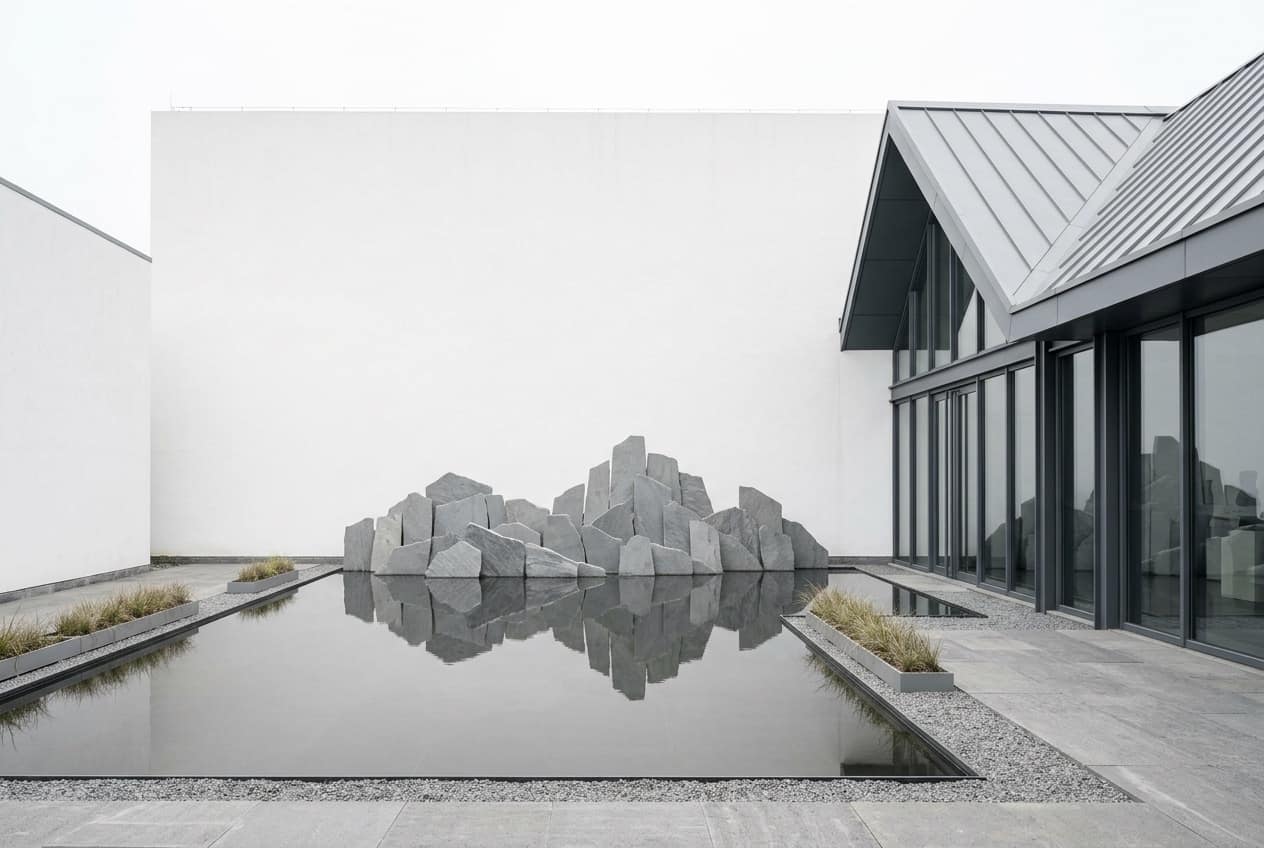
The Suzhou Museum opened in 2006 and is commonly described as the late masterwork of I. M. Pei, the Chinese-American architect whose family roots are in this city — a building he made for the place he came from, near the end of a career that had already produced the Louvre pyramid. What he did here was not imitation. He took the vocabulary of old Suzhou — white rendered walls, grey tiled roofs, water, framed views — and rebuilt it in modern geometry: the sliced-stone rockery standing against a blank white wall in the atrium, the faceted skylights, the reflections held in shallow water. The collection centres on Wu-school painting, ceramics and Suzhou craft traditions such as embroidery and jade carving. But it is worth being honest that many visitors come for the building first, and the way to get the most out of a visit is to treat the architecture as the primary exhibit rather than something you walk through to reach the galleries.
- Architect
- I. M. Pei, late in his career
- Opened
- 2006
- Idea
- Old Suzhou vocabulary in modern geometry
- Collection
- Wu-school painting, ceramics, Suzhou craft
- Entry
- Free, but a booked slot is required
- Closed
- Mondays
- Location
- Beside the Humble Administrator's Garden
- Suggested time
- 1.5–2 hours
2Tickets
Entry is free but not walk-in: you need a booked slot through the museum's official channel, and it closes on Mondays. Free also does not mean easy — because there is no price filter, the slots are the tightest of any site in this cluster, especially at weekends and public holidays, so book several days out rather than the night before. There is a separate west hall at Lion Hill, opened in 2021, with its own booking entrance; the building people travel to see is the main hall in the old town.
| Main hall | Free | Booked slot required; closed Mondays. This is Pei's building in the old town |
|---|---|---|
| West hall | Free | A separate modern branch at Lion Hill, opened 2021, with its own booking entrance |
| Booking | Official channel | Book several days ahead — free entry means the slots are the tightest here |
| Special exhibitions | May be ticketed separately | Temporary shows sometimes carry their own charge and their own booking |
Two of these five need a reservation, and no third party can waive it:Reservations in Suzhou are set by the site itself, not by whoever sold you the ticket. The Humble Administrator's Garden is paid and capped: book and pay through its official channel before you go, because in high season the day's slots are commonly gone. The Suzhou Museum is free but still requires a booked slot, and it closes on Mondays — free does not mean walk-in, and the free slots are the tighter of the two, especially at weekends. If a tour or ticket product implies it removes the booking step, treat that as a claim to verify rather than a fact: on the product page, confirm whether the reservation is genuinely completed on your behalf or whether you still have to make it yourself. Either way, check the closing day before you build a morning around it.
Do not book the wrong hall:There are two Suzhou Museums and they are in different parts of the city. The main hall is Pei's building, in the northeast of the old town next to the Humble Administrator's Garden — that is the one worth planning a morning around. The west hall at Lion Hill is a much larger modern branch opened in 2021, architecturally unrelated, with a separate booking entrance. Booking one does not admit you to the other, and travellers who only discover this at the gate lose the slot entirely. Check which hall a listing refers to before you confirm.
Suzhou runs three different payment logics — know which one you are in:This is the single most useful thing to understand before you spend anything in Suzhou. First, the old-town canal streets are genuinely free: Pingjiang Road has no gate ticket and is open all day, and so are the lanes around it. Second, each garden and museum is sold separately: the Humble Administrator's Garden, the Lingering Garden and the Suzhou Museum are three independent entries with three independent prices and rules, and there is no universal "Suzhou gardens pass" that covers them all — anyone selling you one is touting. Third, the surrounding water towns use combo tickets: at Tongli the lanes are free to wander but Tuisi Garden and the other listed sites need the town combo ticket. Working out which of the three you are dealing with saves more money than hunting for discounts.
3Getting There
Line 4 to Beisita, then roughly a 15-minute walk
About 10 minutes from Suzhou railway station
Several routes stop at the museum
Minutes from the Humble Administrator's Garden and Pingjiang Road
These five fall into three rings — the northeast trio really is walkable, Tongli really is not:Suzhou's sights get listed as if they were all "in the old town", which produces badly broken days. In practice there are three rings. The northeast walking trio: the Humble Administrator's Garden, the Suzhou Museum and Pingjiang Road sit within about ten minutes of each other on foot — this is the most efficient cluster in the city and genuinely works as one half to full day. The northwest: the Lingering Garden is on the other side of the old town, best paired with Shantang Street rather than squeezed onto the northeast day. Outside the city: Tongli is roughly 25 km southeast, about a 40-minute drive, and wants a half day of its own at minimum. A realistic plan is therefore one old-town day for the northeast trio, a second for the Lingering Garden and the west, and Tongli only if you have a third slot — or an overnight in the water town.
The old town is flat and compact — bikes and feet beat taxis inside the moat:Suzhou's walled old town is small and almost entirely flat, and its lanes are narrow and often one-way or pedestrianised. Inside the moat, a shared bike or your own feet will usually beat a taxi on both time and predictability, and the metro handles the longer hops. Shared bikes are unlocked by scanning with Alipay or WeChat, so set that up before you arrive. Taxis are still the right call for the water towns and for late arrivals with luggage.
4Route & Photos
The museum is compact and the flow is obvious: atrium and sliced-stone rockery, then the main galleries, then the Suzhou craft hall, then the shop. Allow an hour and a half to two hours. The single most useful instruction is the order: look at the architecture before the exhibits, because the atrium is what you came for even if you did not know it.
Stop in the atrium before you look for a gallery:Most people walk in and immediately look for the exhibition signage, pass through the atrium in fifteen seconds, and later describe the museum as small. The atrium is the building's argument: a screen of sliced stone set against a blank white wall above still water, which is Pei answering the traditional Suzhou rockery without copying a single one of its forms. Give it a few minutes, look at it from more than one position, then look up at the faceted skylights. After that the galleries read differently too.
Recommended Route
- 1
Atrium and sliced-stone rockery
Pei's signature move here — white wall, layered stone, still water and reflection. Do not walk past it.
- 2
Main galleries
Wu-school painting and ceramics, the core of Suzhou's own cultural lineage.
- 3
Suzhou craft hall
Embroidery, jade carving and furniture — the city's handwork traditions.
- 4
The faceted roof
Look up at how daylight is cut and directed; the detail that ties the building to the old roofs outside.
- 5
Museum shop
Well regarded locally — a reasonable place to finish rather than an afterthought.
Best Photo Spots
Atrium rockery
White wall, sliced stone and reflection — the museum's defining image.
Faceted skylights
Shoot upward at the lines and the cut daylight for the strongest architectural frame.
Framed courtyard views
Pei repeats the traditional framed view through modern openings — shoot through one.
5Food & Stay
| Pingjiang RoadSuzhou dishes and snacks | Mid-range per person | The natural next stop, about ten minutes east on foot |
|---|---|---|
| Guanqian StreetOld-house noodles and pastries | Lower per person | The traditional cluster for Suzhou noodle soup and sweet pastries |
| Museum caféCoffee and light plates | Lower per person | Convenient for a pause between the galleries and the garden next door |
The proper meal is ten minutes away:The cafés right around the museum are convenient but priced for visitors who have just come out. Ten to fifteen minutes on foot puts you on Pingjiang Road or Guanqian Street with considerably more choice. If you are doing the museum and the garden next door on the same day, the sensible pattern is a light stop between the two and a real meal on Pingjiang Road afterwards.
Where to Stay
- Pingjiang Road and the old-town water lanes — the museum, the Humble Administrator's Garden and the canal street are all walkable from here, which makes this the most efficient base in Suzhou.
- Around Guanqian Street — central and well served by metro, with plenty of mid-range hotels; easier if you are also heading to the northwest or out to Tongli.
6Tips & Pitfalls
- Book the free slot several days ahead through the official channel. Because there is no price filter, these are the tightest slots in the cluster.
- It closes on Mondays. Check the current notice before you build a Monday morning around it.
- Confirm you are booking the main hall in the old town, not the west hall at Lion Hill — separate buildings, separate booking entrances.
- Look at the architecture before the exhibits. The atrium rockery and the faceted skylights are the reason the building matters.
- An early slot is both quieter and better for photographs of the atrium, before the reflected light flattens out.
- Ticket prices, boat fares, opening hours and reservation rules all change; verify the official listing for your own travel date rather than relying on any figure quoted online.
- Set up Alipay or WeChat Pay before you arrive — the old town is close to cashless, and shared bikes, teahouses and small snack shops all expect a scan.
7Frequently Asked Questions
Is the Suzhou Museum free, and do I still need to book?
Entry is free but you still need a booked slot through the museum's official channel, and it closes on Mondays. Free entry is exactly why the slots are tight — with no price filter they go quickly, especially at weekends and on public holidays, so book several days ahead rather than the night before.
What is the difference between the main hall and the west hall?
The main hall, in the northeast of the old town beside the Humble Administrator's Garden, is I. M. Pei's building and the one people travel to see. The west hall at Lion Hill is a much larger modern branch opened in 2021 and is architecturally unrelated. They have separate booking entrances, and a booking for one does not admit you to the other.
Is the Suzhou Museum worth visiting if I am not into Chinese art?
Probably yes, if you have any interest in architecture. The collection is regional in focus — Wu-school painting, ceramics, Suzhou embroidery and jade — but the building itself is the main event: Pei rebuilt Suzhou's white walls, grey tiles, water and framed views in modern geometry, and the atrium rockery is the clearest statement of that idea anywhere.
Can I do the Suzhou Museum and the Humble Administrator's Garden on the same day?
Yes — they are next door to each other, a few minutes apart on foot, and together with Pingjiang Road they form the most efficient day in Suzhou. The thing to sort first is the bookings, not the walking order: the museum slot is free but tight, the garden is paid and capped, and the museum's Monday closure constrains which day you can use.
How long do I need at the Suzhou Museum?
An hour and a half to two hours. Spend the first few minutes in the atrium rather than heading straight for the exhibition signage — the sliced-stone rockery and the faceted skylights are what makes the building significant. Then work through the main galleries and the Suzhou craft hall, and finish at the shop.
Combine With
Other Suzhou sights that genuinely pair well with this one
Before You Go
The practical guides you will actually need here
All Suzhou attractions
Klook
Entry is free — what a tour actually buys you here is guiding and logistics
Because the museum costs nothing, no product can honestly sell you a cheaper ticket, and none of them can waive the booked slot that the museum itself sets. What a Suzhou old-town day tour can reasonably add is English guiding through the galleries, a worked-out walking order across the northeast cluster, and payment by overseas card. If a listing includes the museum, check on the product page whether the reservation is genuinely completed on your behalf or whether you still have to make it yourself — and whether the itinerary avoids the Monday closure.
- The museum itself is free — you are comparing guiding and itinerary, not ticket price
- Check that the itinerary does not fall on the museum's closing day
- Pay with an overseas Visa or Mastercard without a Chinese payment app
- Check exactly which sites the product covers — in Suzhou each garden, museum and boat is sold separately
- Where a site sets its own reservation, confirm whether the product completes that step for you or you still have to do it yourself
- Prices, opening hours and closing days follow the operator's notice for your own date
Disclosure: this is an affiliate link. We may earn a small commission if you buy through it, at no extra cost to you. We only recommend products we would use ourselves.
GoChinaTravel Editorial Team
Our team of China travel researchers combines on-the-ground contributor insights, official government sources, and traveler community feedback to create the most detailed English-language China guides available. Every guide is fact-checked against primary sources (NIA, 12367, official attraction websites, Railway 12306) before publication.