1Highlights
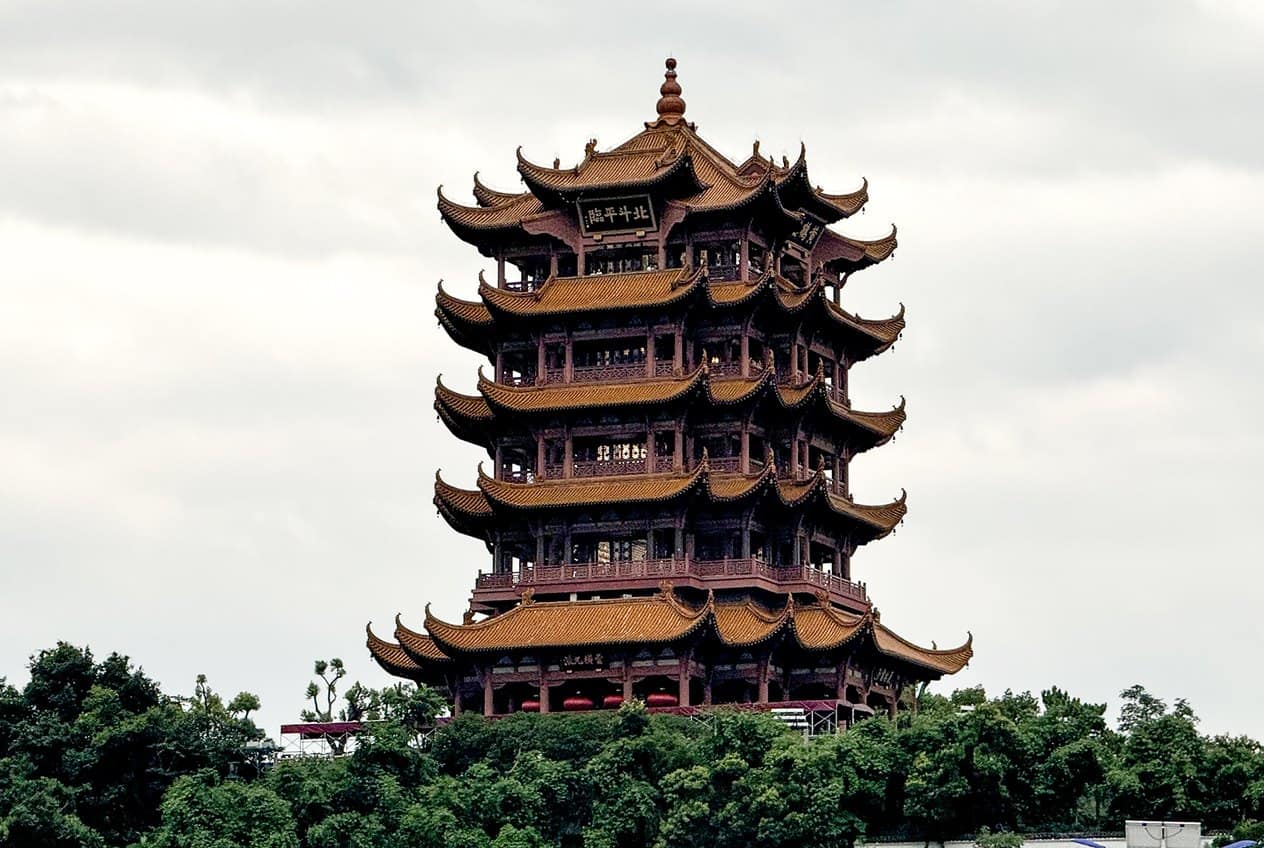
The Yellow Crane Tower is the most written-about building in Chinese literature, and almost nothing about the physical structure in front of you is old. A tower has stood on or near this spot since roughly the third century, and it has burned down, been rebuilt and burned down again more times than any single account agrees on. The version you climb was completed in 1985, built in reinforced concrete with a steel frame, and it is not on the original site — the historic foundations lie under the approach to the first Yangtze River Bridge, so the reconstruction was placed about a kilometre away on higher ground. Knowing that before you arrive changes the visit from a disappointment into an interesting one. What has survived eighteen centuries is not timber; it is a position in the culture. Cui Hao's poem about the crane that flew away and never returned, and Li Bai's farewell to Meng Haoran watching a sail disappear downriver, are why Chinese visitors come. The view they came for — the Yangtze turning past Snake Hill, Turtle Hill answering it on the far bank, the three towns laid out around the confluence — is genuinely the same view, and it is the best geography lesson Wuhan offers.
- Where
- Snake Hill, Wuchang — east bank of the Yangtze
- Current building
- Completed 1985, reinforced concrete, on a relocated site
- Storeys
- Five from outside; interior levels differ
- Day admission
- ¥70 full, ¥35 concession
- Day cut-offs
- Sales 17:15 · entry 17:20 · clearing 18:00
- Night experience
- A separate ticket with its own entry window
- Time needed
- Two to three hours inside the park
- Nearest metro
- Line 5, Simenkou Huanghelou — then uphill on foot
2Tickets
Two things decide your ticket before the price does: which product and how late you are arriving. The daytime admission and the evening experience are separate products with separate entry windows, and a day ticket does not let you stay on for the evening programme — the park clears between them. Then there is the timing trap: "closes at 18:00" is the clearing time, not the last entry. Ticket sales stop at 17:15, entry stops at 17:20, and clearing happens at 18:00. Arriving at 17:30 for a park that "closes at six" means arriving after the gate has already shut. The published day prices are a regulated two-tier structure rather than a commercial package rate, so they are worth stating: ¥70 full and ¥35 concession. What you will see quoted above that on booking platforms are bundles — admission plus a performance, plus a meal, plus lift access. Decide whether you want those before comparing numbers.
| Day admission, full | ¥70 | The regulated adult price. Sales close at 17:15 and entry at 17:20, both earlier than the 18:00 clearing time |
|---|---|---|
| Day admission, concession | ¥35 | Applies to full-time students up to undergraduate level, ages 6–18, and visitors aged 60–64. Bring the original document — a photograph is not accepted |
| Free admission | Free | Children at or under 1.2 m or aged 6 and under, visitors aged 65 and over, serving and disabled military personnel, fire-and-rescue personnel and people with disabilities, each on presentation of the original credential |
| Night at Yellow Crane Tower | Separate product | An evening light-and-performance experience with its own entry window, sold apart from day admission. Neither ticket admits you to the other |
| Red-wall exterior viewing | Free | The much-photographed red wall is on a public street outside the paid park. Worth knowing if your budget or weather is limited — but it includes no park, no interior and no evening programme |
Three cut-offs, not one closing time:This is the single most useful operational fact about the site. Ticket sales close first, entry closes a few minutes after that, and the park clears later still. The figure published as the closing time is the last of the three. Work backwards from the entry cut-off: if you want two hours inside, you need to be through the gate well before it, not before the closing time. The same three-stage pattern applies to the evening experience with its own set of times.
Day and night are not interchangeable:The evening programme is a different product sold at a different price with its own entry window, and the park clears between the two. You cannot buy a day ticket and wait for the lights, and an evening ticket should not be assumed to open every daytime area or level of the tower. Decide which one you want before you book, because the choice changes what you actually see: daytime is for the river geography and the interior; the evening is for lighting and performance.
The official website was unreachable at the time of checking:The park's official web address is the one listed in public attraction records, but it returned an error when checked for this page, so its current rules were not read directly. A failed web request is not evidence the park is closed — it simply means that for live prices, hours and booking rules you should use the on-site notice board, the park's current official booking channel, or the Wuhan culture and tourism bureau's published information rather than this page's figures.
Klook
Compare day and night products before you buy
The two Yellow Crane Tower products are sold separately and bundles on booking platforms can combine admission with a performance, a meal or lift access. If a listing is priced well above the regulated day admission, that difference is the bundle, not the ticket. Check what is actually included for your date before comparing numbers.
- Check the exact ticket category and date — day and night products are sold separately here
- Confirm whether admission, any performance and transport are each included or extra
- Read the change and refund terms before paying, and whether your card is accepted
Disclosure: this is an affiliate link. We may earn a small commission if you buy through it, at no extra cost to you. We only recommend products we would use ourselves.
3Getting There
Simenkou Huanghelou is a metro station, not a ticket gate. Line 5 brings you to the right neighbourhood, but the park sits up on Snake Hill and there is a walk — including a climb — between the exit and whichever gate is operating that day. Different official sources have named different exits and different walking distances, which tells you something useful: check the signs on the day rather than memorising an exit letter. The park has several gates, and the one nearest your metro exit is not always the one open to individual visitors.
Simenkou Huanghelou station, then uphill on foot to the operating gate. Published guidance has named different exits at different times — follow the current signs rather than a remembered exit letter
Several routes stop in the Huanghelou area. Check current route numbers and stop positions on the day; evening service is not necessarily the same as daytime
Give the driver the Chinese name of the specific gate rather than just the attraction. Use permitted drop-off points — do not ask to stop on the bridge approach or in a narrow lane
Wuchang Station is the closest of the three but still needs a metro transfer. Hankou Station is across the Yangtze. Wuhan Station is the furthest out. Match the Chinese name on your ticket first
Wuhan, Wuchang and Hankou are three different railway stations:They are in three different districts, tens of kilometres apart, and "Wuhan Station" is not shorthand for "Wuchang Station" — it is the newest and the furthest out, in eastern Wuchang. Hankou Station sits on the north-west bank and is the closest to Jianghan Road and the riverfront. Match the Chinese name printed on your ticket before arranging any onward transport. The same logic applies to the city itself: the Yangtze separates Wuchang from Hankou, so grouping your days by bank saves far more time than optimising a route within one day.
The station, the red wall and the gate are three places:The metro exit puts you in the neighbourhood. The famous red wall is a free, public-street viewpoint outside the paid park — a legitimate stop if you only want the photograph, but stopping there first often leads people away from the actual entrance. Identify the gate direction when you come out of the station, then decide whether to detour to the wall. There is also a climb: Snake Hill is a hill, and the approach is not flat.
4Route & Photos
Climb first, explore the park afterwards. The tower is the reason you are here and it is also where queues build; the garden, the pavilions and the stele corridors are pleasant but they do not need a fresh pair of legs. Two to three hours inside is a reasonable budget, excluding the walk up from the metro. The park publishes several suggested routes organised by interest — one around flowering plants, one around poetry and calligraphy, one around the martial and historical sites — and they are genuinely different walks rather than three names for the same loop.
Recommended Route
- 1
Enter and head straight for the tower
Follow the current route to the main building and go up before doing anything else. Crowd management is one-way in places, so follow the flow rather than cutting back against it. If a queue has already formed, it will only be longer after you have walked the garden.
- 2
Read the building as you climb
Each level carries murals, poems and displays. The point is not to tick off five floors but to understand what the tower meant: a place officials and poets came to look at the river and write about departure. Cui Hao's poem and Li Bai's farewell to Meng Haoran are the two texts worth knowing before you go up.
- 3
Orient yourself from the top
This is the single best view in Wuhan for understanding the city. Find the Yangtze, the 1957 road-and-rail bridge, Turtle Hill directly opposite, and the three towns arranged around the confluence. Haze is common and limits distance — on a flat day, look at the geometry rather than the horizon.
- 4
Look back at the silhouette
After coming down, walk far enough away to see the whole roofline. The upturned eaves stacked five deep are the shape every photograph of Wuhan uses, and you cannot see it from directly underneath. Use an open stopping place rather than stepping over landscaping.
- 5
Pick one slower section
Depending on which of the park's suggested routes appeals: the Goose Pond and stele corridor for calligraphy, the Baiyun Pavilion for its changing exhibitions, the Shengxiang Pagoda — which is genuinely old, unlike the tower — or the Yue Fei statue. One is enough; the park does not need to be completed.
- 6
Leave by a different gate
The park has gates on several sides and they lead to quite different places — one towards the Wuchang old-town lanes, one back towards the metro, one towards the bridge approach. Choose the one that matches your next stop rather than retracing your steps to where you came in.
Best Photo Spots
The full silhouette from inside the park
Stand back far enough to get all five tiers of eaves against the sky. The approach from the lower garden gives the classic upward angle. Keep off planting beds and do not cross a railing for a cleaner foreground.
The river and the bridge from an upper level
Shoot through or over the railing, never around it, and take turns — the good positions are narrow. On a hazy day the bridge reads better than the far skyline, so compose for the near subject.
The red wall from the public street
Outside the paid park and free, which is why it is so heavily photographed. It is a street: watch for vehicles and other pedestrians. A red-wall picture is a picture of a wall — it is not evidence of having visited the tower.
5Food & Stay
| Hot dry noodlesBreakfast | Shop menu | The Wuchang lanes below the hill are full of breakfast shops. Mixed dry with sesame paste, no broth. Contains wheat and sesame; ask separately about peanut |
|---|---|---|
| Hubu Lane snacksSnack alley | Per item | A dense snack alley a short way from the park, best treated as a grazing stop rather than a meal. Busy at weekends; prices are per item and displayed |
| Liangdao StreetEveryday eating | Shop menu | Ordinary neighbourhood food rather than a tourist alley — a different thing from Hubu Lane, not a continuation of it. Better for an actual sit-down meal |
| Lotus-root ribs soupRegional dish | By the pot | Hubei home cooking, worth ordering at a proper restaurant after the climb. The stock is meat-based, so vegetarians need to ask about the broth itself |
Where to Stay
- Simenkou and the Wuchang old town put you closest to the tower and the surrounding lanes. Ask about narrow-lane vehicle access and stairs before booking — a hotel described as near the tower is not necessarily near the gate that is open.
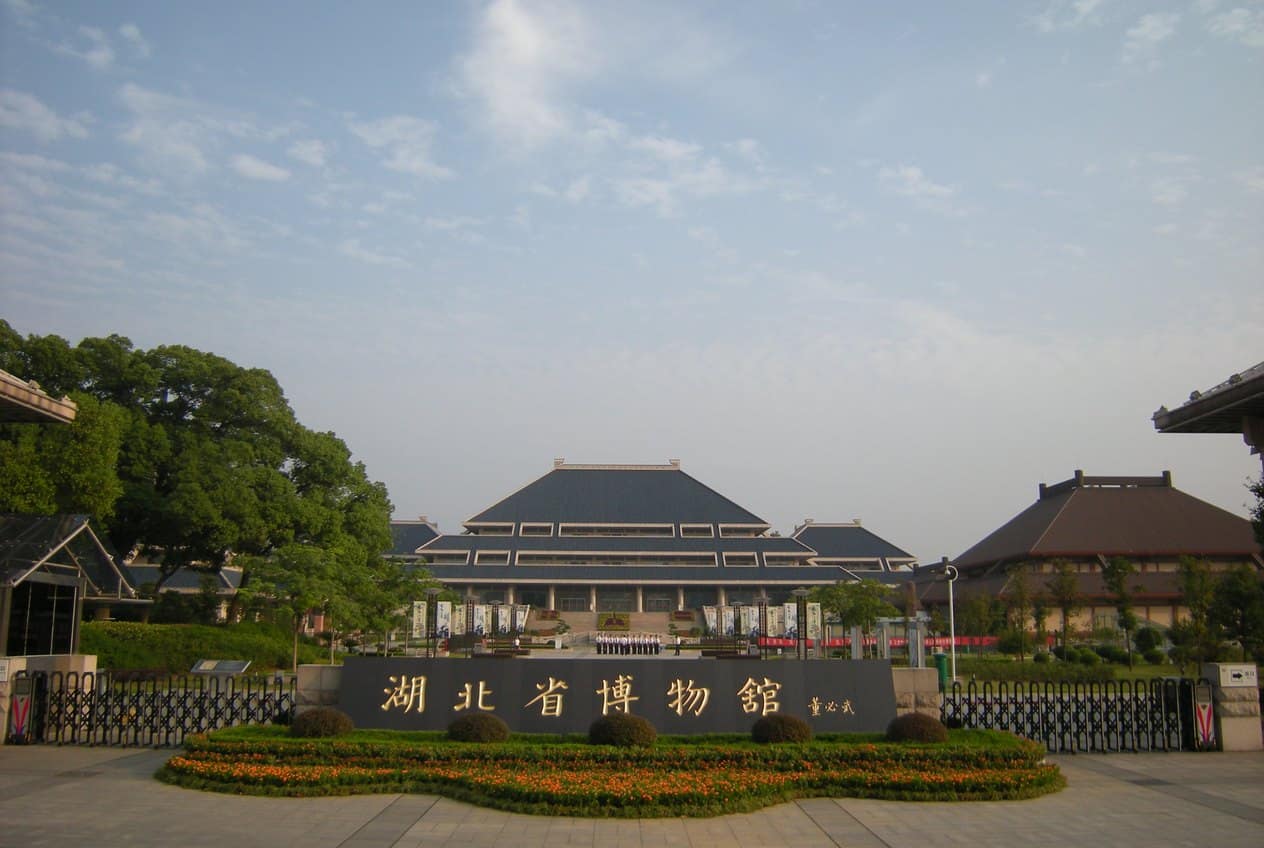
- Along the Wuchang metro lines is the practical choice if the rest of your plans are on this bank — the provincial museum and East Lake are both on the Wuchang side. Choose for luggage access and the actual station rather than for an ambiguous river-view label.
- Staying in Hankou still works if most of your itinerary is over there; you simply cross the river for this visit. Check the return journey, since the metro stops earlier than the evening programme ends.
6Tips & Pitfalls
- Know about the 1985 rebuild before you arrive. It is not a trick and nobody hides it, but visitors who expect surviving Tang timber are reliably disappointed. What is continuous here is the cultural position, not the structure — and the Shengxiang Pagoda inside the park is genuinely old if you want something that is.
- Work backwards from the entry cut-off, not the closing time. Three separate times govern the end of the day, and the one printed as "closes at" is the latest of them. The practical rule: be through the gate at least two hours before the published closing figure.
- Snake Hill is a hill. The walk from the metro involves a climb before you even reach the gate, and the park itself is on slopes. If anyone in the group has limited mobility, ask at the gate about lift eligibility and which levels are reachable — an elevator existing does not make the whole visit step-free.
- Take the concession documents, not photographs of them. Half-price and free categories here all require the original credential at the gate, and staff do check.
- Haze is common over the Yangtze and limits the long view. It is not a reason to cancel — the bridge, the near bank and the tower itself all photograph fine — but do not plan the visit around a clear horizon.
- The red-wall viewpoint outside the park is free and legitimate, and it is also just a wall. If budget or weather rules out the ticket, it is a reasonable short stop; it is not a substitute for the view from the top.
- Published prices, opening hours and programmes change. Verify the official notice for your own travel date rather than trusting any guide, including this one.
- Carry your passport. Real-name booking and entry checks may ask for the original document, not a photograph of it.
7Frequently Asked Questions
Is this the original ancient tower?
No, and the gap is larger than most summaries admit. A tower has stood in this area since around the third century, but it was destroyed and rebuilt repeatedly, and the structure you climb was completed in 1985 in reinforced concrete. It is also not on the original site — the historic foundations lie beneath the approach to the first Yangtze River Bridge, so the reconstruction was placed on higher ground nearby. None of this makes the visit pointless: the river view, the geography of the three towns, and the literary weight of the place are all real and all unchanged. But go for the position and the poetry, not for old timber. If you specifically want something genuinely ancient, the Shengxiang Pagoda inside the park predates the current tower by centuries.
What time do I actually need to arrive?
Earlier than the published closing time suggests, because three different cut-offs apply: ticket sales stop first, entry stops a few minutes after that, and the park clears later still. The figure published as the closing time is the last of the three, so arriving half an hour before it means arriving after the gate has shut. Work backwards instead: if you want two to three hours inside — which is a realistic budget for the tower plus one slower section of the park — be through the gate at least that long before the published closing figure. Add the walk from the metro and the climb up Snake Hill on top of that. The same three-stage structure applies to the evening experience, with its own earlier and later times.
Can one ticket cover both day and night?
No. The daytime admission and the evening experience are separate products with separate prices and separate entry windows, and the park clears between them — you cannot buy a day ticket and simply wait for the lights to come on. Equally, an evening ticket should not be assumed to open every daytime area or every level of the tower, because the evening product is built around lighting and performance rather than general access. Decide which you want before booking, because they suit different interests: daytime is better for reading the river geography, the interior displays and the park; the evening is a light-and-performance experience. If you want both, that is two tickets on two occasions.
Is the free red-wall photo spot enough?
It depends on what you came for. The red wall is on a public street outside the paid park, it costs nothing, and it produces the photograph that circulates on social media. If your budget is tight, the weather is bad, or you are passing through with an hour, it is a perfectly reasonable stop — just watch the traffic and the other pedestrians, and do not block the pavement. What it does not give you is anything the ticket is actually for: the interior, the murals and poems on each level, the elevated view of the Yangtze and the bridge, the park itself, and the evening programme. A picture of a wall is a picture of a wall. If the reason you are in Wuhan at all involves Cui Hao or the river, the climb is the thing.
Which railway station should I plan around?
Check the Chinese name printed on your own ticket first, because Wuhan, Wuchang and Hankou are three different stations in three different districts, tens of kilometres apart. "Wuhan Station" sounds like the city's main station but it is the newest and the furthest out, in eastern Wuchang. Wuchang Station is the closest to the tower of the three, though it still needs a metro transfer. Hankou Station is across the Yangtze on the north-west bank — fine as a base, but it means crossing the river for this visit. The broader point applies to the whole trip: group your days by bank rather than by fame. The tower is a Wuchang day; Jianghan Road and the riverfront are a Hankou day. Crossing twice in one day costs real time.
8Sources and verification limits
The public sources behind the facts on this page. Titles are kept in their original language so they can be verified. Published prices, opening hours and programmes change — check the current official notice before you travel.
- 1.2026武汉黄鹤楼公园门票价格表(日常+夜场+优待票)武汉本地宝 · 2026-08
- 2.2026武汉黄鹤楼门票多少钱武汉本地宝 · 2026-08
- 3.李白王维苏轼,都在湖北写过「种草笔记」(武汉市文化和旅游局供稿)湖北网络广播电视台 · undated
- 4.武昌区旅游景区一览表:黄鹤楼位置与季节开放时段武汉市武昌区人民政府 · 2022-09-30
- 5.武汉文旅恢复运营信息:黄鹤楼交通与时段腾讯新闻转载武汉文旅 · 2026-07-13
Combine With
Other Wuhan sights that genuinely pair well with this one
Before You Go
The practical guides you will actually need here
All Wuhan attractions
GoChinaTravel Editorial Team
Our team of China travel researchers combines on-the-ground contributor insights, official government sources, and traveler community feedback to create the most detailed English-language China guides available. Every guide is fact-checked against primary sources (NIA, 12367, official attraction websites, Railway 12306) before publication.