Photo: Windmemories / CC BY-SA 4.0, via Wikimedia Commons
Three Towns, Two Rivers
Wuhan — Yellow Crane Tower, the Zeng Hou Yi Bells and the Riverfront of Old Hankou
One city made of three, split by the Yangtze — and the split decides your whole itinerary.
📅Best Time
March–May & September–November
🗓️Stay
3 days (recommended)
✨Vibe
Rivers · Bronze Age · Treaty Port
Wuhan is not one city that grew outwards — it is three that grew towards each other and were merged in 1927. Wuchang on the east bank holds the Yellow Crane Tower, the provincial museum and East Lake; Hankou on the north-west bank is the treaty port, with the Bund-style riverfront and the European facades of Jianghan Road; Hanyang is the old industrial quarter between them. The Yangtze and the Han run through the middle of all this, which is why the single most useful thing to know before you arrive is which of the three you are standing in.
✨ City Highlights
🏯
Yellow Crane Tower→
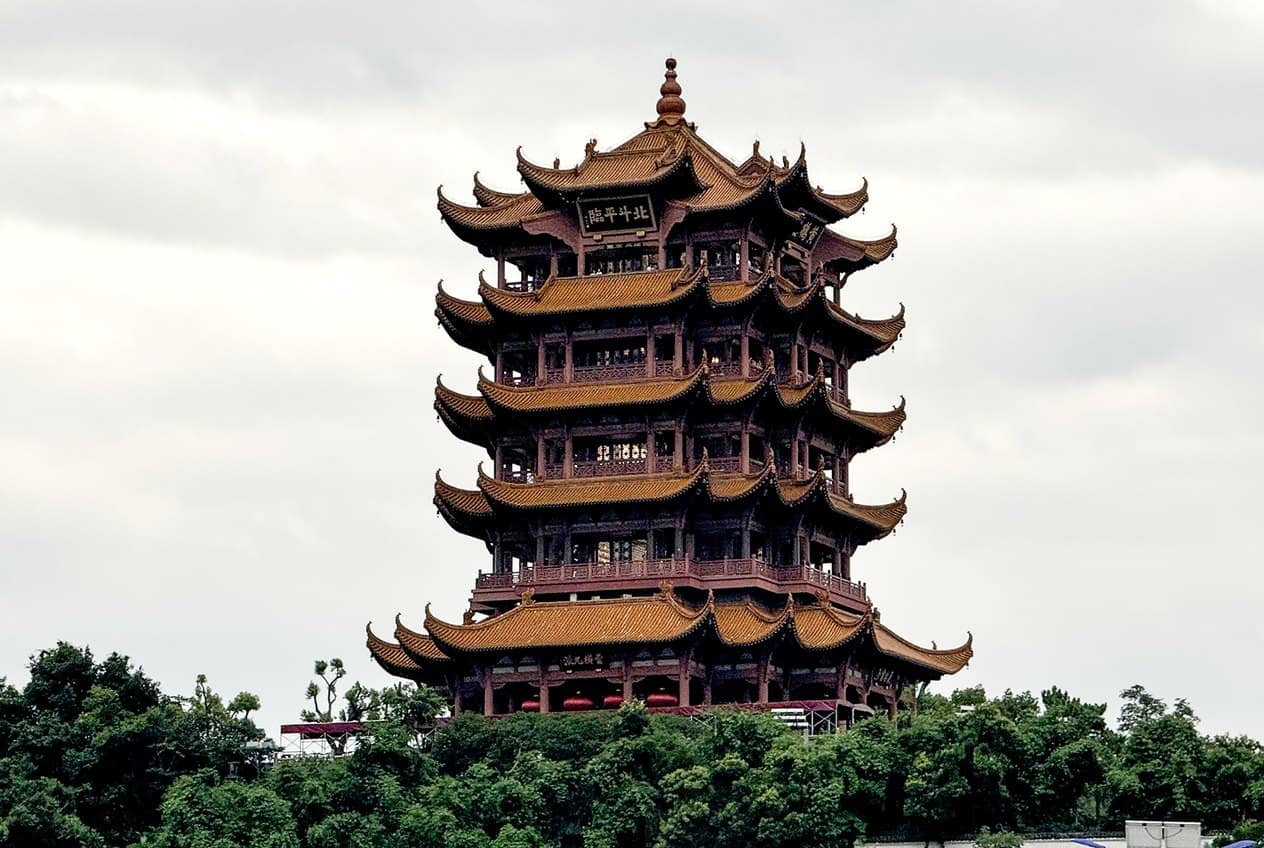
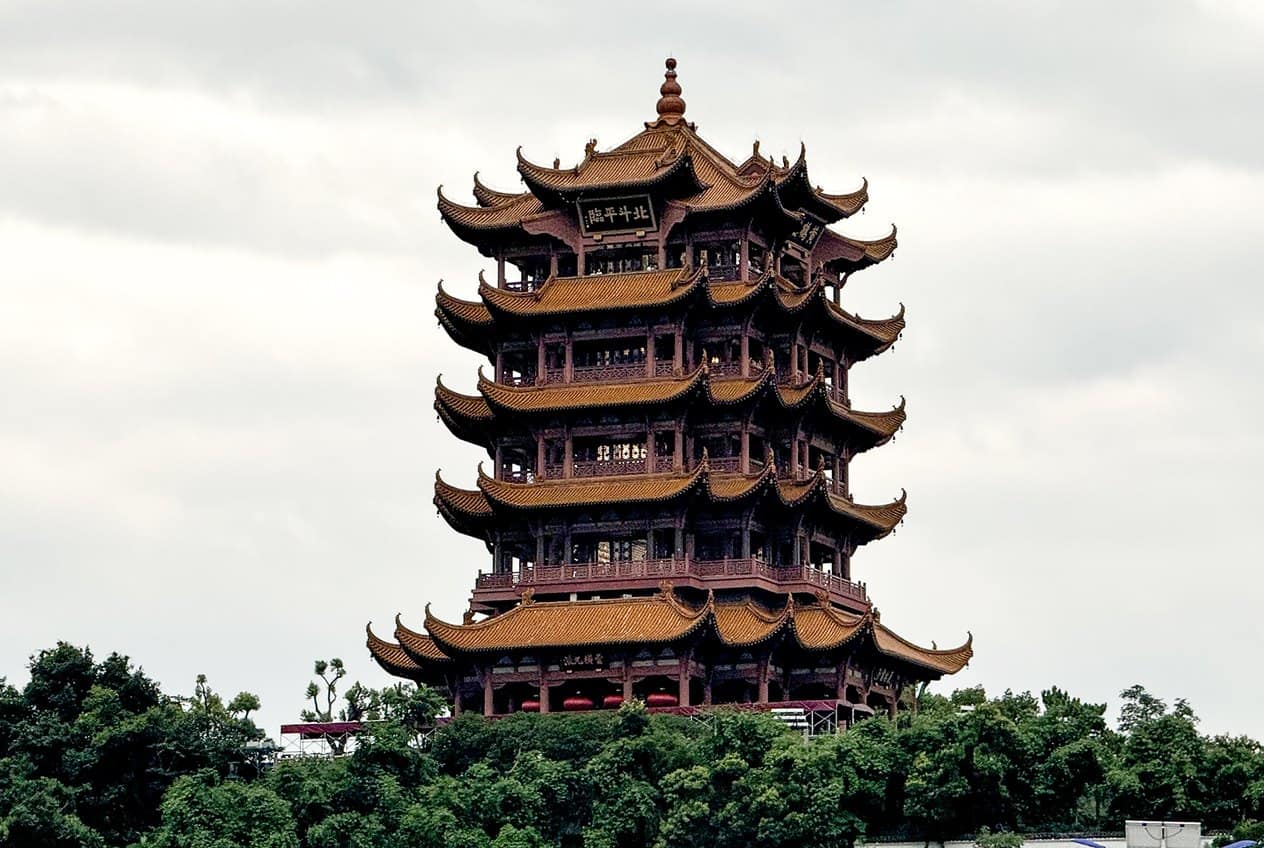
The poetic landmark of the Yangtze, on Snake Hill in Wuchang. The building you climb is a 1985 reconstruction in concrete — the continuity is the poetry and the river view, not the timber.
Full attraction guide🔔
Zeng Hou Yi bells→
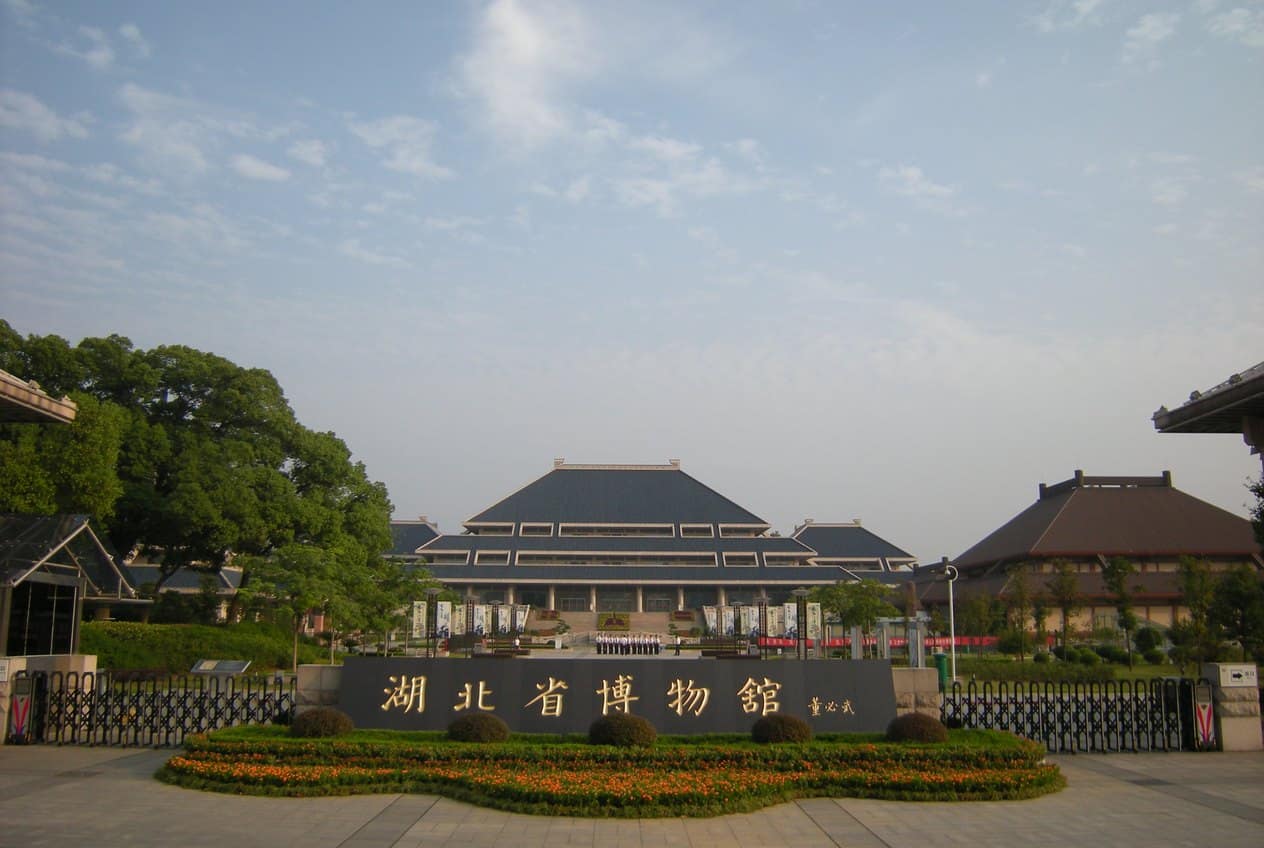
A 65-piece bronze bell set from a 433 BC tomb, each bell sounding two pitches. Free to see at the Hubei Provincial Museum, but entry is by real-name reservation only.
Full attraction guide🗡️
Goujian sword→
A 2,500-year-old bronze sword, excavated in 1965 and still unrusted, its diamond lattice and inscription intact. Same museum, usually a managed queue.
Full attraction guide🌊
East Lake→
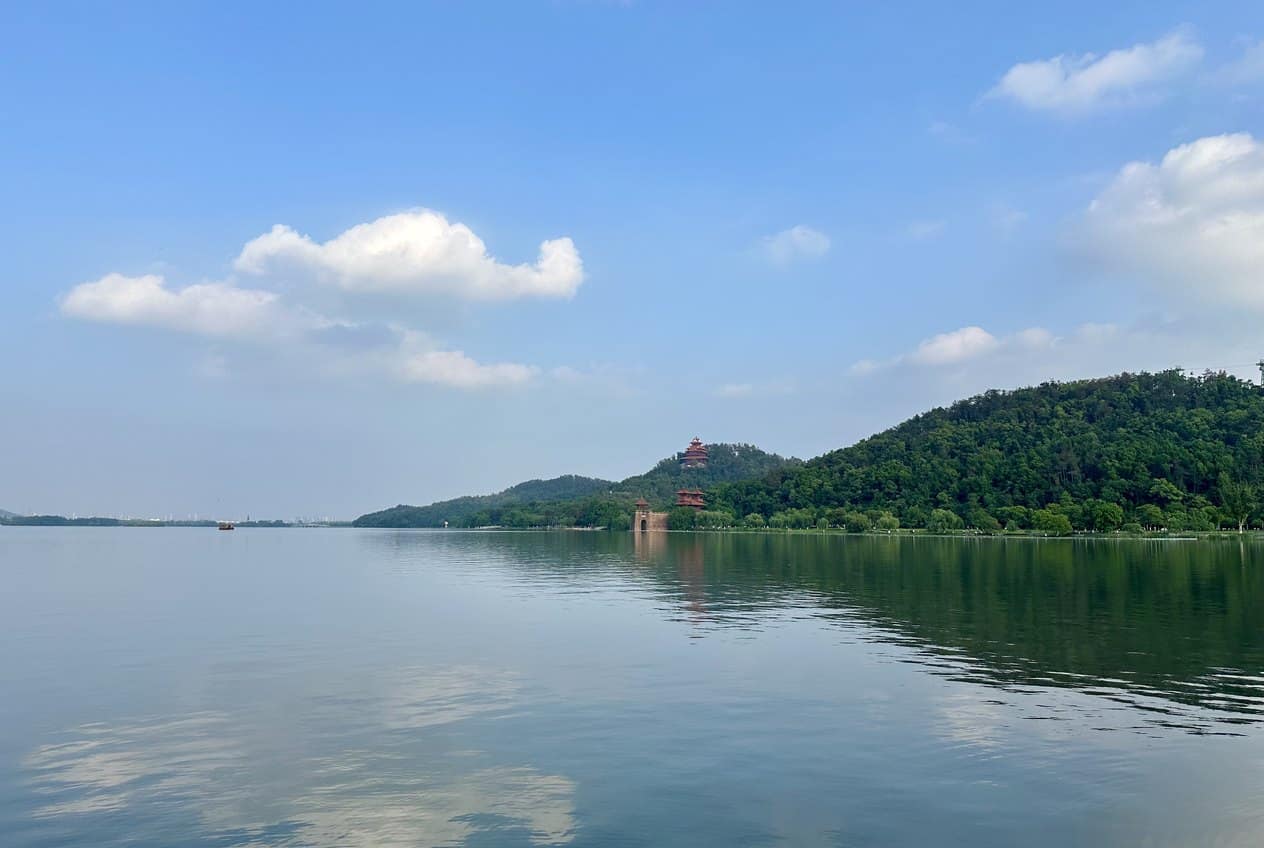
A lake district rather than a park — Tingtao, Moshan and Luoyan are separate areas linked by greenways. The public shores are free; the gardens inside them are not.
Full attraction guide🧱
Old Hankou→
Jianghan Road and Lihuangpi Road: a commercial pedestrian street and a quiet brick one, both left over from the treaty port. Free to walk, and the walking is the point.
Full attraction guide🍜
Guozao, the breakfast ritual
Literally "passing the morning". Hot dry noodles with sesame paste, doupi, mianwo — Wuhan takes breakfast more seriously than any other Chinese city.
📌 Insider Tips
- ▸Wuhan, Wuchang and Hankou are three different railway stations, in three different districts, tens of kilometres apart. The name on your ticket is the one that matters — "Wuhan Station" is not shorthand for "Wuchang Station". See the arrivals table below before you book anything onward.
- ▸The river is the real distance. Yellow Crane Tower is in Wuchang; Jianghan Road and the riverfront are in Hankou, across the Yangtze. Grouping your days by bank — one Wuchang day, one Hankou day — saves more time than any route optimisation within a day.
- ▸The 1985 rebuild is not a disappointment if you know about it. The Yellow Crane Tower has been destroyed and rebuilt many times over roughly 1,800 years, and the current structure is not even on the original site — it moved when the first Yangtze bridge was built. What you are visiting is a cultural position, not a surviving building.
- ▸The provincial museum is free and still needs a reservation, and the museum states it has authorised no third-party platform to make that booking for you. Book on its own channels, carry the original document, and note that missing a slot three times suspends your booking rights for six months.
- ▸Closing time is not the same as last admission, and at the Yellow Crane Tower there are three separate cut-offs — ticket sales stop first, entry stops a few minutes later, and clearing happens later still. Arriving half an hour before the published closing time means arriving after the gate has shut.
- ▸Day and night tickets at the Yellow Crane Tower are not interchangeable. A day ticket does not let you stay for the evening programme, and the evening ticket is a separate product with its own entrance time.
- ▸Wuhan summers are genuinely hot and humid, and the city floods in heavy rain. July and August are hard work; late March to May and late September to November are the windows.
- ▸Visa: Wuhan Tianhe is a designated port for the 240-hour transit exemption, and Hubei is among the permitted stay regions. The older 144-hour wording still circulating in guides is out of date.
🗓️ Day-by-Day Itinerary
Curated routes — what to do, hour by hour
🌉
Three Days by Bank
Wuchang, Wuchang, then Hankou — no mid-day river crossings
🏯
Day 1
Day 1 — Wuchang: the tower
Yellow Crane Tower · Snake Hill · Wuchang old-town lanes
- 🏯08:30
Yellow Crane Tower at opening
Metro Line 5 to Simenkou Huanghelou, then a walk uphill to the operating gate — the station is not the gate. Go up the tower first and read the park afterwards; the five storeys and the river orientation are the point.
- 🌉11:00
The first Yangtze bridge from above
From the tower's upper levels, find the 1957 bridge, Turtle Hill opposite and the three towns laid out around the confluence. This is the clearest geography lesson Wuhan offers.
- 🍜12:30
Lunch in the Wuchang lanes
Hubu Lane and Liangdao Street are both nearby and are different things — one a dense snack alley, one ordinary neighbourhood eating. Pick one; they are not a continuous food court.
- 🏘️14:30
Tanhualin, or rest
A lane quarter of cafés and small shops on the Wuchang side, suited to a slow afternoon. If the tower and the hill have used up your energy, this is the stop to drop.
📊 Three stations, three districts — read the name on your ticket
| Station | Which of the three towns | Metro | What it is for |
|---|---|---|---|
| Hankou 汉口站 | Hankou, north-west bank | Line 2 | The closest to Jianghan Road and the riverfront. Shares Line 2 with Jianghan Road station |
| Wuchang 武昌站 | Wuchang, east bank | Lines 4, 7 | Convenient for the Yellow Crane Tower side, though still a transfer away from it |
| Wuhan 武汉站 | Wuchang's far east, in Hongshan | Lines 4, 5 | The newest and largest, and the furthest from everything central. Not a synonym for Wuchang Station |
| Tianhe airport 天河机场 | Huangpi, far north of the city | Airport line to Line 2 | Allow properly for the ride in — this is not a short hop from either bank |
📊 Three days, grouped by bank rather than by fame
| Day | Bank | What it covers | Why grouped this way |
|---|---|---|---|
| Day 1 | Wuchang, east | Yellow Crane Tower, then one old-town quarter nearby | The tower deserves its own half-day with the entrance walk and the hill; adding a museum the same day makes both rushed |
| Day 2 | Wuchang, east | Hubei Provincial Museum, then Tingtao at East Lake | They are on the same metro line and a short distance apart, and the museum slot anchors the day |
| Day 3 | Hankou, north-west | Jianghan Road, Lihuangpi Road, the riverfront | All walkable from one another on one bank, with no river crossing in the middle of the day |
| Avoid | Crossing twice a day | Tower in the morning, Hankou at lunch, museum after | Each crossing costs real time, and the museum's timed slot does not move for your traffic |
🍜 Food Highlights
The dishes you can't leave without trying
🍜Must Try
Hot Dry Noodles (热干面)
Shop menu
Mixed dry with sesame paste, not served in soup. Wuhan's defining breakfast — mix it thoroughly before the first bite.
🫓Must Try
Sanxian Doupi (三鲜豆皮)
Shop menu
Crisp rice-and-bean wrapper set with egg around sticky rice and fillings, commonly pork and mushroom. Recipes vary by shop.
🍩Breakfast
Mianwo (面窝)
Shop menu
A fried ring of rice-and-bean batter with scallion and ginger. Crisp outside, soft in the middle; eaten alongside something else.
🍲Breakfast
Hutangfen (糊汤粉)
Shop menu
Rice noodles in a thickened, peppery fish broth, with a fried dough stick to dip. Fish-based, so not vegetarian.
🐟Classic
Steamed Wuchang Fish (清蒸武昌鱼)
Often by weight
A whole bream steamed with ginger and scallion — a sit-down dish. Confirm how the bill is calculated before ordering.
🥣Classic
Lotus-Root Ribs Soup (排骨藕汤)
By the pot
Hubei home cooking: pork ribs and lotus root simmered until the root turns floury. The stock is meat-based.
💰 Budget (per person)
Backpacker / Mid-range / Luxury
| Category | 💚 Budget | ✨ Mid-range | 💎 Luxury |
|---|---|---|---|
| 🏨Hotel (2 nights) | ¥160-400 | ¥700-1,400 | ¥2,400+ |
| 🍜Food & Drink | ¥180-320 | ¥450-800 | ¥1,500+ |
| 🚇Transport | ¥40-90 | ¥120-250 | ¥400+ |
| 🎫Attractions | ¥70-150 | ¥200-350 | ¥500+ |
| Total | ¥450-960 | ¥1,470-2,800 | ¥4,800+ |
Per person, three days, excluding the flight or train into the city. The low end is realistic here because the two biggest draws — the provincial museum and old Hankou — cost nothing to enter.
🗺️ Full Guide
🗺️
Reading the City
- Why there are three of everything
Wuchang, Hankou and Hanyang were separate administrative cities until they were merged in 1927. That is why Wuhan has three major railway stations, several riverfront promenades, more than one museum with a similar name, and distances that feel wrong on a map. The Yangtze runs between Wuchang and the other two; the Han river separates Hankou from Hanyang. Nearly every itinerary that disappoints in Wuhan does so because it treated the three as one walkable centre.
- Which town has what
Wuchang, on the east bank, is the historic and institutional side: the Yellow Crane Tower, the Hubei Provincial Museum, East Lake, the universities. Hankou, on the north-west bank, is the commercial and foreign-concession side: Jianghan Road, Lihuangpi Road, the Customs House, the riverfront promenade. Hanyang, between them on the south-west, is the old industrial quarter and holds Guqintai and Qingchuan Pavilion, which most short visits skip.
- Hankou is a treaty port, not an old Chinese town
The European facades along Jianghan Road and Lihuangpi Road date from after 1861, when Hankou was opened to foreign trade and several national concessions were laid out side by side. The architecture is early twentieth-century commercial and consular, not imperial. Reading it as a Chinese old town leads to the wrong expectations — what is actually interesting is how densely the banks, clubs and consulates were packed into a few blocks.
- Museums with confusable names
Hubei Provincial Museum is in Wuchang, on Donghu Road, and holds the Zeng Hou Yi bells and the Goujian sword. Wuhan Museum is a different institution in Hankou, on Qingnian Road. Jianghanguan Museum is inside the Customs House building on the Hankou waterfront. Three separate places with three separate admission arrangements — the one people mean when they say "the Wuhan museum" is almost always the provincial one.
- Why breakfast is the meal
Guozao — literally passing the morning — is a genuine civic habit rather than a tourist framing. Hot dry noodles are mixed dry with sesame paste rather than served in soup, which surprises visitors expecting a noodle bowl. Doupi is a rice-and-bean-batter wrapper with egg around sticky rice and fillings. Mianwo is a fried rice-and-bean ring. Most of these are eaten standing up, before eight in the morning, and are gone by mid-morning.
🍜
Where to Eat
- Hot dry noodles 热干面
The defining dish. Wheat noodles tossed dry with sesame paste, soy and pickled vegetables — no broth. Mix thoroughly before the first bite or the paste sits in a lump at the bottom. Contains wheat and sesame; ask separately about peanut.
- Sanxian doupi 三鲜豆皮
A crisp rice-and-bean-batter wrapper set with egg, enclosing sticky rice with fillings that commonly include pork and mushroom. Recipes vary between shops, so the name alone establishes nothing about suitability.
- Mianwo 面窝
A ring of fried rice-and-bean batter with scallion and ginger, crisp at the edge and soft at the centre. Usually eaten alongside something else rather than on its own.
- Hutangfen 糊汤粉
Rice noodles in a thickened fish broth, heavily peppered, traditionally eaten with a fried dough stick dipped into it. The broth is fish-based, so it is not vegetarian however it is described.
- Steamed Wuchang fish 清蒸武昌鱼
A proper sit-down dish rather than a street snack — a whole bream steamed with ginger and scallion. Often priced by weight, so confirm how the bill will be calculated before ordering.
- Lotus-root ribs soup 排骨藕汤
Hubei's home-cooking signature, slow-simmered until the lotus root turns floury. The stock is meat-based; vegetarians need to ask about the broth rather than the visible ingredients.
🏨
Where to Stay
- Jianghan Road, Hankou
The most convenient base for a first visit — walking distance to the riverfront, Lihuangpi Road and the Customs House, with Line 2 running under it straight to Hankou station and the airport line. Evening commercial noise is the trade-off; ask whether the room faces the street.
- Near Hankou Station
Practical for arrival and departure days and cheaper, but you will use the metro for everything. Worth it only if your train times are awkward.
- Donghu Road or Zhongbei Road, Wuchang
Better if your plans centre on the provincial museum and East Lake. It puts the whole Wuchang day within short reach, at the cost of a river crossing for the Hankou day.
- Around Simenkou, Wuchang
Closest to the Yellow Crane Tower and the Wuchang old-town lanes. Ask about narrow-lane vehicle access and stairs; a hotel described as near the tower is not necessarily near its operating gate.
🚇
Getting Around
- Metro
The fastest way to cross the rivers and the only reliable one at rush hour. Line 2 is the spine: it runs under the Yangtze, serves Jianghan Road and Hankou station, and connects to the airport line. Lines 4 and 5 serve the Wuchang side; Line 8 reaches the provincial museum at Shengbo Hubei Ribao station.
- Crossing the river
Three ways, and they are not equivalent. The metro is fastest and weatherproof. The commuter ferry between the Hankou and Wuchang banks costs a couple of yuan and is a genuinely good way to see both skylines. Driving across the first Yangtze bridge is scenic but slow at peak times.
- Didi and taxis
Work normally and are reasonable for short hops within one bank. Across the river at rush hour the metro will usually beat them. Give drivers the Chinese name of the specific gate, not just the attraction.
- High-speed rail onward
Wuhan sits at the crossing point of the north-south and east-west high-speed networks, which is why it appears in so many multi-city routes. Guangzhou, Shanghai, Beijing, Xi'an and Changsha are all direct — check which of the three stations your service actually departs from.
- Walking
Excellent within one bank and useless between them. Old Hankou is genuinely walkable end to end; the Wuchang sights are spread out and need the metro between them.
🎫
Booking and Admission
- Free still means reserved
The Hubei Provincial Museum charges nothing for its permanent galleries and still requires a real-name, timed reservation made in advance. Its service page states that no third-party platform has been authorised to make that booking — so an OTA product offering to secure entry is working outside the museum's own system. Book on the official channels and carry the original document named on the booking.
- The no-show rule
A booked slot that goes unused counts as a no-show, and three of them suspend your booking rights for six months. This matters more than it sounds for a trip with tight train connections — cancel a slot you cannot keep rather than simply not turning up.
- Three cut-offs, not one closing time
At the Yellow Crane Tower, ticket sales close first, entry closes a few minutes after that, and the park clears later still. The published "closes at" figure is the last of the three. Work backwards from the entry cut-off, not the closing time.
- Day and night are separate products
The Yellow Crane Tower sells a daytime admission and a separate evening experience with its own entry window. One does not admit you to the other, and you cannot stay on after daytime clearing.
- What is genuinely free
The Hankou riverfront promenade, Jianghan Road, Lihuangpi Road, the public shores of East Lake at Tingtao and Moshan, the Customs House exterior and the commuter ferry crossing all cost nothing or next to nothing. A Wuhan trip that felt expensive usually paid to go inside things whose outsides were the attraction.
✅ Pre-Departure Checklist
Tick these off before you leave home
⚠️ Heads-Up & Things to Avoid
- ⚠Wuhan, Wuchang and Wuhan East are different railway stations in different districts. Match the Chinese name on your ticket before arranging onward transport.
- ⚠The provincial museum states it has authorised no third-party platform to book entry. Treat any paid 'guaranteed entry' offer with suspicion and book on the official channels.
- ⚠Protected buildings in old Hankou default to exterior viewing. An open door into a residential hall or courtyard is not an invitation.
- ⚠Do not enter the Yangtze or cross barriers onto exposed river ground for photographs. The riverfront borders a working river with commercial traffic.
- ⚠July and August are hot, humid and prone to street flooding. Shorten outdoor plans rather than pushing through the afternoon heat.
- ⚠Emergency: 110 (police) · 120 (ambulance) · 119 (fire) · 12367 (immigration, English available)
🎯 Wuhan Attraction Guides
One in-depth guide per sight: tickets, transport, walking route, photo spots and pitfalls
Yellow Crane Tower
China's most written-about tower — rebuilt in 1985, and not even on its original site.
Hubei Provincial Museum
Free entry, reservation compulsory — and the museum says no third-party platform can book it for you.
East Lake
A lake district, not a park — pick one shore and accept you will not see the rest.
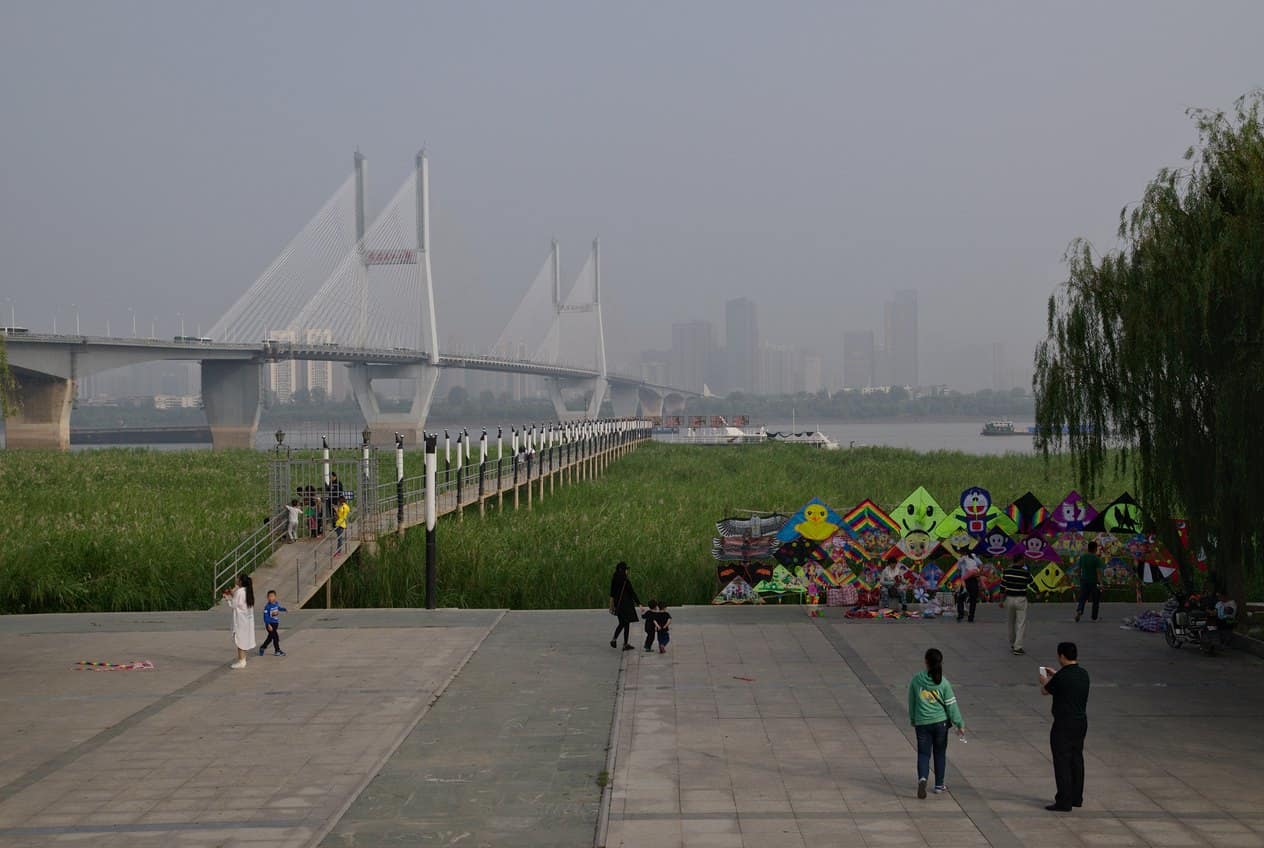
Hankou Riverfront
Free, open and on the Hankou bank — but the Customs House, the ferry pier and the park gates are three different places.
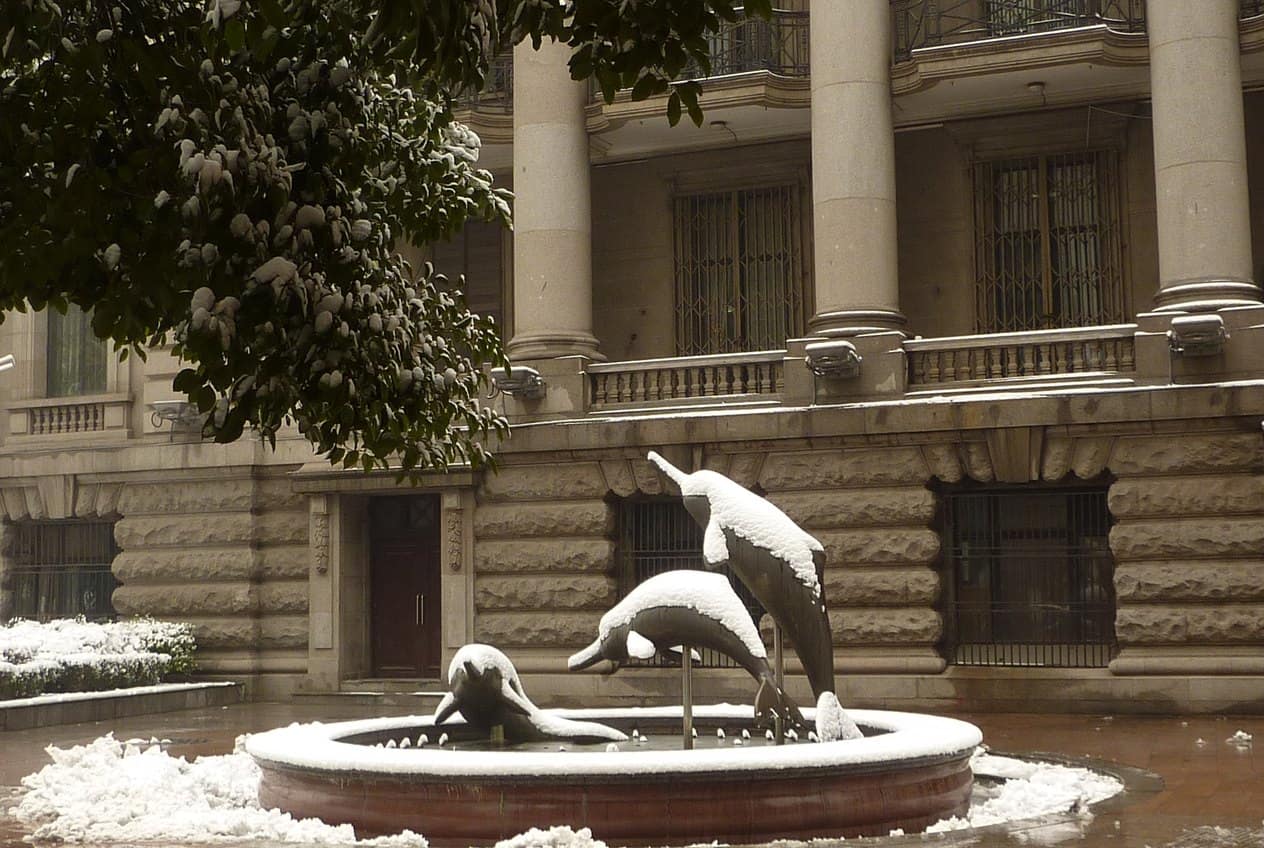
Jianghan Road & Lihuangpi Road
Two different streets in old Hankou, not two names for the same shopping strip.
Where to Go Next
Routes travellers actually take from here — with rail times and why the pairing works.
Hunan Food & NightlifeChangshaAround ninety minutes south by high-speed rail — the obvious next stop on the north-south line.Ancient CapitalXi'anNorth-west on the fast network, trading the treaty port for the Tang capital.Modern MetropolisShanghaiEast down the Yangtze corridor, and a second treaty-port waterfront to compare with Hankou's.
Before You Go
The practical guides you'll want open on your phone while you're here.
High-Speed RailHow to use China's high-speed rail network as a foreign visitor: booking with a passport, what G, D, C, K and T trains mean, seat classes compared, station procedures, luggage rules and the routes worth taking.Chinese Food BasicsA first-timer's guide to eating in China: the regional cuisines explained, dishes to order by region, how spicy Sichuan actually is, breakfast, street food safety, vegetarian options and table etiquette.Paying in ChinaComplete guide to paying in China as a foreign visitor: setting up Alipay and WeChat Pay with an overseas card, the 3% fee threshold, whether cash still works, ATM charges, tipping, and what to do when a payment is declined.Best time to visitWhen to visit China by month and region, why Golden Week and Chinese New Year are the two weeks to avoid, and how to pick dates for the Great Wall, Guilin, Harbin or Yunnan.Hotels & check-inWhy some Chinese hotels refuse foreign guests, how police registration works, what to book and where, Airbnb legality, deposits, and how to avoid arriving somewhere that cannot check you in.How to Order FoodOrdering food in China without Chinese: how QR-code menus work, what to do when the mini-programme login fails, reading menu categories, portions and paying.
Explore other cities
GoChinaTravel Editorial Team
Our team of China travel researchers combines on-the-ground contributor insights, official government sources, and traveler community feedback to create the most detailed English-language China guides available. Every guide is fact-checked against primary sources (NIA, 12367, official attraction websites, Railway 12306) before publication.