Route overview
This is the second-visit route, and it deliberately contains no Great Wall and no Forbidden City. If you have already queued for both, the interesting question is no longer what Beijing built for emperors but how eight hundred years of that history sits underneath an ordinary working city. So the days are organised by neighbourhood rather than by monument: a day in the glass-and-steel east, a day in the Drum Tower hutong grid down to the narrowest lane in the city, a day that runs from the Muslim quarter at Niujie through a Lama temple to a street that only really starts after dark, and a day pairing the 798 factories with a Ming-dynasty temple almost nobody visits. It is a slower, flatter route than the classic five days, with far less queuing and much more walking. Four days is the right length — it is long enough to stop rushing and short enough that you still notice each area is different.
| Length | 4 days, 3 nights |
|---|---|
| Best for | Repeat visitors, long layovers, slow travellers |
| Pace | Gentle — walking-heavy, no full-day excursions |
| Includes the Great Wall? | No — see the 5-day route for that |
| Must reserve ahead | Nothing essential |
Day 1
Glass, Steel & Cocktails
Guomao CBD → Sanlitun → Gongti
- 10:00
Guomao CBD & CCTV 'Big Pants'
Subway Line 1/10 to Guomao. Iconic view of CCTV HQ (234m) from the NW corner of Guomao Bridge at 45°. China Zun (528m) is Beijing's tallest.
- 11:30
China World Mall & The Place
Beijing's Ginza. Walk 15 min to The Place — a 250m LED canopy screen overhead, best at dusk. Peek into Jinzhang Hutong's industrial cafés.
- 13:00
Lunch: Haidilao at China World
24h service, English menus, the best hotpot for first-timers. Tomato base + sliced lamb. ~¥130/person.
- 15:00
Sanlitun Taikoo Li
Subway Line 10 to Tuanjiehu. Open-air architectural complex, Apple flagship, concept boutiques. Beijing's most dressed-up spot.
- 18:00
Rooftop Drinks: The Roof / Migas Mercado
The Roof (Taikoo Li South, L4) panoramic skyline; Migas (China World Summit Wing 7F) Spanish terrace facing CCTV. Cocktails ¥70-130.
- 20:00
Dinner: Dadong or Jing Yaa Tang
Dadong: modern duck with 8 condiments incl. caviar, ¥300-400. Jing Yaa Tang (Opposite House): refined duck + cocktails, ¥200-350.
- 22:00
Gongti / Sanlitun Nightlife
La Social SLT (Latin), PH (K-pop, student energy), Destination (LGBTQ landmark). 22:00-05:00, ¥100-300, bring passport.
Day 2
Secret Alleys & Bell Towers
Drum Tower → Hidden Hutongs → Houhai
- 09:00
Breakfast near Drum Tower
Line 2/8 to Shichahai/Gulou Dajie. Jianbing from a cart (¥8-12), or Yao Ji Chaogan (Gulou East 311) for chaogan + baozi, ¥25.
- 09:30
Bell Tower & Drum Tower
¥30 combined. The Bell Tower's 63-ton Ming bell. Climb for an aerial view of the hutong maze — better than any high-rise.
- 10:30
Zhuzhong (Bell-Casting) Hutong
5-8 min north of the Bell Tower. Where the 46.5-ton Yongle Bell was cast. No shops, no tourists — grey brick, birdsong, legend. This is the real Beijing.
- 11:30
Dongming Hutong — Narrowest Lane
Walk south toward Houhai. At its narrowest only one person fits sideways. Tall grey walls, vines, cooing pigeons — Beijing's most photogenic alley.
- 13:00
Lunch + Coffee: Wudaoying Hutong
Rent a shared bike, ride 15 min. The hipster hutong: craft coffee, hidden ramen, indie bookstores. Vineyard Cafe ¥80-120 or Wudaoying Ramen ¥40-60.
- 15:30
Shichahai Lake & Yandai Xiejie
Paddleboat in summer (¥60-80/hr) or ice-skate in winter (¥60). Stroll Yandai Xiejie, a commercial lane since the Yuan Dynasty.
- 18:30
Houhai Sunset + Huajia Yiyuan
Willows silhouetted against the Bell Tower — pure Beijing magic. Dinner at Huajia Yiyuan (Guijie 235): 28-day ducklings, ¥200-260. Open till 2 AM.
Day 3
A Day of Flavor
Niujie Muslim Quarter → Lama Temple → Guijie Night
- 08:30
Niujie Muslim Quarter
Line 7 to Guang'anmennei. Beijing's 1,000-year Muslim neighborhood. Jubao Yuan halal hotpot (¥100-120), the deli for aiwowo, and Niujie Mosque (996 AD, ¥10).
- 12:00
Yonghe Lama Temple
Line 2/5 to Yonghegong. Most important Tibetan Buddhist temple outside Tibet. 26m sandalwood Maitreya. ¥25, free incense. 1.5 hours.
- 14:00
Lao She Teahouse — Tea Ceremony
Jasmine tea + shadow puppetry, opera, clapper storytelling since 1988. ¥180-280 incl. tea + show. Book via WeChat.
- 17:00
Guijie / Ghost Street
Line 5 to Beixinqiao. 1.5km of red lanterns, 24h. Signature: spicy crayfish at Huda (¥120-180). Also baodu (boiled tripe) at Guijie Yihao.
- 20:00
Optional: Chaoyang Acrobatics
World-class Chinese acrobatics. 19:30 show, ¥180-380. Line 6 to Hujialou.
Day 4
Art District & Hidden Temples
798 Art → Zhihua Temple → Fragrant Hills
- 10:00
798 Art District
Line 14 to Jiangtai, 15-min walk. Former East-German factory turned China's top contemporary art zone. UCCA (¥60-100), Café Flatwhite. 2-3 hours.
- 13:00
Lunch: 798 Area
At Café (salads, sandwiches, ¥80-120) or Laker's (craft beer + burgers, ¥100-150).
- 14:30
Zhihua Temple — Hidden Ming Gem
Didi 20 min to Lumicang Hutong 5. ¥20 (free Wed, first 200). 1444 temple 95% of tourists miss. Ming court music daily 10:00 & 15:00. Closed Mon.
- 16:30
Option A: Fragrant Hills
Line 10 to Bagou + Xijiao light rail. ¥10. Climb 557m to Xianglu Peak for a Beijing panorama. Blazing red in autumn. Cable car ¥100 round-trip.
- 16:30
Option B: Imperial Ancestral Temple
If not up for hills: this underrated Ming temple (Fuchengmen Inner 131, ¥20) houses 188 emperors' tablets — Forbidden City scale, nearly empty. Closed Mon.
Before you go
Wear the shoes you would hike in. This route is built almost entirely on walking, and hutong surfaces are uneven grey brick and stone, not pavement.
Two stops are evening-first. Ghost Street and Sanlitun are both better after dark — resist the instinct to front-load them into the afternoon.
Hutongs are a grid of near-identical lanes. Download an offline map before Day 2; phone signal is fine but your sense of direction will not be.
Many of the best stops here are small and cash-shy. Independent hutong cafés and Niujie food stalls often take mobile payment only, so have a wallet app working before you set out.
Stops on this route
Open an individual guide for tickets, opening hours and how to get there.
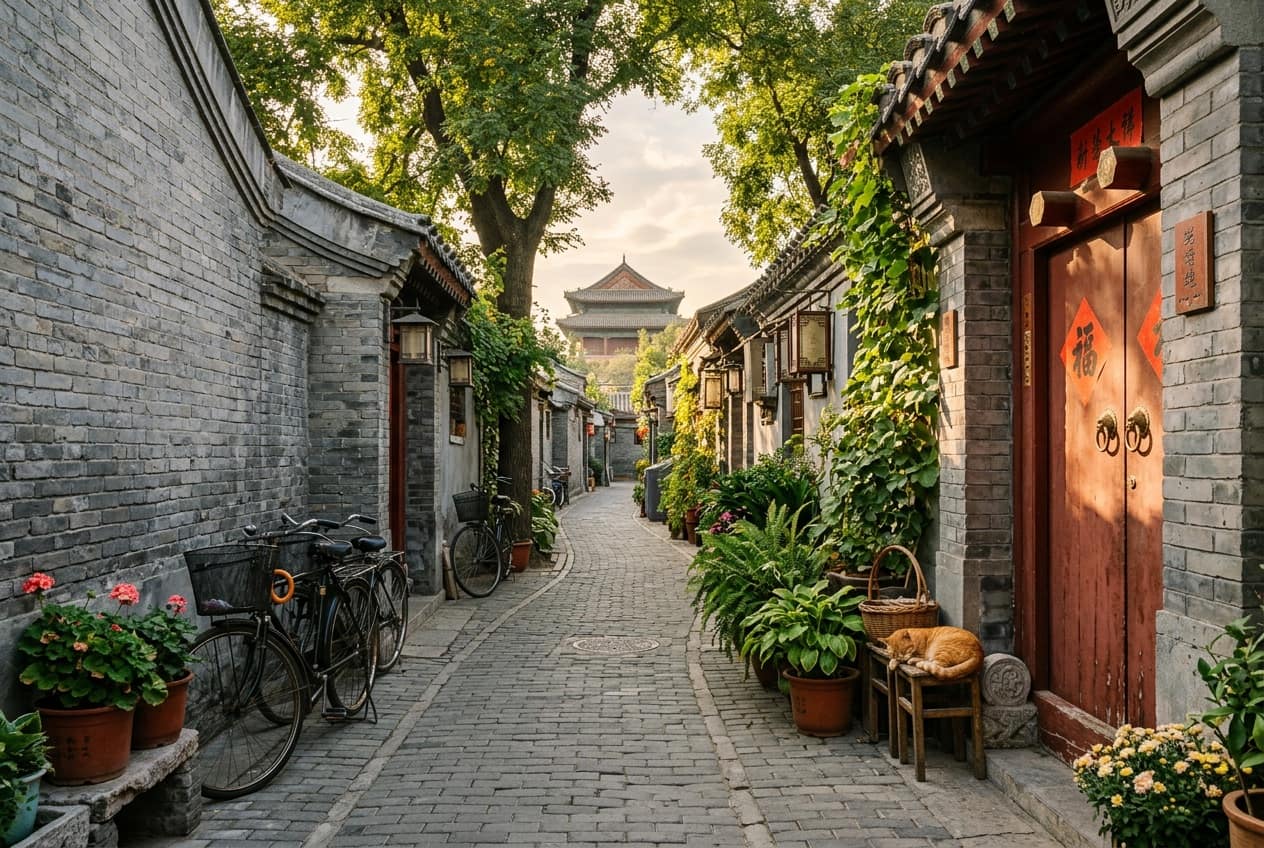
Nanluoguxiang & Hutongs
Skip commercialised Nanluoguxiang after 200 metres. The real hutongs are one turn away — and they are free.
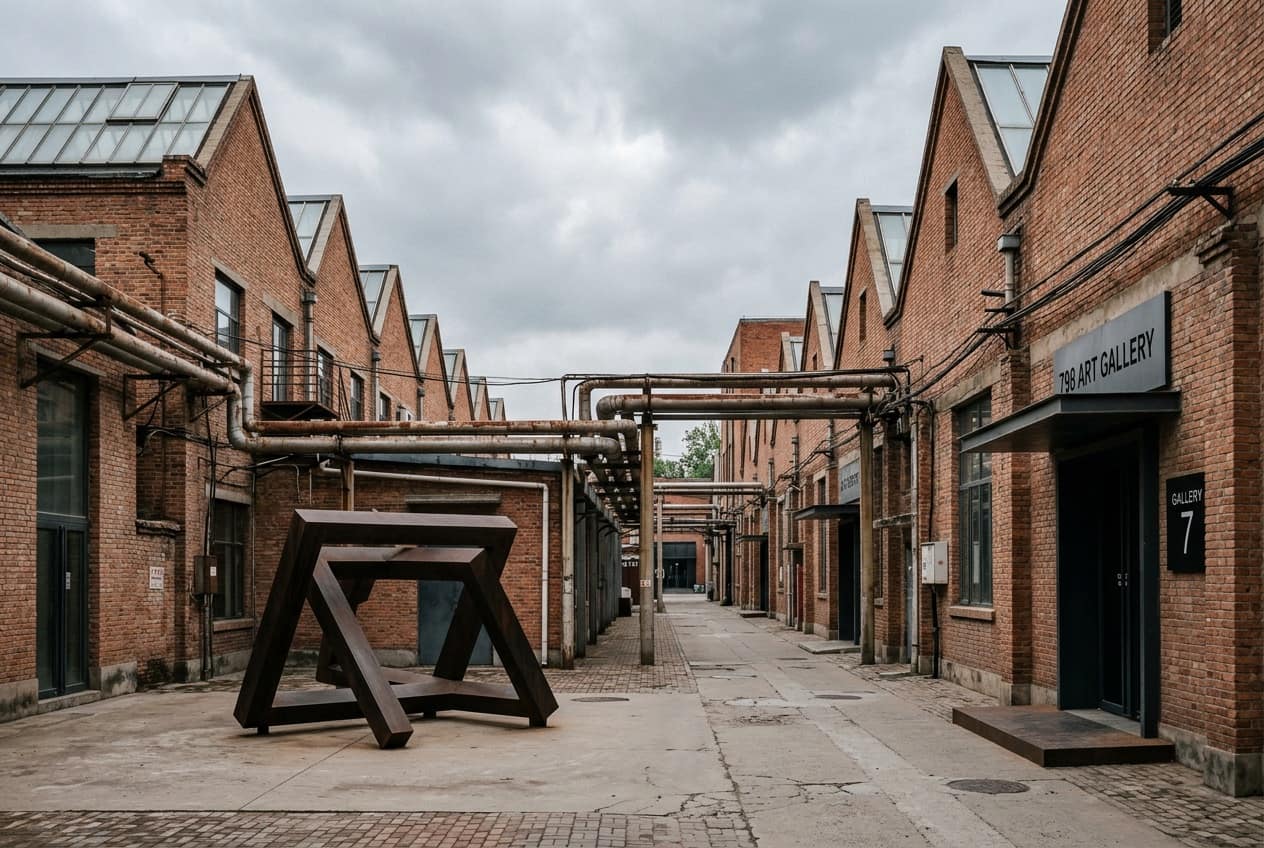
798 Art Zone
Asia's largest contemporary art district inside a 1954 East German Bauhaus factory. Free entry, 80+ galleries, Friday openings.
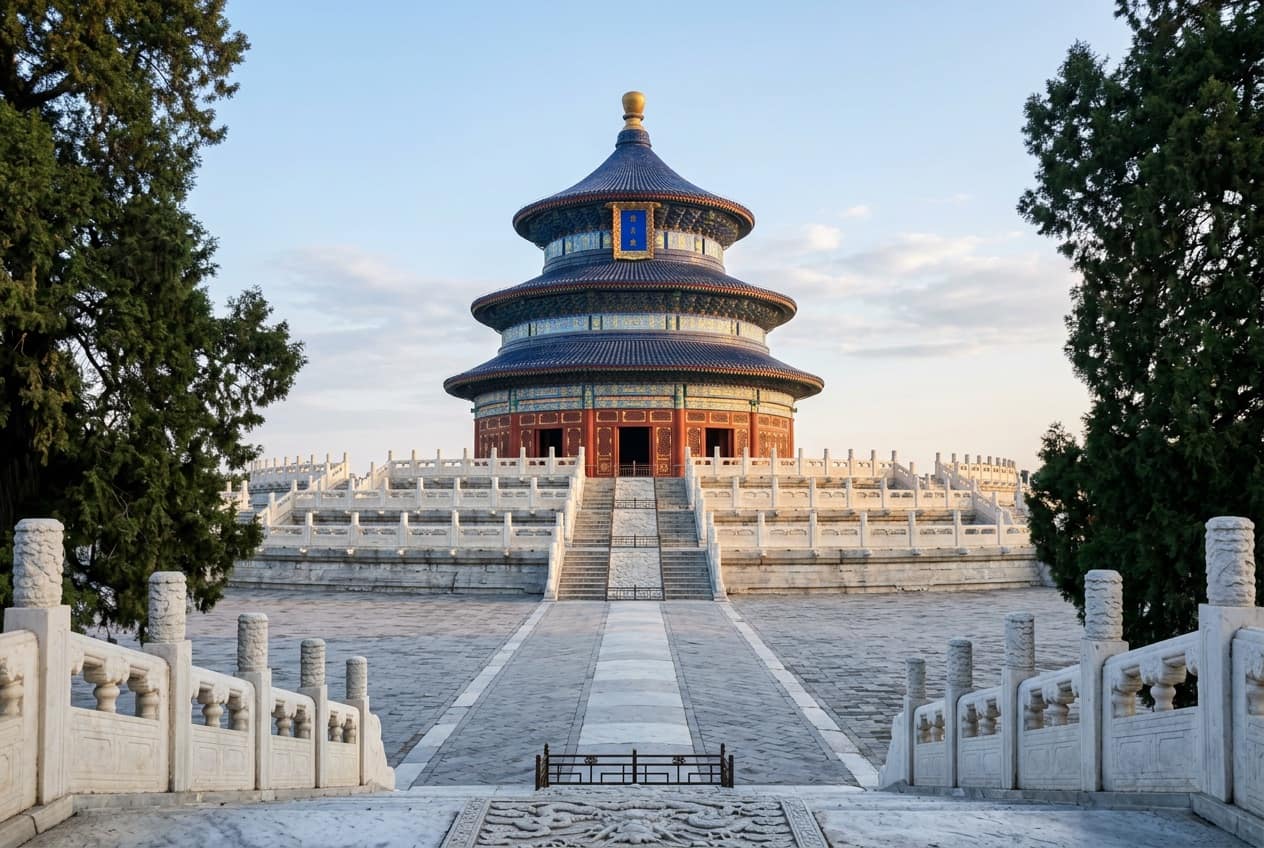
Temple of Heaven
Often called China's most perfect building. Come at 6 AM for tai chi and choirs, or Friday night for the lit Hall of Prayer.
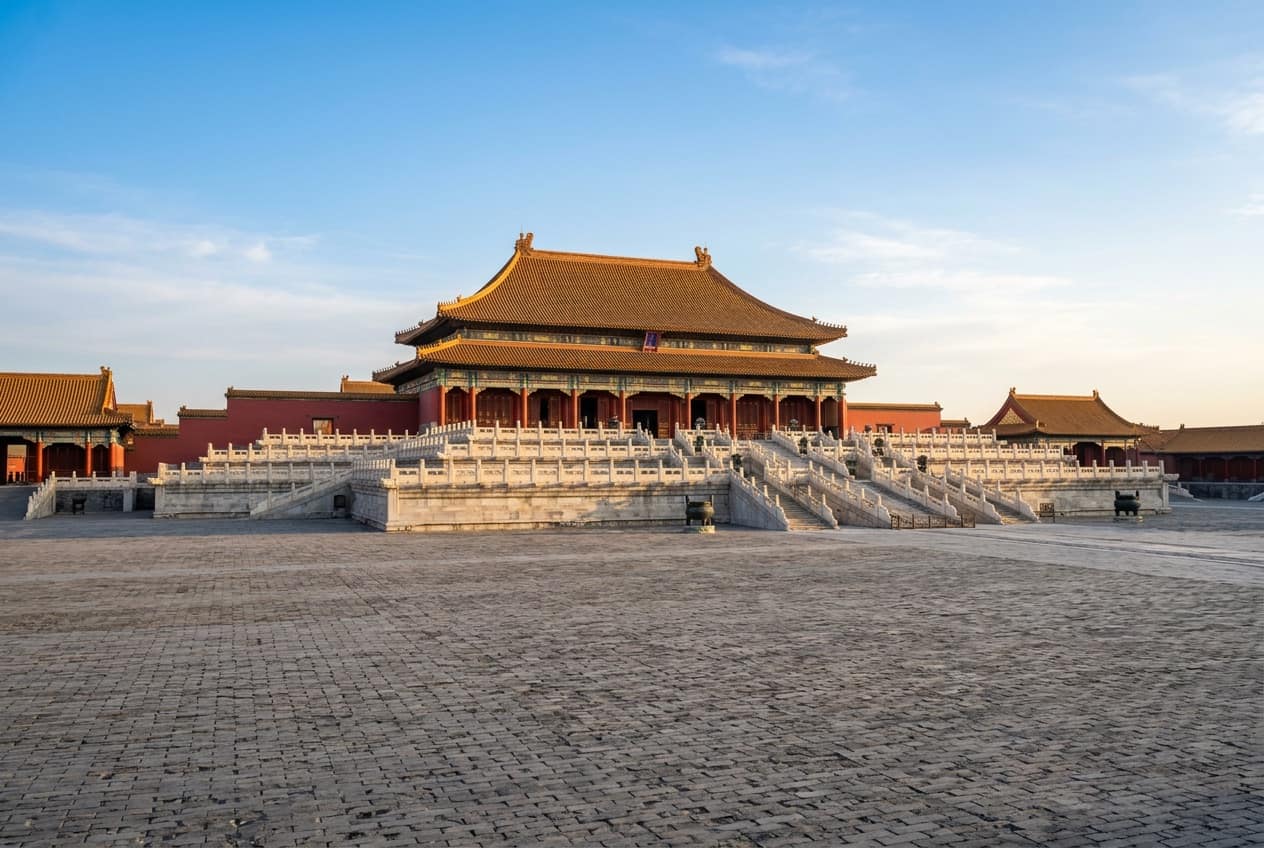
Forbidden City
The world's largest surviving palace complex — 24 emperors, 600 years, 9,999 rooms. Reservation-only, closed Mondays.
Practical reading
The practical guides you will actually use on this trip.
FAQ
Why does this itinerary skip the Great Wall?
Because it is designed for people who have already been. The Wall is a full-day round trip; removing it is what frees up the time that makes a neighbourhood-paced route possible at all. If this is your first visit to Beijing, use the 5-day classic route instead.
Is 4 days too long if I am not seeing the headline sights?
No — the opposite problem is more common. Each of these days is a single area explored properly rather than three areas sampled, and the walking adds up. Most people finish this route wishing they had one more day for the hutongs specifically.
Can I combine this with the 5-day classic route?
Yes, and it is the natural way to spend a longer stay. Run the 5-day classic first for the monuments, then append Days 2 and 4 of this route — the Drum Tower hutong grid and the 798 plus Zhihua Temple pairing — for a seven-day trip with almost no repetition.
Is this route suitable in winter?
It is walking-heavy and largely outdoors, so Beijing's dry sub-zero winter makes it harder than the classic route, which has more indoor palace and museum time. It works if you dress for it and move the food-street evenings earlier, but spring and autumn suit it far better.
Other itineraries
GoChinaTravel Editorial Team
Our team of China travel researchers combines on-the-ground contributor insights, official government sources, and traveler community feedback to create the most detailed English-language China guides available. Every guide is fact-checked against primary sources (NIA, 12367, official attraction websites, Railway 12306) before publication.